


One of the biggest reasons why a lot of players enjoy opening MTG booster packs is so they can have the opportunity to crack a flashy and expensive rare or mythic rare. Many players get a thrill from opening up packs, and even if the first few don’t contain anything super valuable, all it takes is one big hit to make everything worthwhile.
As such, it’s reasonable for players to often overlook the commons and uncommons as a whole. Interestingly, though, from a Constructed standpoint, it feels like more cards of lower rarity have been rather impactful in recent premier sets. The Lost Caverns of Ixalan, for instance, featured a wide range of elite uncommons that quickly became defining cards in Standard and beyond.
In Standard,
Deep-Cavern Bat
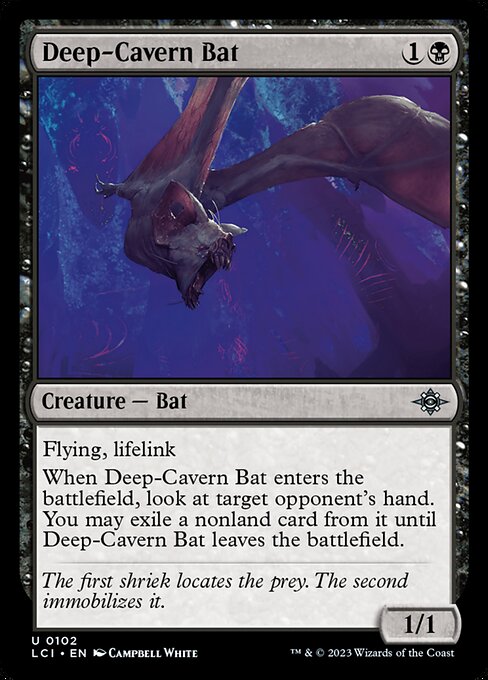 Deep-Cavern Bat
Flying, lifelink
Deep-Cavern Bat
Flying, lifelink
When this creature enters, look at target opponent's hand. You may exile a nonland card from it until this creature leaves the battlefield.
was a huge upgrade for midrange decks. In Pioneer,
Geological Appraiser
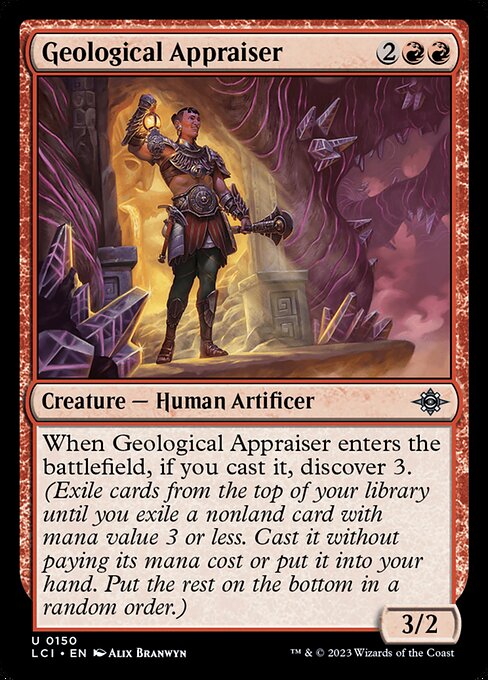 Geological Appraiser
When this creature enters, if you cast it, discover 3. (Exile cards from the top of your library until you exile a nonland card with mana value 3 or less. Cast it without paying its mana cost or put it into your hand. Put the rest on the bottom in a random order.)
completely warped the format, resulting in a rather timely ban. This trend of seeing more and more powerful uncommons extended with Murders at Karlov Manor, with cards like
No More Lies
Geological Appraiser
When this creature enters, if you cast it, discover 3. (Exile cards from the top of your library until you exile a nonland card with mana value 3 or less. Cast it without paying its mana cost or put it into your hand. Put the rest on the bottom in a random order.)
completely warped the format, resulting in a rather timely ban. This trend of seeing more and more powerful uncommons extended with Murders at Karlov Manor, with cards like
No More Lies
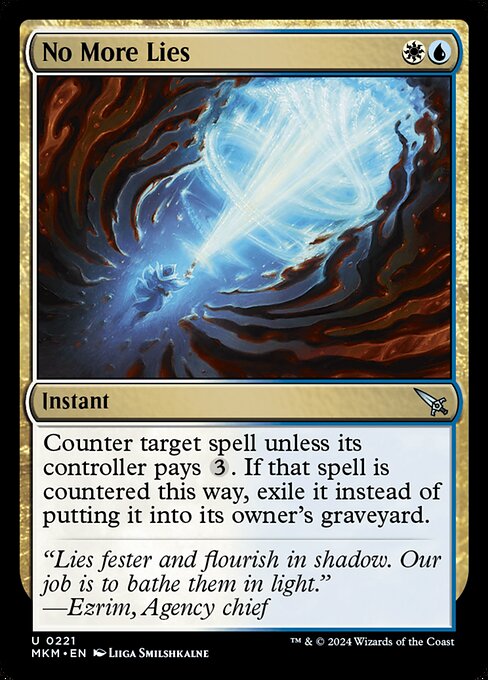 No More Lies
Counter target spell unless its controller pays {3}. If that spell is countered this way, exile it instead of putting it into its owner's graveyard.
quickly becoming multi-format all-stars. Even further, though, this set in particular has a slew of important commons that are seeing play from Standard down to Legacy. Let’s take a closer look at these strong additions that certainly deserve more respect.
No More Lies
Counter target spell unless its controller pays {3}. If that spell is countered this way, exile it instead of putting it into its owner's graveyard.
quickly becoming multi-format all-stars. Even further, though, this set in particular has a slew of important commons that are seeing play from Standard down to Legacy. Let’s take a closer look at these strong additions that certainly deserve more respect.
Investigation Station

Right off the bat, we have a functional reprint of
Thraben Inspector
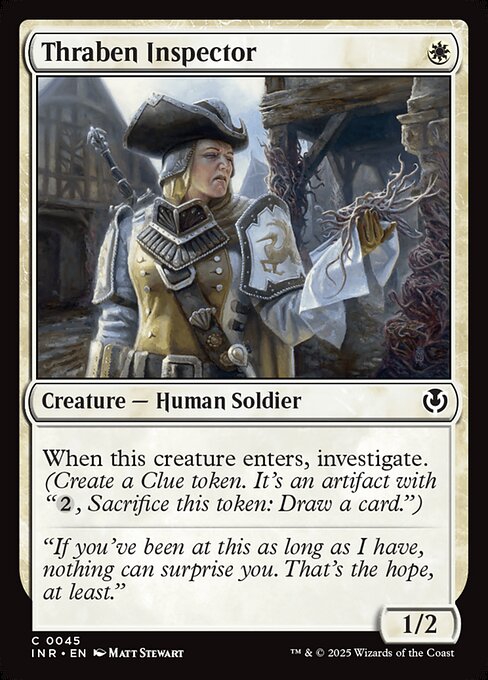 Thraben Inspector
When this creature enters, investigate. (Create a Clue token. It's an artifact with "{2}, Sacrifice this token: Draw a card.")
. Sure, Novice Inspector is a Detective, but this is a very minor detail. Novice Inspector’s printing is extremely important for two reasons in particular. First, its presence in Standard has proved to be a massive upgrade to Boros Convoke.
Thraben Inspector
When this creature enters, investigate. (Create a Clue token. It's an artifact with "{2}, Sacrifice this token: Draw a card.")
. Sure, Novice Inspector is a Detective, but this is a very minor detail. Novice Inspector’s printing is extremely important for two reasons in particular. First, its presence in Standard has proved to be a massive upgrade to Boros Convoke.
Boros Convoke faltered a bit before Murders at Karlov Manor entered the fray, in part because of a lack of consistency. Outside of
Voldaren Epicure
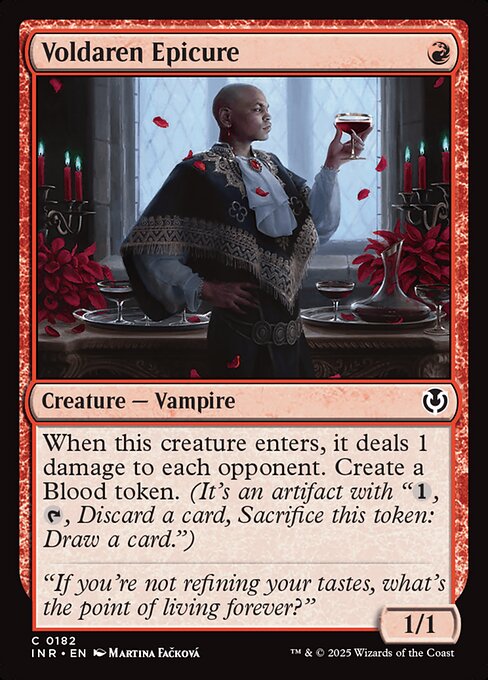 Voldaren Epicure
When this creature enters, it deals 1 damage to each opponent. Create a Blood token. (It's an artifact with "{1}, {T}, Discard a card, Sacrifice this token: Draw a card.")
, there weren’t many cheap ways to reliably enable
Gleeful Demolition
Voldaren Epicure
When this creature enters, it deals 1 damage to each opponent. Create a Blood token. (It's an artifact with "{1}, {T}, Discard a card, Sacrifice this token: Draw a card.")
, there weren’t many cheap ways to reliably enable
Gleeful Demolition
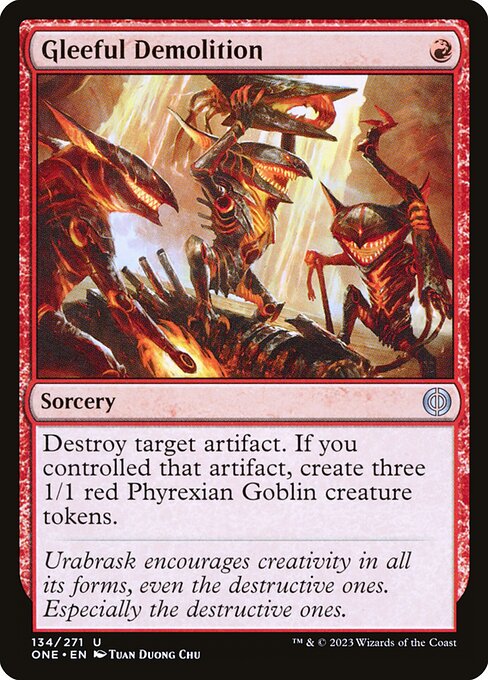 Gleeful Demolition
Destroy target artifact. If you controlled that artifact, create three 1/1 red Phyrexian Goblin creature tokens.
, which lends itself to the most broken starts for the Pioneer version of the deck.
Gleeful Demolition
Destroy target artifact. If you controlled that artifact, create three 1/1 red Phyrexian Goblin creature tokens.
, which lends itself to the most broken starts for the Pioneer version of the deck.
With yet another one-drop Creature in Boros that makes an Artifact when it enters the battlefield, Gleeful Demolition becomes much more appealing. This only makes the supporting cast, including
Warden of the Inner Sky
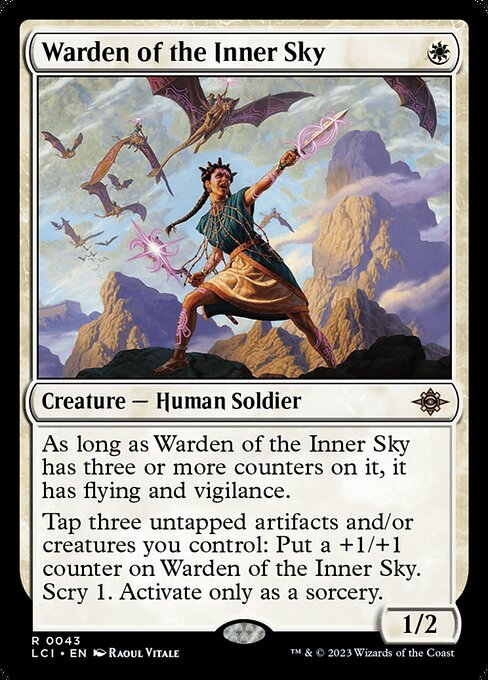 Warden of the Inner Sky
As long as this creature has three or more counters on it, it has flying and vigilance.
Warden of the Inner Sky
As long as this creature has three or more counters on it, it has flying and vigilance.
Tap three untapped artifacts and/or creatures you control: Put a +1/+1 counter on this creature. Scry 1. Activate only as a sorcery.
and
Knight-Errant of Eos
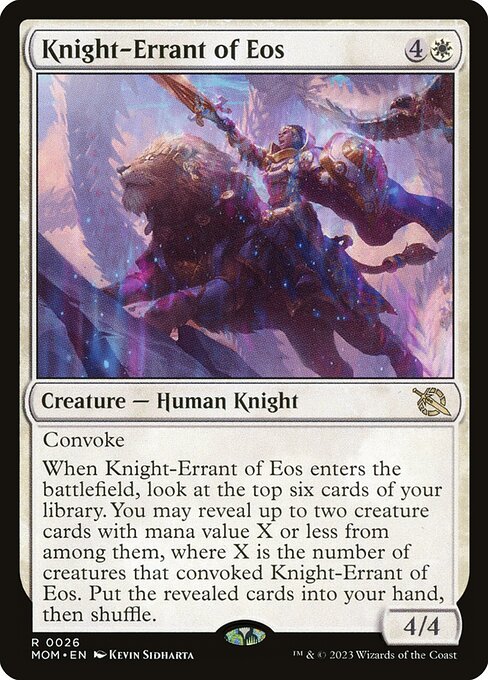 Knight-Errant of Eos
Convoke
Knight-Errant of Eos
Convoke
When this creature enters, look at the top six cards of your library. You may reveal up to two creature cards with mana value X or less from among them, where X is the number of creatures that convoked this creature. Put the revealed cards into your hand, then shuffle.
, much more threatening.
Even beyond Standard, though, the card is having a massive impact, which leads us to the second reason Novice Inspector is such a strong card: redundancy. Boros Convoke decks in Pioneer and Boros
Experimental Synthesizer
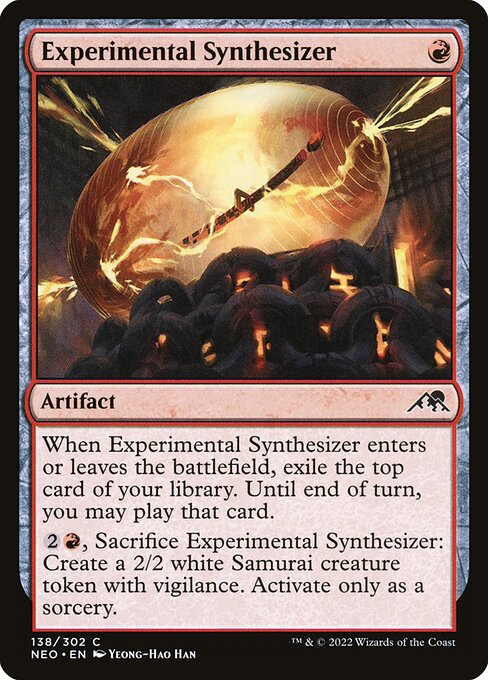 Experimental Synthesizer
When this artifact enters or leaves the battlefield, exile the top card of your library. Until end of turn, you may play that card.
Experimental Synthesizer
When this artifact enters or leaves the battlefield, exile the top card of your library. Until end of turn, you may play that card.
{2}{R}, Sacrifice this artifact: Create a 2/2 white Samurai creature token with vigilance. Activate only as a sorcery.
decks in Pauper are happy to run playsets of both Novice Inspector and Thraben Inspector. The added consistency players gain by playing a full 8 copies of this effect cannot be overstated.
Read More: Players Voice Frustration with Play Boosters Pricing People Out of MTG!
A Versatile Sideboard Card

Next up, we have Pick Your Poison. What was once just a silly test card that was not tournament legal has been completely revamped into a powerful modal spell. For one mana, you can make an opponent sacrifice an Artifact, Enchantment, or Creature with Flying. While none of these modes are necessarily thrilling for a Sorcery even at one mana, the card’s versatility is essential to its popularity.
For instance, some players were already making use of
Run Afoul
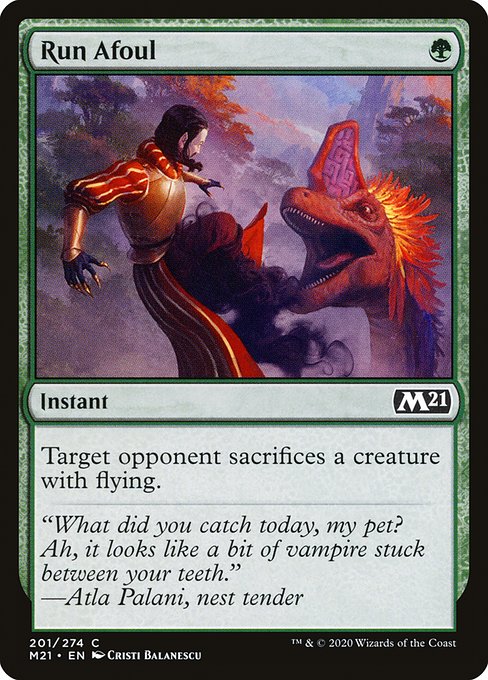 Run Afoul
Target opponent sacrifices a creature of their choice with flying.
in Legacy to help answer
Murktide Regent
Run Afoul
Target opponent sacrifices a creature of their choice with flying.
in Legacy to help answer
Murktide Regent
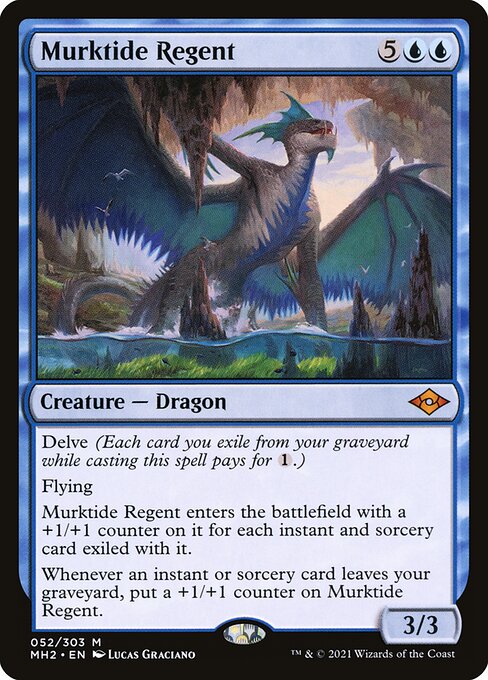 Murktide Regent
Delve (Each card you exile from your graveyard while casting this spell pays for {1}.)
Murktide Regent
Delve (Each card you exile from your graveyard while casting this spell pays for {1}.)
Flying
This creature enters with a +1/+1 counter on it for each instant and sorcery card exiled with it.
Whenever an instant or sorcery card leaves your graveyard, put a +1/+1 counter on this creature.
and the like. Pick Your Poison offers a similar efficient answer in Standard to help green decks deal with
Raffine, Scheming Seer
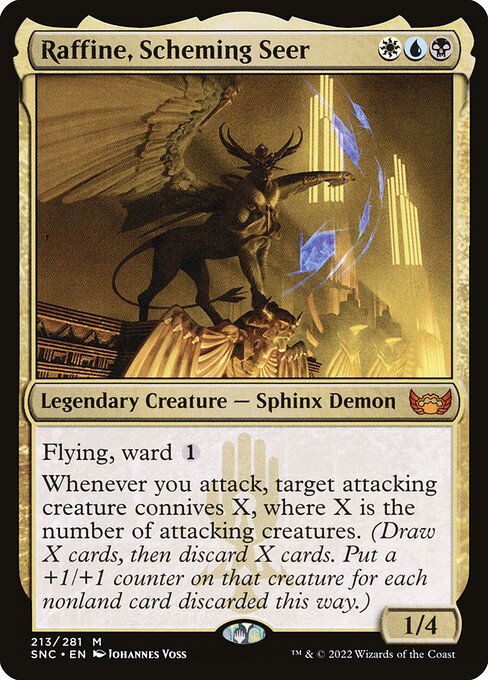 Raffine, Scheming Seer
Flying, ward {1}
Raffine, Scheming Seer
Flying, ward {1}
Whenever you attack, target attacking creature connives X, where X is the number of attacking creatures. (Draw X cards, then discard X cards. Put a +1/+1 counter on that creature for each nonland card discarded this way.)
. While this is a downgrade compared to Run Afoul when only factoring in the third mode, the fact that this card has uses in other matchups is essential. Players only have access to 15 sideboard cards, and while Run Afoul was strong, it was extremely narrow in its use.
Pick Your Poison, meanwhile, is a great answer to Enchantments like
Urza’s Saga
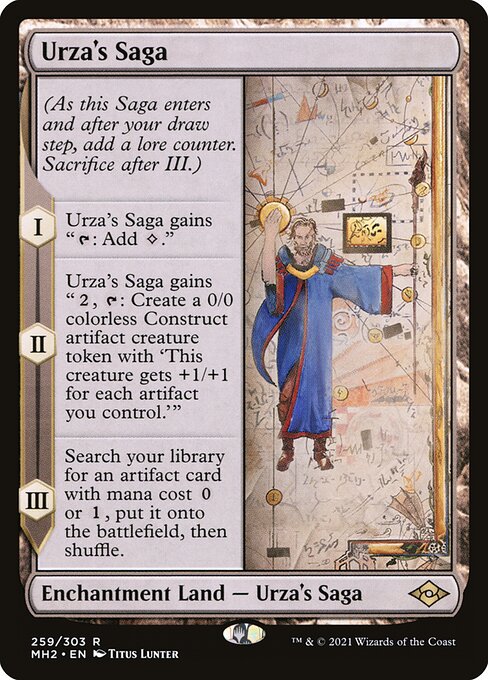 Urza’s Saga
(As this Saga enters and after your draw step, add a lore counter. Sacrifice after III.)
Urza’s Saga
(As this Saga enters and after your draw step, add a lore counter. Sacrifice after III.)
I — This Saga gains "{T}: Add {C}."
II — This Saga gains "{2}, {T}: Create a 0/0 colorless Construct artifact creature token with 'This token gets +1/+1 for each artifact you control.'"
III — Search your library for an artifact card with mana cost {0} or {1}, put it onto the battlefield, then shuffle.
or
Blood Moon
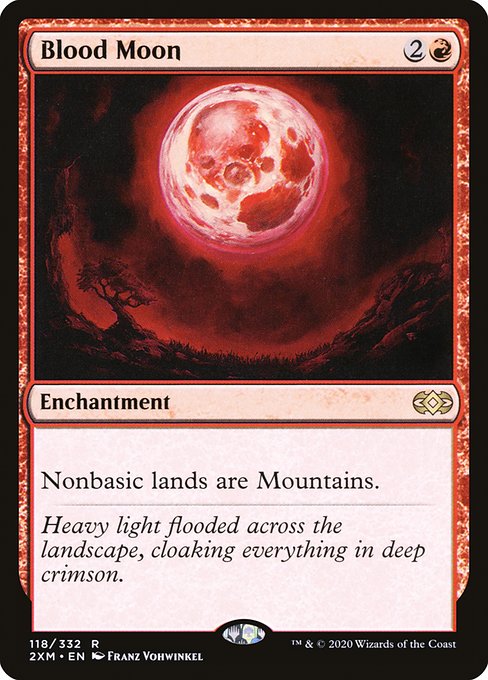 Blood Moon
Nonbasic lands are Mountains.
. In Modern, getting to answer either Saga or
Amulet of Vigor
Blood Moon
Nonbasic lands are Mountains.
. In Modern, getting to answer either Saga or
Amulet of Vigor
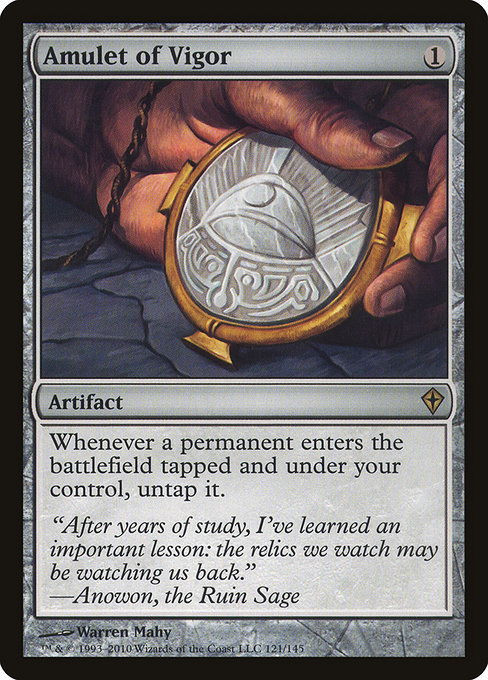 Amulet of Vigor
Whenever a permanent you control enters tapped, untap it.
out of Amulet Titan decks is very valuable, showcasing the card’s flexibility even in one specific matchup.
Amulet of Vigor
Whenever a permanent you control enters tapped, untap it.
out of Amulet Titan decks is very valuable, showcasing the card’s flexibility even in one specific matchup.
Read More: New MTG Karlov Manor Commander Addition Causes 585% Price Spike!
A Card for Control and Combo Alike

On the surface, Deduce looks like a small upgrade over
Think Twice
 Think Twice
Draw a card.
Think Twice
Draw a card.
Flashback {2}{U} (You may cast this card from your graveyard for its flashback cost. Then exile it.)
. Think Twice has seen play in Modern before, though its inefficiency has forced it to go by the wayside in recent years. Still, being able to play a card draw spell for only two mana is valuable. Even though you will need to spend four mana total to actually generate card advantage, being able to break it up over multiple turns is nice for a control deck.
In Pioneer Azorius control, for example, you can often pass with two mana available and simply react to what your opponent does. If they cast a problematic spell,
No More Lies
No More Lies
Counter target spell unless its controller pays {3}. If that spell is countered this way, exile it instead of putting it into its owner's graveyard.
is a great response. Need to kill a Creature?
Get Lost
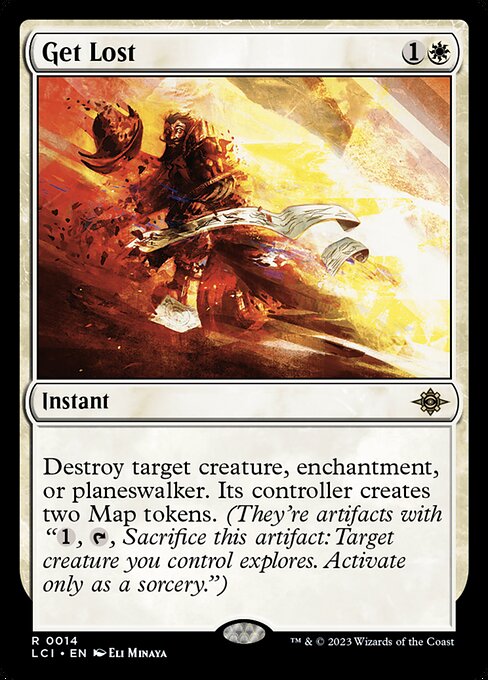 Get Lost
Destroy target creature, enchantment, or planeswalker. Its controller creates two Map tokens. (They're artifacts with "{1}, {T}, Sacrifice this token: Target creature you control explores. Activate only as a sorcery.")
can do the trick. Now, if your opponent sniffs out your Counterspell and chooses not to cast anything into it, you can cast Deduce on their end step, using your mana efficiently and pulling you further ahead.
Get Lost
Destroy target creature, enchantment, or planeswalker. Its controller creates two Map tokens. (They're artifacts with "{1}, {T}, Sacrifice this token: Target creature you control explores. Activate only as a sorcery.")
can do the trick. Now, if your opponent sniffs out your Counterspell and chooses not to cast anything into it, you can cast Deduce on their end step, using your mana efficiently and pulling you further ahead.
While this alone is decent, the fact that Deduce specifically makes an Artifact token is a huge boon for
Indomitable Creativity
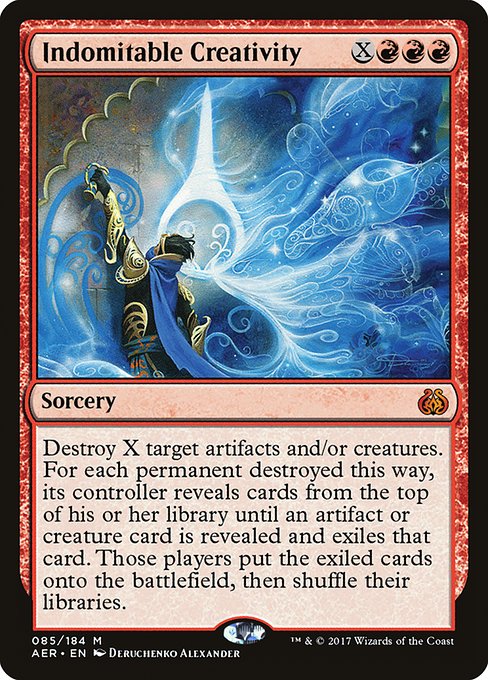 Indomitable Creativity
Destroy X target artifacts and/or creatures. For each permanent destroyed this way, its controller reveals cards from the top of their library until an artifact or creature card is revealed and exiles that card. Those players put the exiled cards onto the battlefield, then shuffle.
decks in Pioneer and Modern. A huge strength that these decks tend to have is that they allow you to play reactively, while simultaneously giving you the ability to win the game out of nowhere. Deduce is strong on its own, while also providing a target for Creativity in an efficient manner. You can always crack the Clue to pull ahead on cards, but if your opponent ever puts the shields down, you can threaten to put a huge haymaker into play.
Indomitable Creativity
Destroy X target artifacts and/or creatures. For each permanent destroyed this way, its controller reveals cards from the top of their library until an artifact or creature card is revealed and exiles that card. Those players put the exiled cards onto the battlefield, then shuffle.
decks in Pioneer and Modern. A huge strength that these decks tend to have is that they allow you to play reactively, while simultaneously giving you the ability to win the game out of nowhere. Deduce is strong on its own, while also providing a target for Creativity in an efficient manner. You can always crack the Clue to pull ahead on cards, but if your opponent ever puts the shields down, you can threaten to put a huge haymaker into play.
Read More: New Universes Beyond Changes Threaten to Replace MTG Sets
Thrill of Possibility Meets Deadly Dispute

Finally, we have a card that successfully fills multiple roles in Pauper. Demand Answers is an interesting card that gives the player casting it a lot of flexibility. For decks like Boros Synthesizer or Affinity, you will primarily be sacrificing Artifacts to cast Demand Answers. Being able to convert excess Artifacts to card advantage has long been a strong strategy in Pauper, hence the massive success of
Deadly Dispute
 Deadly Dispute
As an additional cost to cast this spell, sacrifice an artifact or creature.
Deadly Dispute
As an additional cost to cast this spell, sacrifice an artifact or creature.
Draw two cards and create a Treasure token. (It's an artifact with "{T}, Sacrifice this token: Add one mana of any color.")
.
Obviously, Demand Answers doesn’t also come with a Treasure token, making it significantly worse in its effect. What it lacks in power, though, it gains in versatility. For instance, in Rakdos Burn lists, it’s quite common to use Demand Answers just like
Thrill of Possibility
 Thrill of Possibility
As an additional cost to cast this spell, discard a card.
Thrill of Possibility
As an additional cost to cast this spell, discard a card.
Draw two cards.
. With access to three mana, you can discard
Alms of the Vein
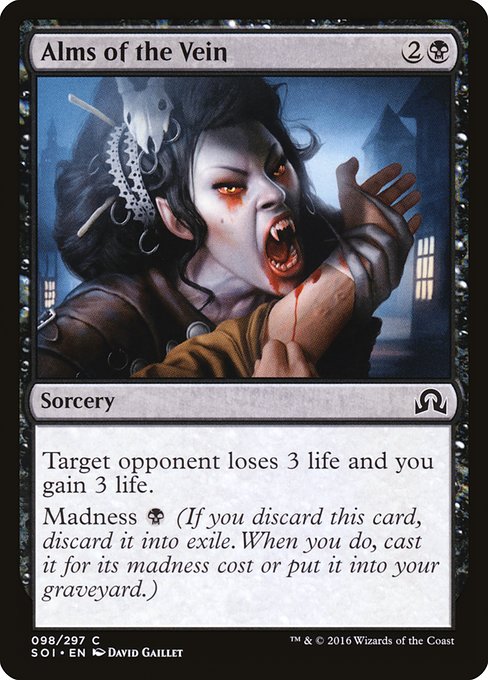 Alms of the Vein
Target opponent loses 3 life and you gain 3 life.
Alms of the Vein
Target opponent loses 3 life and you gain 3 life.
Madness {B} (If you discard this card, discard it into exile. When you do, cast it for its madness cost or put it into your graveyard.)
,
Fiery Temper
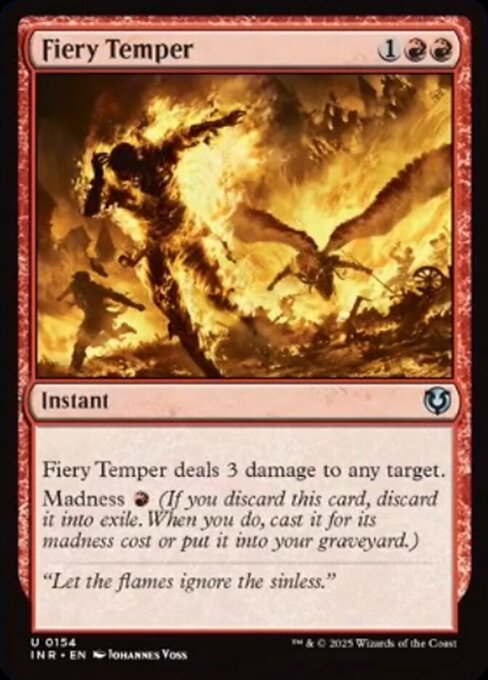 Fiery Temper
 deals 3 damage to any target.
Fiery Temper
Fiery Temper deals 3 damage to any target.
Madness {R} (If you discard this card, discard it into exile. When you do, cast it for its madness cost or put it into your graveyard.)
, or
Kitchen Imp
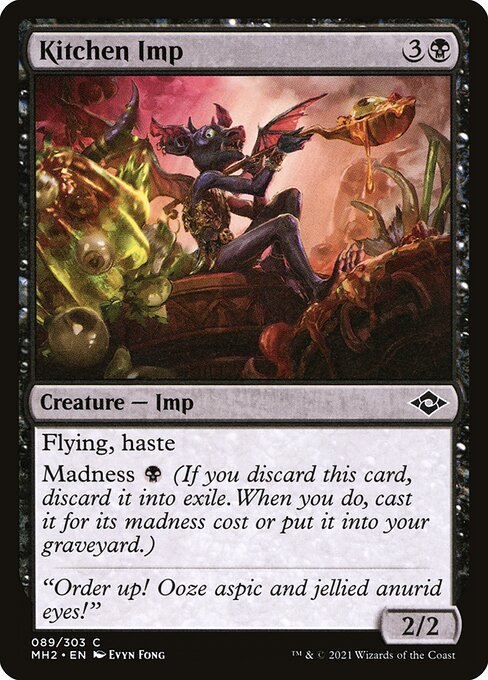 Kitchen Imp
Flying, haste
Kitchen Imp
Flying, haste
Madness {B} (If you discard this card, discard it into exile. When you do, cast it for its madness cost or put it into your graveyard.)
to trigger Madness and generate card advantage at the same time.
However, unlike Thrill of Possibility, you also have the option of sacrificing Blood tokens from
Voldaren Epicure
Voldaren Epicure
When this creature enters, it deals 1 damage to each opponent. Create a Blood token. (It's an artifact with "{1}, {T}, Discard a card, Sacrifice this token: Draw a card.")
. Getting to choose how you want to pay the additional cost to casting Demand Answers is quite strong. Additionally, the fact that Demand Answers is red instead of black means it fits into red-based
Kuldotha Rebirth
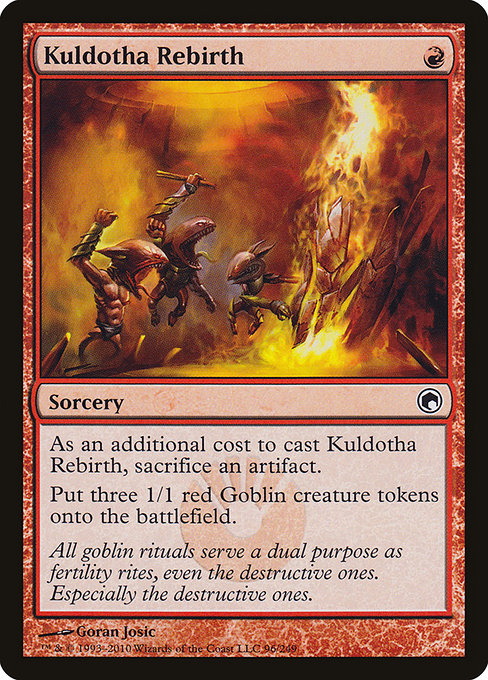 Kuldotha Rebirth
As an additional cost to cast this spell, sacrifice an artifact.
Kuldotha Rebirth
As an additional cost to cast this spell, sacrifice an artifact.
Create three 1/1 red Goblin creature tokens.
decks quite nicely.
It truly is amazing just how many cards of low rarity have made a splash from Murders at Karlov Manor. Even
Shock
 Shock
Shock deals 2 damage to any target.
, which is now Standard legal again, sees some play in mono-red aggro alongside
Play with Fire
Shock
Shock deals 2 damage to any target.
, which is now Standard legal again, sees some play in mono-red aggro alongside
Play with Fire
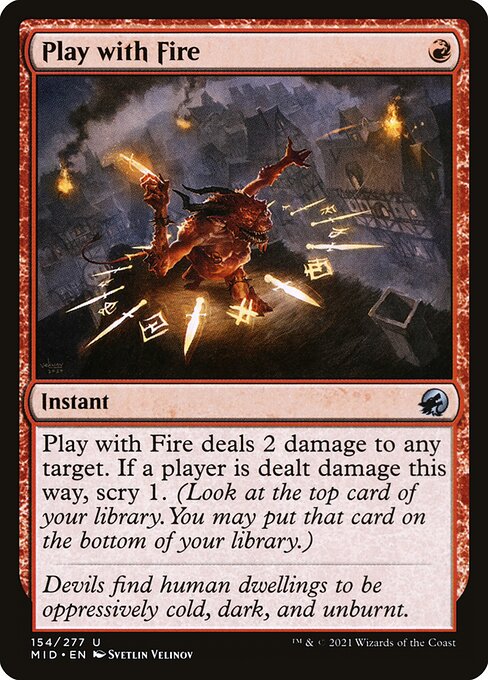 Play with Fire
 deals 2 damage to any target. If a player is dealt damage this way, scry 1. (Look at the top card of your library. You may put that card on the bottom.)
. This doesn’t even factor in the massive number of elite uncommons that the set has given us.
Play with Fire
Play with Fire deals 2 damage to any target. If a player is dealt damage this way, scry 1. (Look at the top card of your library. You may put that card on the bottom.)
. This doesn’t even factor in the massive number of elite uncommons that the set has given us.
Read More: Overpowered MTG Mechanic Creates Absurd Metagame Disparity