


Of all the MTG Star Trek cards released so far,
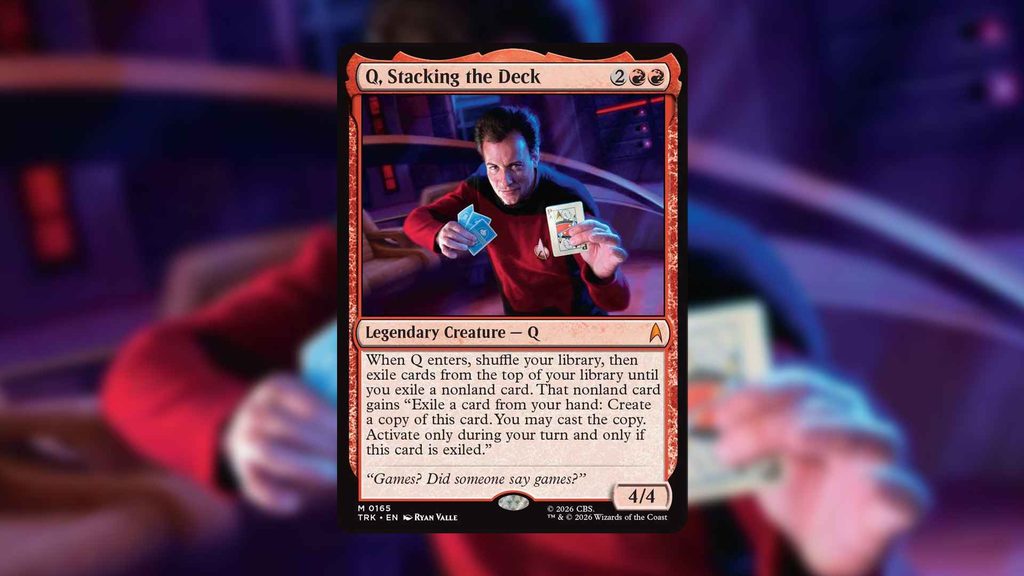
Q, Stacking the Deck
 Q, Stacking the Deck
When Q enters, shuffle your library, then exile cards from the top of your library until you exile a nonland card. That nonland card gains "Exile a card from your hand: Create a copy of this card. You may cast the copy. Activate only during your turn and only if this card is exiled."
is by far the most bizarre. Build your deck right, and you can technically ensure that every single card in your hand is a copy of something powerful. This makes Q, Stacking the Deck incredible with topdeck manipulation cards like
Sensei’s Divining Top
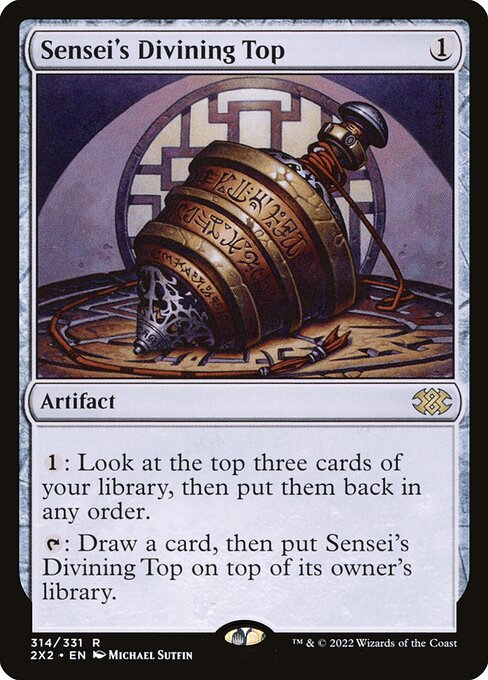 Sensei’s Divining Top
{1}: Look at the top three cards of your library, then put them back in any order.
{T}: Draw a card, then put this artifact on top of its owner's library.
and
Scroll Rack
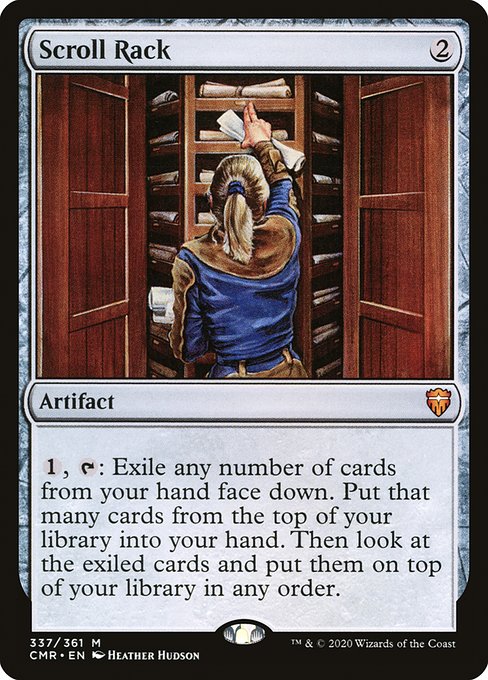 Scroll Rack
{1}, {T}: Exile any number of cards from your hand face down. Put that many cards from the top of your library into your hand. Then look at the exiled cards and put them on top of your library in any order.
, letting you consistently put bombs like
Jeska’s Will
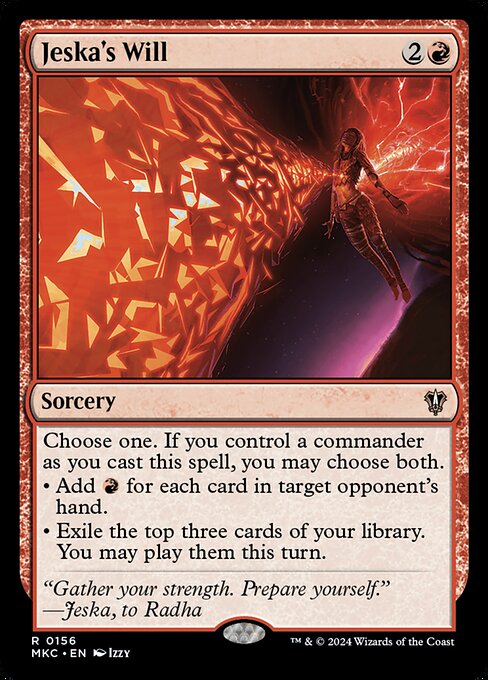 Jeska’s Will
Choose one. If you control a commander as you cast this spell, you may choose both instead.
• Add {R} for each card in target opponent's hand.
• Exile the top three cards of your library. You may play them this turn.
on top of your deck.
While this is likely the best way to play Q, if you’re going for speed, some jankier options are available. By running as many as 98 lands in your Commander deck, you can ensure that Q hits the same card every time.
With the right cards, this can create a consistent death combo that starts with casting Q from the command zone, regardless of what your opening hand looks like. While these combos aren’t exactly good, there is a certain novelty to winning the game with a combo like this.
Q, Stacking the Deck 98-Land Combos
Despite these combos sharing the same pitfalls as past 97-land combos, Q, Stacking the Deck has multiple combos that win on turn six, or turn five if you open with something like
Ancient Tomb
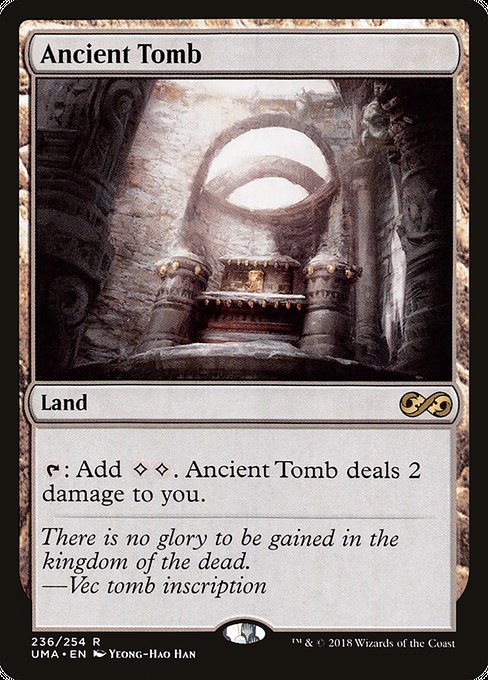 Ancient Tomb
{T}: Add {C}{C}. This land deals 2 damage to you.
. Of course, these combos won’t work if you happen to start with the other nonland card in your opening hand, but a single mulligan should fix that.
The quickest death combo discovered so far appears to be pairing Q with
Glaring Fleshraker
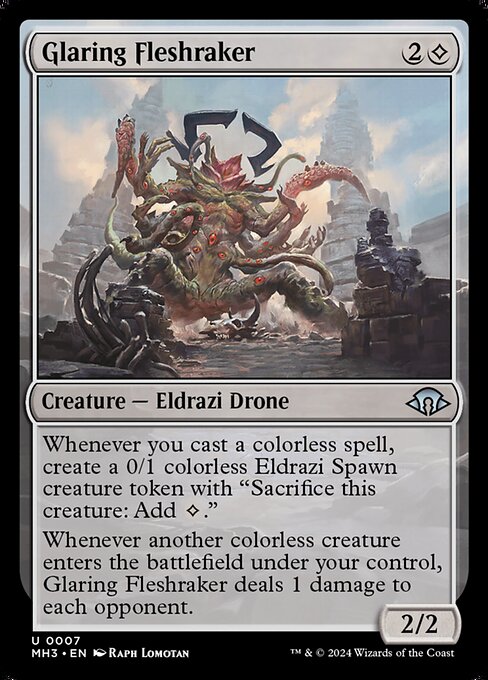 Glaring Fleshraker
Whenever you cast a colorless spell, create a 0/1 colorless Eldrazi Spawn creature token with "Sacrifice this token: Add {C}."
Whenever another colorless creature you control enters, this creature deals 1 damage to each opponent.
. Since each Fleshraker creates a Scion whenever another is cast, you can cast your Fleshraker copies for free once you have three in play. The damage these creatures deal stacks exponentially, since each Raker deals damage for the Scions it and the others create. With this in mind, you need five Glaring Fleshrakers to deal 40 damage to the table, which you can do as early as turn 5 with a fast land like
Ancient Tomb
Ancient Tomb
{T}: Add {C}{C}. This land deals 2 damage to you.
.
Most of the time, however, you’ll win on turn six, dealing up to 112 damage to the table! As this Reddit post demonstrates, if you play Q on turn four and follow up with a Glaring Fleshraker on turn 5, you can empty your 7-land hand on turn 6 to annihilate the table.
Of course, this Glaring Fleshraker combo has a few issues; the biggest is creature removal. Theoretically, you can win through a few spot removal pieces on your Fleshrakers, but it will slow the combo down immensely. With enough creature removal, you’ll have to wait a long time to amass a lethal number of Fleshrakers, giving your opponents plenty of time to kill you. You also need to find both red and colorless mana to pull this combo off, but in a 98-land deck, that should be pretty easy.
If you want to run a Q combo that avoids removal issues, some players have also mentioned
Price of Progress
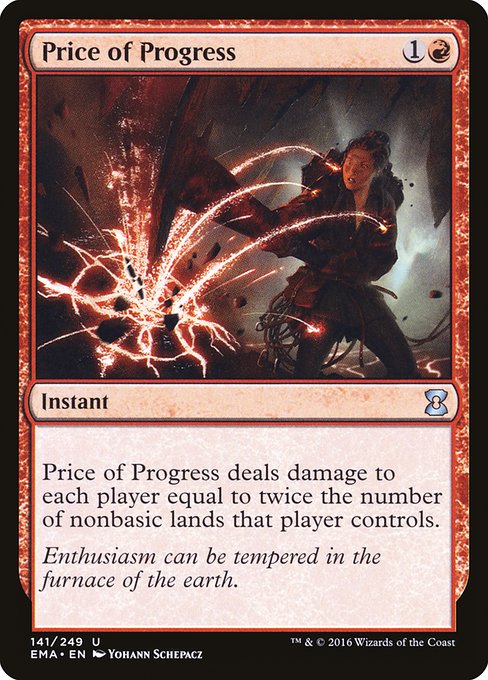 Price of Progress
 deals damage to each player equal to twice the number of nonbasic lands that player controls.
as an option. While this can burn out the table while ignoring creature removal, the lands your opponents play matter. If they play at least four nonbasic lands by turn 5, you should win on turn 6 by casting a total of 5 Price of Progress. Given how many nonbasic lands an average Commander deck runs, pulling this off is likely easier than it sounds.
Playing the Long Game
While creating a 98-land two-card combo with Q, Stacking the Deck can lead to some hilarious moments, but it’s more of a novelty than a strong strategy. Because of this, you typically only want to pull these combos off once before putting the deck away for good. That said, if you really want to pull off these 90+ land Q decks multiple times, there are some slower but more consistent cards you can consider.
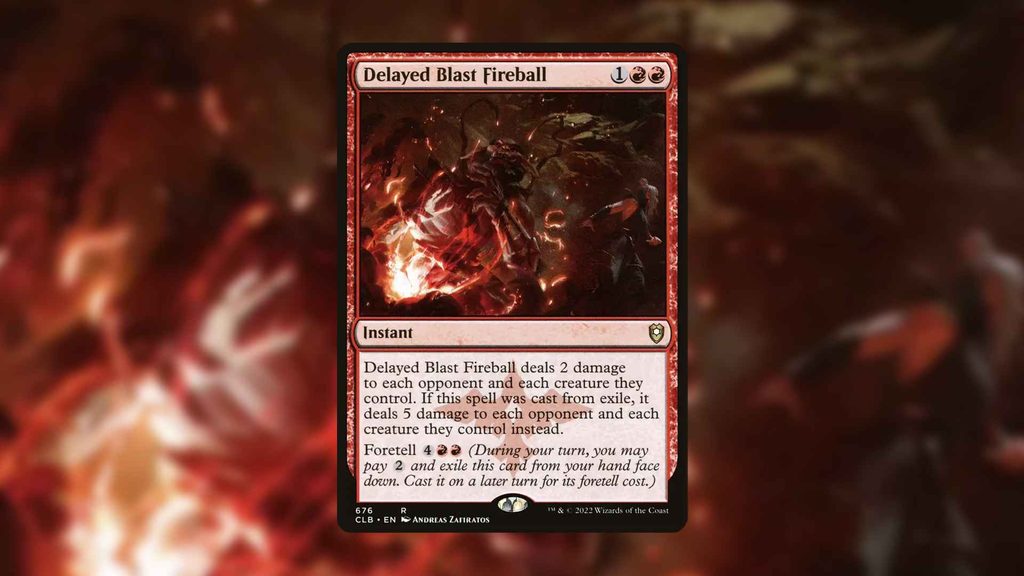
If you want a more reliable Q target with some staying power,
Delayed Blast Fireball
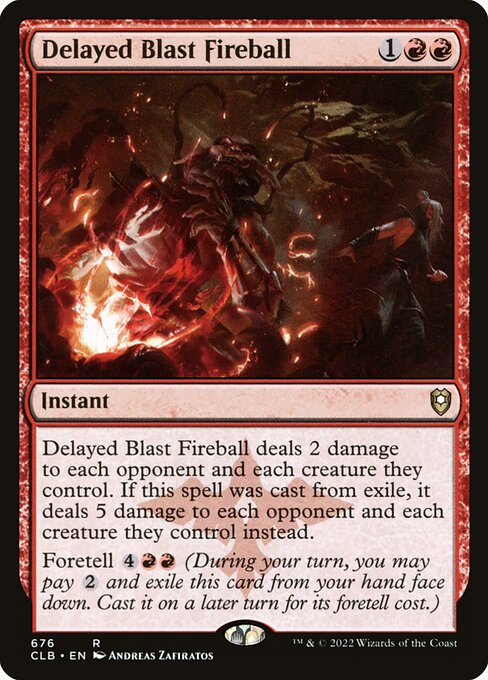 Delayed Blast Fireball
 deals 2 damage to each opponent and each creature they control. If this spell was cast from exile, it deals 5 damage to each opponent and each creature they control instead.
Foretell {4}{R}{R} (During your turn, you may pay {2} and exile this card from your hand face down. Cast it on a later turn for its foretell cost.)
is a decent choice. While it will win the game much later than Price of Progress or Glaring Fleshraker, Delayed Blast Fireball will repeatedly wipe your opponent’s creatures, giving you plenty of time. Notably, because you’re casting your copies from exile, Delayed Blast Fireball always deals 5 damage despite costing 3 mana.
Otherwise, some other early Q, Stacking the Deck brews include a few different nonland cards that can both snowball and do a lot on their own.
Terror of the Peaks
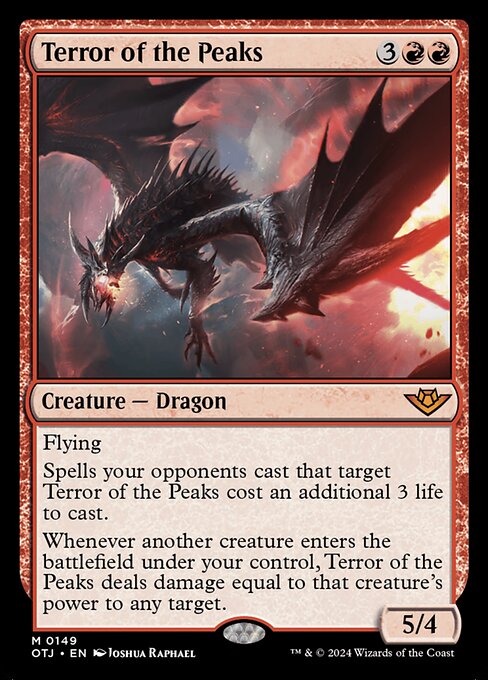 Terror of the Peaks
Flying
Spells your opponents cast that target this creature cost an additional 3 life to cast.
Whenever another creature you control enters, this creature deals damage equal to that creature's power to any target.
paired with something like
The One Ring
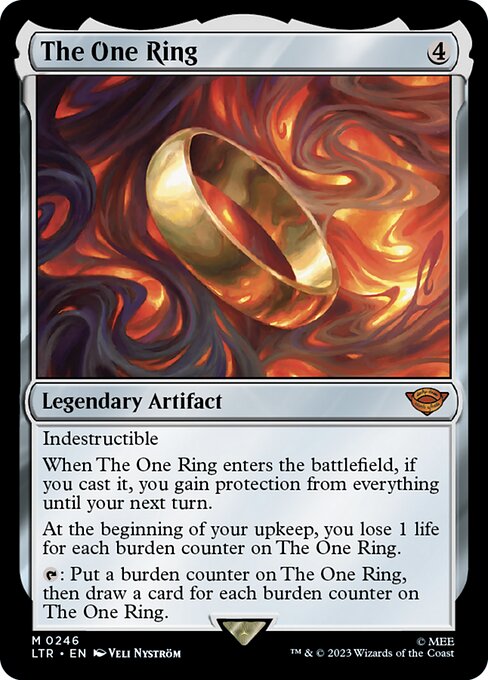 The One Ring
Indestructible
When The One Ring enters, if you cast it, you gain protection from everything until your next turn.
At the beginning of your upkeep, you lose 1 life for each burden counter on The One Ring.
{T}: Put a burden counter on The One Ring, then draw a card for each burden counter on The One Ring.
is an example, letting you deploy a consistent number of threats without running out of cards. The One Ring is particularly nasty with Q, since you can essentially give yourself recurring Protection From Everything.
With all this in mind, the best strategies with
Q, Stacking the Deck
Q, Stacking the Deck
When Q enters, shuffle your library, then exile cards from the top of your library until you exile a nonland card. That nonland card gains "Exile a card from your hand: Create a copy of this card. You may cast the copy. Activate only during your turn and only if this card is exiled."
will want to play more than one nonland card to give the deck some staying power. Since this Commander looks quite powerful even without the 98-land gimmick, the best way to enjoy the jankier decks this Commander offers is to build a more traditional Q deck alongside it. That way, by switching between decks, you may catch your opponents off guard with a 98-card combo more than once.
Stick with us here at mtgrocks.com: the best site for Magic: The Gathering coverage. Be sure to check out our deckbuilder for your next big brew, and our brand new MTG Rocks Podcast!