


Not all problematic turn one combos in Magic necessarily win the game on the spot. All you need to do is get disgustingly far ahead early in a way your opponent cannot interact with, and it can become very difficult for them to have a legitimate game of Magic.
A good example of this is the new combo of
Leyline of the Guildpact
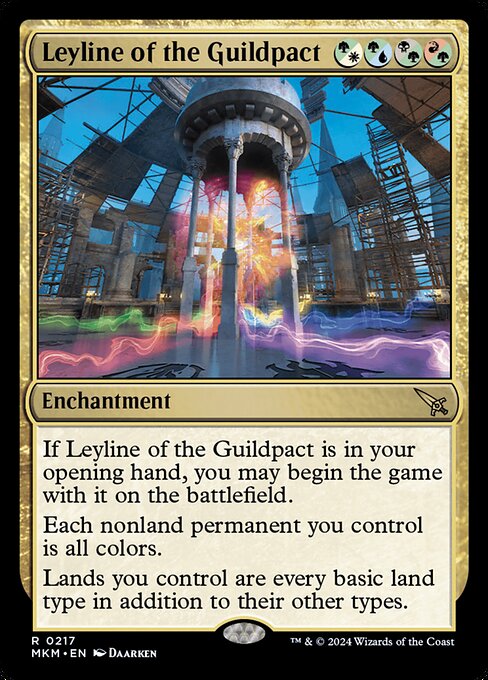 Leyline of the Guildpact
If this card is in your opening hand, you may begin the game with it on the battlefield.
Leyline of the Guildpact
If this card is in your opening hand, you may begin the game with it on the battlefield.
Each nonland permanent you control is all colors.
Lands you control are every basic land type in addition to their other types.
and
Scion of Draco
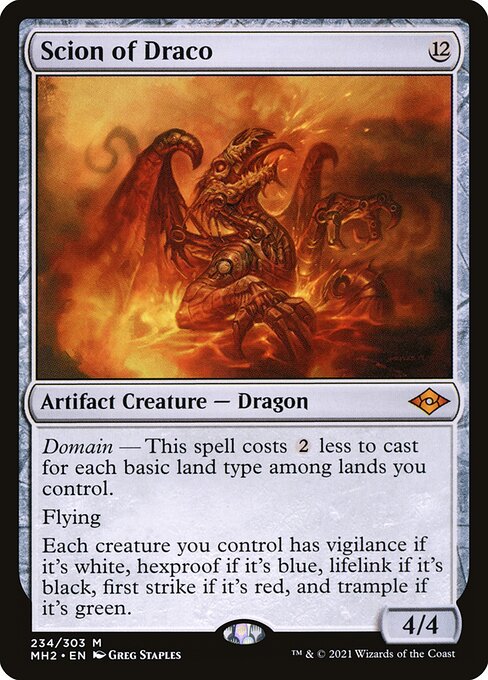 Scion of Draco
Domain — This spell costs {2} less to cast for each basic land type among lands you control.
Scion of Draco
Domain — This spell costs {2} less to cast for each basic land type among lands you control.
Flying
Each creature you control has vigilance if it's white, hexproof if it's blue, lifelink if it's black, first strike if it's red, and trample if it's green.
in Modern. The combo definitely won’t end the game on the spot but dealing with a turn 2 4/4 with a slew of keywords, making it near-impossible to interact with, can be difficult.
Play patterns that completely skew games, making them uninteresting, are common ones that are addressed by bannings. A good example is the recent Pioneer banning of Geological Appraiser. This card led to turn three wins, completely warping the format. While the Leyline of the Guildpact combo is not this egregious, there is another Leyline combo that went too far.
This Leyline combo was not part of a paper format. You could instead find this plaguing the Historic Ladder on MTG Arena. Thanks to an Alchemy exclusive card, you could easily turn a Leyline of your choice into a dangerous clock that is incredibly difficult to interact with, kind of like Scion of Draco. While this combo was eventually dealt with, it nonetheless warped the metagame heavily.
For those sick of the Leyline combo ruining their play experience in Historic, you are in luck! A recent MTG Arena announcement highlighted distinct Alchemy rebalances to two cards. Rather than seeing these cards banned outright, these rebalances still give players the opportunity to play with fixed versions of the two cards. Let’s take a closer look.
Fragment Reality

Up to this point, Fragment Reality has been completely dominating the Historic format. The main archetype that uses Fragment Reality has one main goal: get
Geist of Saint Traft
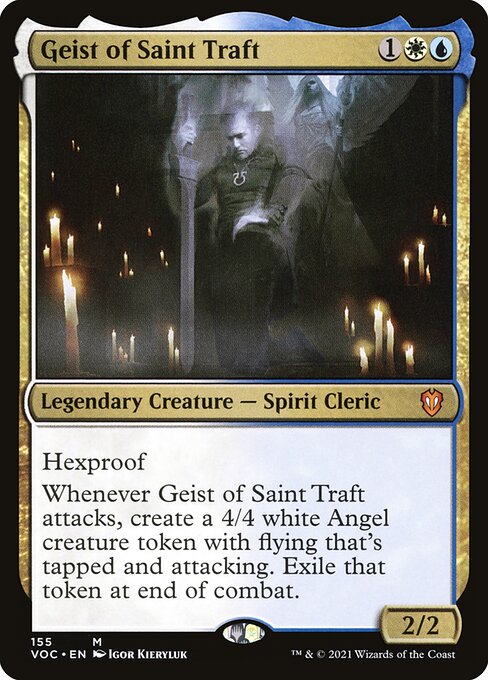 Geist of Saint Traft
Hexproof (This creature can't be the target of spells or abilities your opponents control.)
Geist of Saint Traft
Hexproof (This creature can't be the target of spells or abilities your opponents control.)
Whenever Geist of Saint Traft attacks, create a 4/4 white Angel creature token with flying that's tapped and attacking. Exile that token at end of combat.
into play as quickly as possible. This deck functions like an all-in combo strategy, playing upwards of 20 various Leylines. As long as you are able to begin the game with a Leyline in play and have Fragment Reality to cast, putting Geist into play turn one is trivial.
Not only was this deck extremely powerful, but it also led to relatively unpleasant gameplay experiences. Beating a turn one Geist can be very difficult for many strategies, especially when on the draw. Meanwhile, this archetype is incredibly one-dimensional, encouraging tons of mulligans until you have a hand that can “do the thing.” Sometimes, even if you managed to find an answer to Geist,
Slip Out the Back
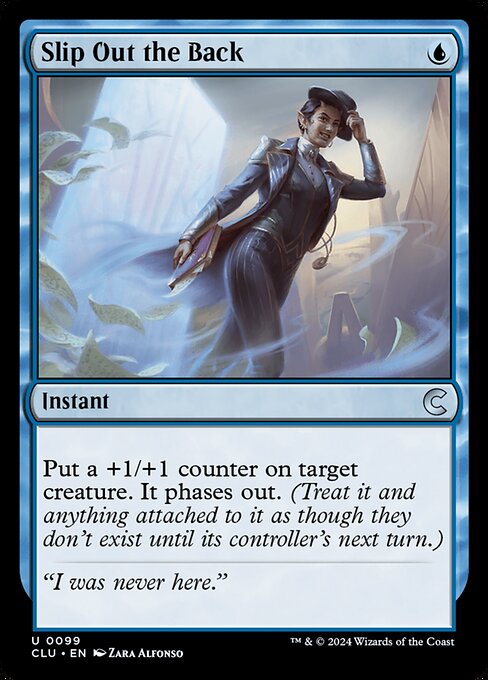 Slip Out the Back
Put a +1/+1 counter on target creature. It phases out. (Treat it and anything attached to it as though they don't exist until its controller's next turn.)
would ruin your day.
Slip Out the Back
Put a +1/+1 counter on target creature. It phases out. (Treat it and anything attached to it as though they don't exist until its controller's next turn.)
would ruin your day.

The way Fragment Reality is being rebalanced is simple. Rather than change the effect of the card, Wizards of the Coast ultimately decided to restrict the card to only target your opponent’s permanents. This seems like a strong change, as it removes the broken nature of the card while still leaving room for players to utilize it as a removal spell.
Read More: MTG Secret Lair Misprint Commands 14575% Premium Over Existing Variant
Geological Appraiser
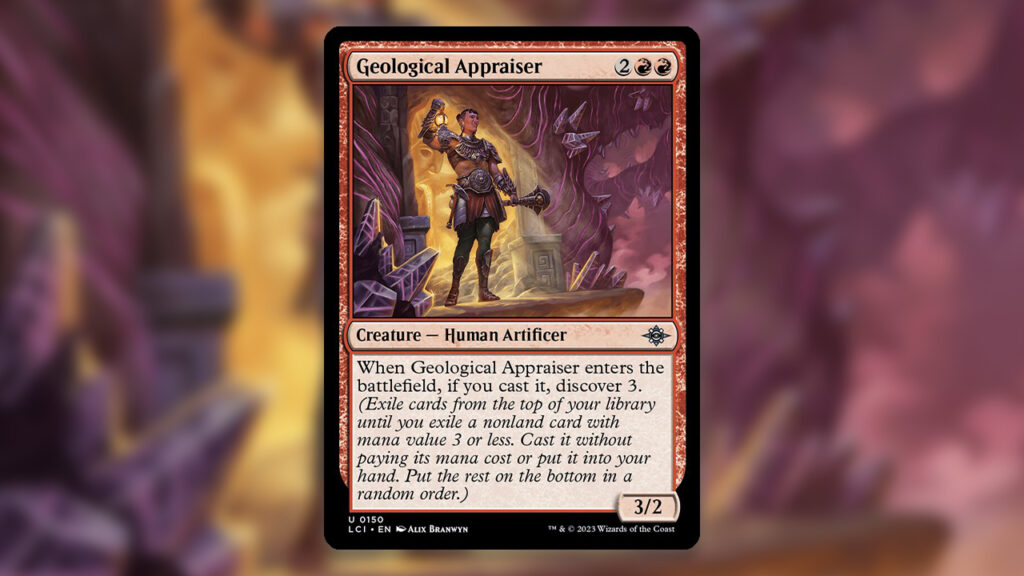
The other card that saw a rebalance today was Geological Appraiser. Once again, while this change is labeled as an Alchemy rebalance, it seemingly will affect Historic the most. Geological Appraiser is an incredibly strong combo card that got banned rather quickly in Pioneer. The Pioneer and Historic versions of Discover combo were actually pretty similar at the time, utilizing the power of
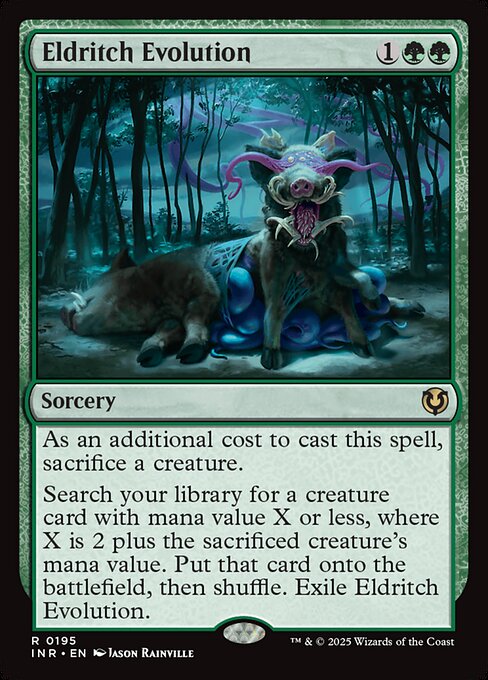
Eldritch Evolution
 Eldritch Evolution
As an additional cost to cast this spell, sacrifice a creature.
Eldritch Evolution
As an additional cost to cast this spell, sacrifice a creature.
Search your library for a creature card with mana value X or less, where X is 2 plus the sacrificed creature's mana value. Put that card onto the battlefield, then shuffle. Exile Eldritch Evolution.
and
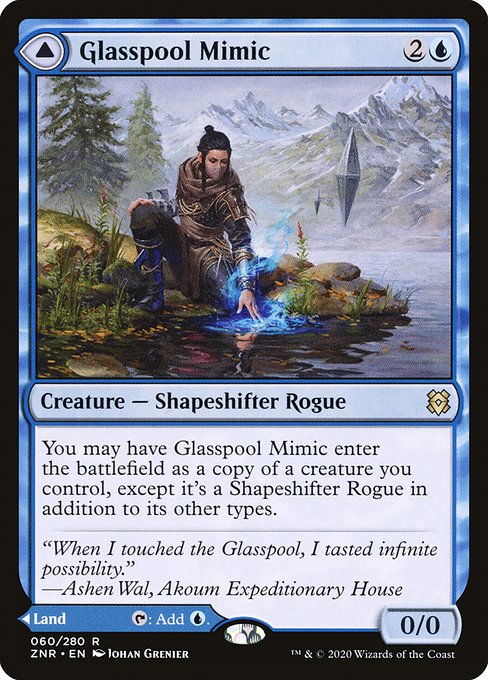
Glasspool Mimic
 Glasspool Mimic
You may have this creature enter as a copy of a creature you control, except it's a Shapeshifter Rogue in addition to its other types.
.
Glasspool Mimic
You may have this creature enter as a copy of a creature you control, except it's a Shapeshifter Rogue in addition to its other types.
.
The deck’s main gameplan was to first resolve a copy of Geological Appraiser. From there, you were guaranteed to reveal either a
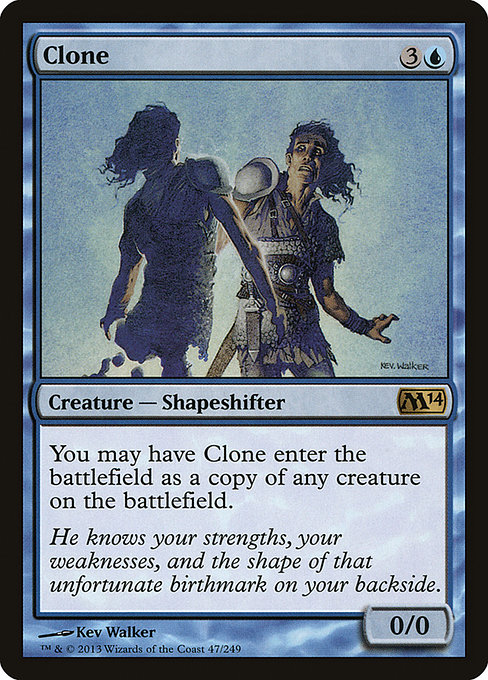
Clone
 Clone
You may have this creature enter as a copy of any creature on the battlefield.
variant or Eldritch Evolution. If you revealed a Clone variant, you would just get another copy of Appraiser and Discover 3 once again. Otherwise, you would search for
Trumpeting Carnosaur
Clone
You may have this creature enter as a copy of any creature on the battlefield.
variant or Eldritch Evolution. If you revealed a Clone variant, you would just get another copy of Appraiser and Discover 3 once again. Otherwise, you would search for
Trumpeting Carnosaur
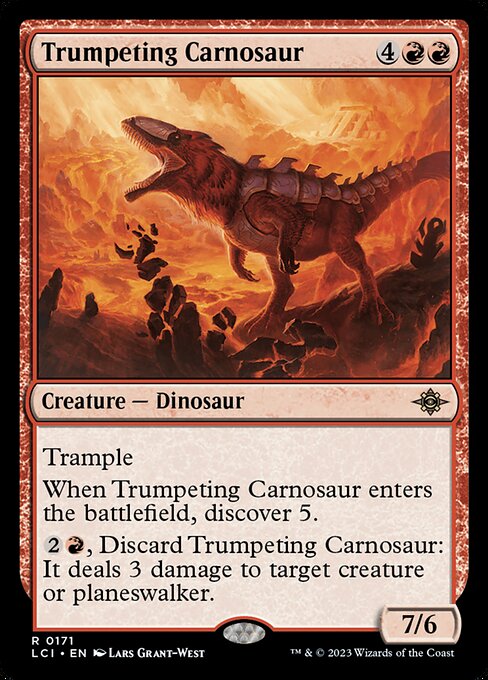 Trumpeting Carnosaur
Trample
Trumpeting Carnosaur
Trample
When this creature enters, discover 5.
{2}{R}, Discard this card: It deals 3 damage to target creature or planeswalker.
and Discover 5, opening the door for you to reveal Geological Appraiser, too.
Assuming you don’t get unlucky and burn through all of your copies of Eldritch Evolution right away, you will end up with a big board of Creatures. Eventually, your last copy of Eldritch Evolution can find
Doomskar Titan
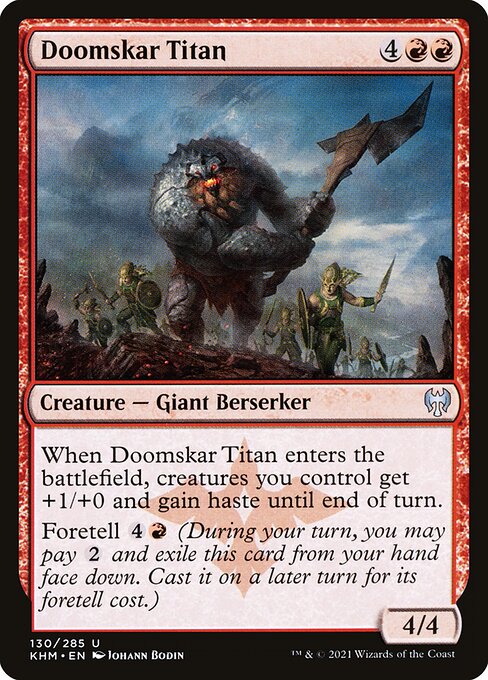 Doomskar Titan
When this creature enters, creatures you control get +1/+0 and gain haste until end of turn.
Doomskar Titan
When this creature enters, creatures you control get +1/+0 and gain haste until end of turn.
Foretell {4}{R} (During your turn, you may pay {2} and exile this card from your hand face down. Cast it on a later turn for its foretell cost.)
, allowing you to attack for lethal. This deck was not only strong, but also pretty fast. While you couldn’t play any other cards with mana value three or less for fear of breaking up your own combo, cards like
Magma Opus
 Magma Opus
 deals 4 damage divided as you choose among any number of targets. Tap two target permanents. Create a 4/4 blue and red Elemental creature token. Draw two cards.
Magma Opus
Magma Opus deals 4 damage divided as you choose among any number of targets. Tap two target permanents. Create a 4/4 blue and red Elemental creature token. Draw two cards.
{U/R}{U/R}, Discard this card: Create a Treasure token.
could still help you ramp into Geological Appraiser a turn early.

Ultimately, the change that was made on MTG Arena is that Geological Appraiser now costs five mana instead of four. At minimum, this slows down the deck’s combo potential by a full turn, which is quite significant. The goal here was to make Discover combo decks a little less aggressive without completely removing their existence from Historic.
Read More: MTG Legendary Otter Spoiler is an Amazing Spellslinger Commander!
Will These Cards Still See Play?
This time around, these Alchemy rebalance decisions appear to be perfectly reasonable. Sometimes, the rebalances remove too much of what made certain cards powerful in the first place to the point where they end up seeing virtually no competitive player moving forward. Take
Orcish Bowmasters
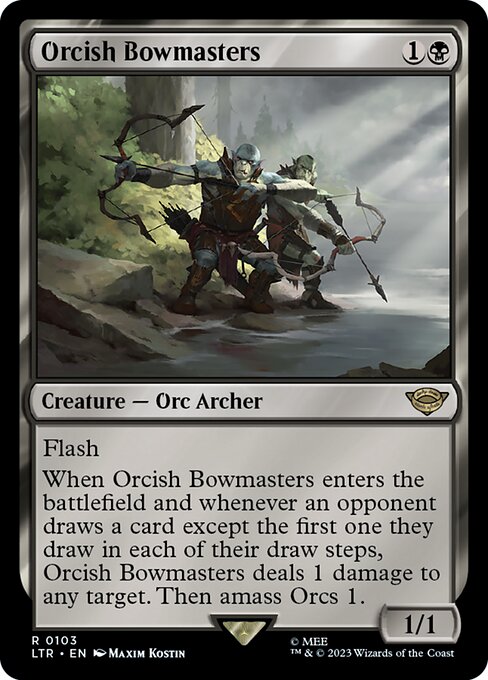 Orcish Bowmasters
Flash
Orcish Bowmasters
Flash
When this creature enters and whenever an opponent draws a card except the first one they draw in each of their draw steps, this creature deals 1 damage to any target. Then amass Orcs 1.
, for example. This card was absurdly strong in Historic, but since the removal of the enters-the-battlefield effect from it, the card has been nowhere to be found in the format.
Obviously, in the case of Fragment Reality, the Leyline combo deck in its current iteration is gone. However, some Historic strategies like Jeskai control already utilized Fragment Reality as a basic removal spell. The downside, of course, is that even if you remove an opponent’s threat, they may be able to replace it with a Creature of lesser mana value from their deck. Still, the card answers problematic one-drops like
Esper Sentinel
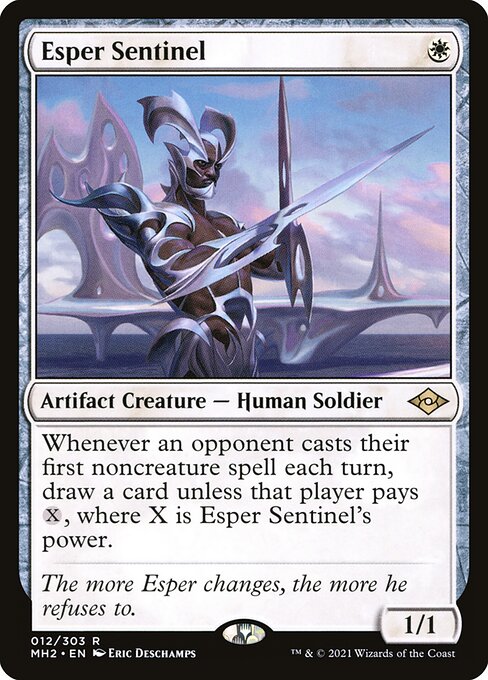 Esper Sentinel
Whenever an opponent casts their first noncreature spell each turn, draw a card unless that player pays {X}, where X is this creature's power.
effectively, and its efficient nature works well in conjunction with
Snapcaster Mage
Esper Sentinel
Whenever an opponent casts their first noncreature spell each turn, draw a card unless that player pays {X}, where X is this creature's power.
effectively, and its efficient nature works well in conjunction with
Snapcaster Mage
 Snapcaster Mage
Flash
Snapcaster Mage
Flash
When this creature enters, target instant or sorcery card in your graveyard gains flashback until end of turn. The flashback cost is equal to its mana cost. (You may cast that card from your graveyard for its flashback cost. Then exile it.)
.
In the case of Geological Appraiser, delaying the combo a turn doesn’t necessarily mean that a similar deck won’t see play. Between Appraiser, Carnosaur, and
Pantlaza, Sun-Favored
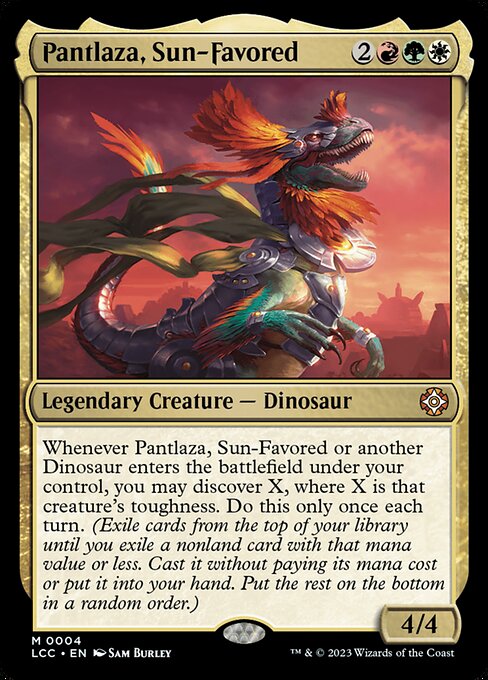 Pantlaza, Sun-Favored
Whenever Pantlaza or another Dinosaur you control enters, you may discover X, where X is that creature's toughness. Do this only once each turn. (Exile cards from the top of your library until you exile a nonland card with that mana value or less. Cast it without paying its mana cost or put it into your hand. Put the rest on the bottom in a random order.)
, the deck can still execute the combo relatively consistently. All things considered, these changes feel like decent ways to address two problematic combo cards without outright removing them from Historic and beyond. It’ll be interesting to see how these changes end up affecting various metagames on Arena in the near future.
Pantlaza, Sun-Favored
Whenever Pantlaza or another Dinosaur you control enters, you may discover X, where X is that creature's toughness. Do this only once each turn. (Exile cards from the top of your library until you exile a nonland card with that mana value or less. Cast it without paying its mana cost or put it into your hand. Put the rest on the bottom in a random order.)
, the deck can still execute the combo relatively consistently. All things considered, these changes feel like decent ways to address two problematic combo cards without outright removing them from Historic and beyond. It’ll be interesting to see how these changes end up affecting various metagames on Arena in the near future.
Read More: 105 Missing MTG Arena Cards Discovered by Players