


Introduction
Power Creep is a term that is used to describe when the power level of a game rises as time goes by. When Magic began in 1993, the card
Savannah Lions
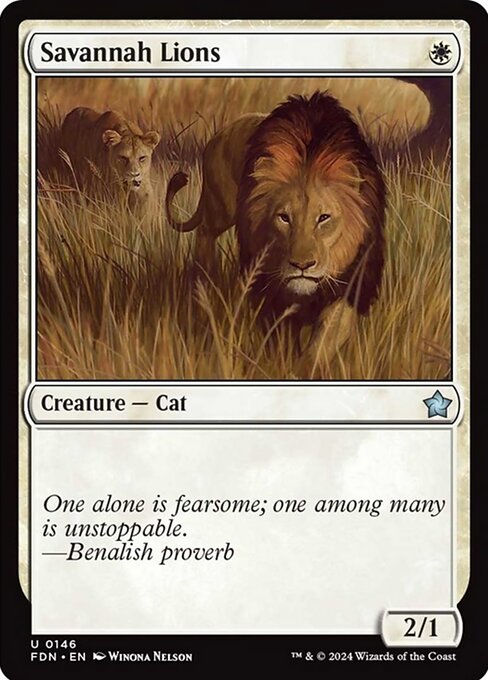 Savannah Lions
was the most powerful low-cost creature around, as a 2/1 for one White mana. The card was printed as a Rare and remained at that rarity until it was dropped to Common in 2018 when it was reprinted in Masters 25.
Savannah Lions
was the most powerful low-cost creature around, as a 2/1 for one White mana. The card was printed as a Rare and remained at that rarity until it was dropped to Common in 2018 when it was reprinted in Masters 25.
The power of Savannah Lions has been eclipsed in recent years. It is certainly no longer the best one-drop of all time. There are several strictly better versions of the card like
Recruitment Officer
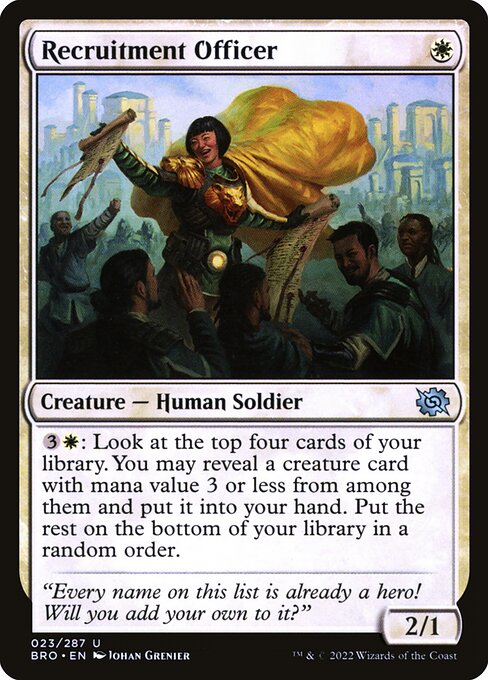 Recruitment Officer
{3}{W}: Look at the top four cards of your library. You may reveal a creature card with mana value 3 or less from among them and put it into your hand. Put the rest on the bottom of your library in a random order.
and
Usher of the Fallen
Recruitment Officer
{3}{W}: Look at the top four cards of your library. You may reveal a creature card with mana value 3 or less from among them and put it into your hand. Put the rest on the bottom of your library in a random order.
and
Usher of the Fallen
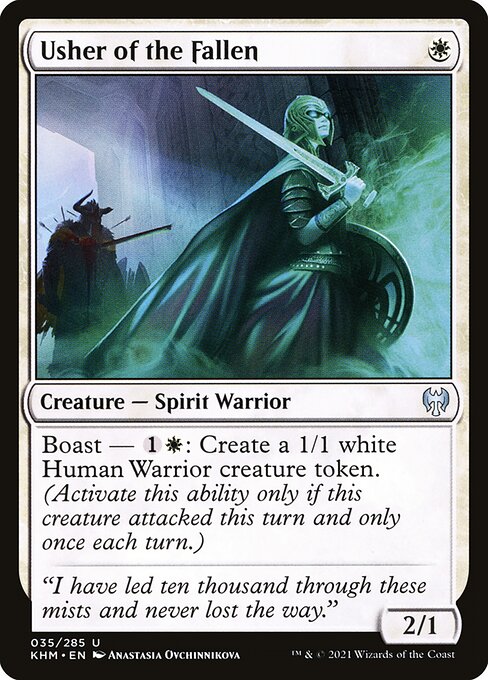 Usher of the Fallen
Boast — {1}{W}: Create a 1/1 white Human Warrior creature token. (Activate only if this creature attacked this turn and only once each turn.)
. To say nothing of
Ragavan, Nimble Pilferer
Usher of the Fallen
Boast — {1}{W}: Create a 1/1 white Human Warrior creature token. (Activate only if this creature attacked this turn and only once each turn.)
. To say nothing of
Ragavan, Nimble Pilferer
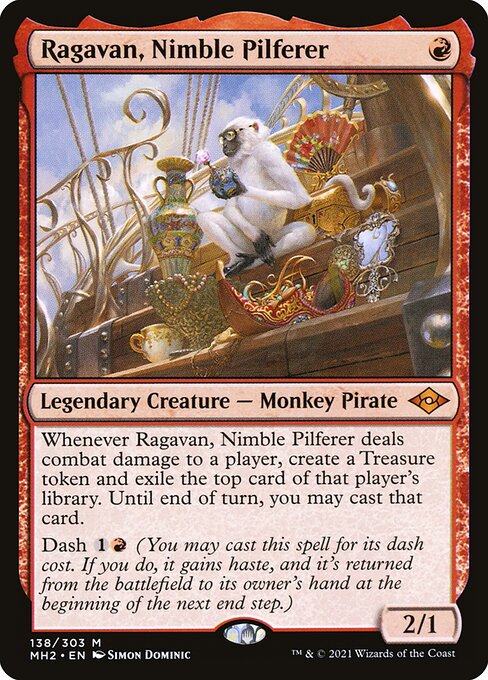 Ragavan, Nimble Pilferer
Whenever Ragavan deals combat damage to a player, create a Treasure token and exile the top card of that player's library. Until end of turn, you may cast that card.
Ragavan, Nimble Pilferer
Whenever Ragavan deals combat damage to a player, create a Treasure token and exile the top card of that player's library. Until end of turn, you may cast that card.
Dash {1}{R} (You may cast this spell for its dash cost. If you do, it gains haste, and it's returned from the battlefield to its owner's hand at the beginning of the next end step.)
the game’s most infamous 2/1 for one.
The card
Boon-Bringer Valkyrie
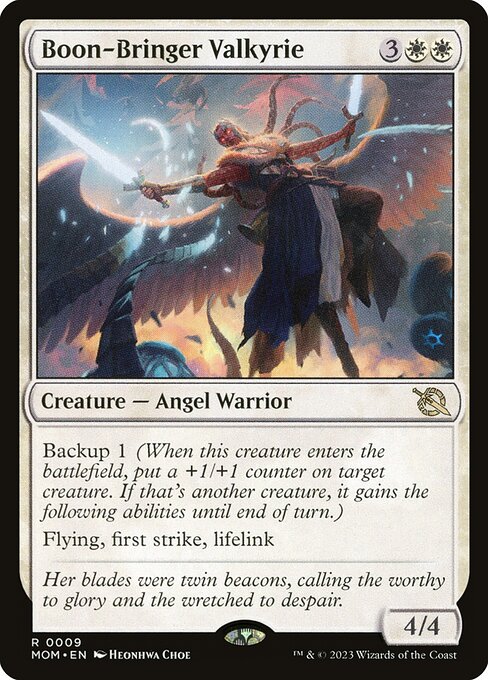 Boon-Bringer Valkyrie
Backup 1 (When this creature enters, put a +1/+1 counter on target creature. If that's another creature, it gains the following abilities until end of turn.)
Boon-Bringer Valkyrie
Backup 1 (When this creature enters, put a +1/+1 counter on target creature. If that's another creature, it gains the following abilities until end of turn.)
Flying, first strike, lifelink
, from March of the Machine offers an interesting case study of Power Creep in Magic: the Gathering. This is not because the card is very powerful, although it is an exceedingly strong pick in March of the Machine Limited, but rather because, despite its strength, it has currently had essentially no competitive impact whatsoever. Especially when compared to
Baneslayer Angel
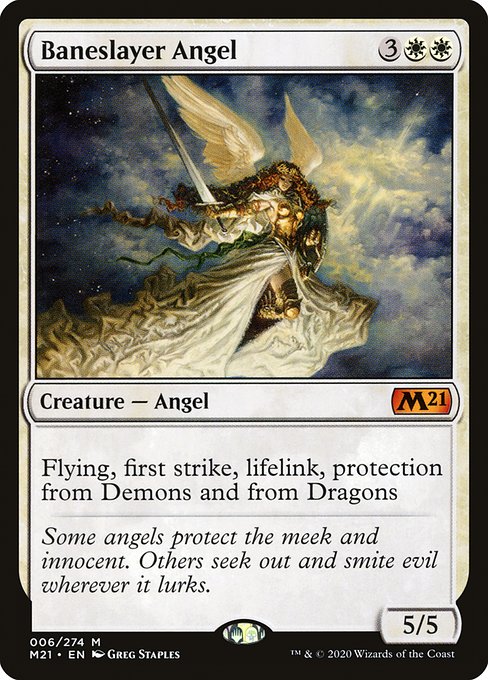 Baneslayer Angel
Flying, first strike, lifelink, protection from Demons and from Dragons
, its predecessor, and a card that had a huge tournament presence during its time.
Baneslayer Angel
Flying, first strike, lifelink, protection from Demons and from Dragons
, its predecessor, and a card that had a huge tournament presence during its time.
Boon-Bringer Valkyrie vs Baneslayer Angel

For five mana, Boon-Bringer Valkyrie is a 4/4 Angel with Flying, First Strike, Lifelink, and Backup 1. It is exceedingly similar to Baneslayer Angel which debuted in Magic 2010. Like Boon-Bringer Valkyrie, Baneslayer is also a five mana Angel with Flying, First Strike, and Lifelink. Baneslayer Angel is a 5/5, rather than a 4/4, but Boon-Bringer Valkyrie makes up for this thanks to its Backup ability. Backup allows Boon-Bringer Valkyrie to provide all of its abilities, along with a +1/+1 counter, to another creature in play. This means that Boon-Bringer, like Baneslayer, provides 5/5 worth of stats as it enters play. This has the potential to be is hugely impactful. Even in a scenario where Boon-Bringer Valkyrie enters play alone, It can still back itself up and become a 5/5. While Baneslayer Angel does not have Backup, it does have protection from Demons and Dragons a situational bonus, that keeps it safe from some powerful Black and Red threats.
The two cards are of, roughly, equivalent strength. The major difference between them is that Boon-Bringer Valkyrie was released more than a decade later than Baneslayer. Due to the increase in the game’s power level in the years separating these two cards, Boon-Bringer Valkyrie has largely been ignored outside of Limited, whilst Baneslayer is one of the game’s most famous cards. At the height of its value in April of 2019, Baneslayer was worth $17.78. Boon-Bringer Valkyrie, in contrast, has currently not been worth more than a dollar since the release of March of the Machine earlier this month.
The Game’s Power Level Marches On
In Magic 2010 which, despite its name, was released in 2009 the Modern format did not yet exist, let alone Pioneer. Baneslayer was released in this set, and it was printed into a world where high-cost cards were simply more viable and games tended to last longer. In the years since, an increasing number of powerful, and low-cost, threats have raised the speed of the game dramatically. Cards like
Luminarch Aspirant
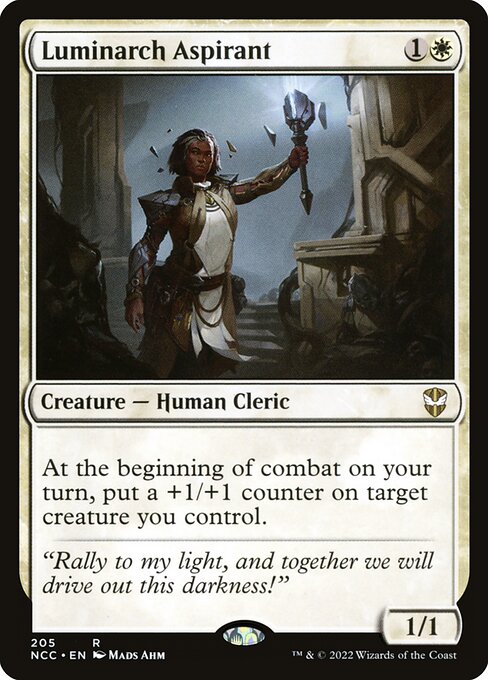 Luminarch Aspirant
At the beginning of combat on your turn, put a +1/+1 counter on target creature you control.
, Monastary Swiftspear and of course
Ragavan, Nimble Pilferer
Ragavan, Nimble Pilferer
Whenever Ragavan deals combat damage to a player, create a Treasure token and exile the top card of that player's library. Until end of turn, you may cast that card.
Luminarch Aspirant
At the beginning of combat on your turn, put a +1/+1 counter on target creature you control.
, Monastary Swiftspear and of course
Ragavan, Nimble Pilferer
Ragavan, Nimble Pilferer
Whenever Ragavan deals combat damage to a player, create a Treasure token and exile the top card of that player's library. Until end of turn, you may cast that card.
Dash {1}{R} (You may cast this spell for its dash cost. If you do, it gains haste, and it's returned from the battlefield to its owner's hand at the beginning of the next end step.)
have all played their part in this. This means that for a card that costs five or more mana to see play, it can’t just be a powerful bomb, but needs to be game-winningly good like
Ugin, the Spirit Dragon
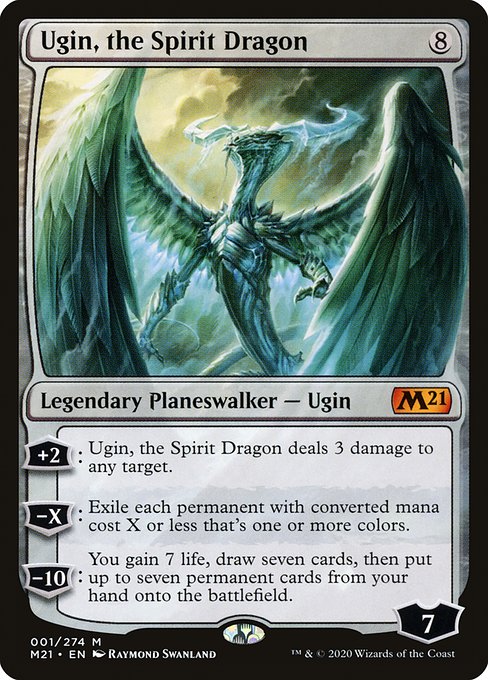 Ugin, the Spirit Dragon
+2: Ugin deals 3 damage to any target.
Ugin, the Spirit Dragon
+2: Ugin deals 3 damage to any target.
−X: Exile each permanent with mana value X or less that's one or more colors.
−10: You gain 7 life, draw seven cards, then put up to seven permanent cards from your hand onto the battlefield.
. Expensive cards can also see play, if they possess a way of bringing their cost down sharply like Murktide Reagent.
Boon-Bringer Valkyrie’s failure to attract much competitive interest is far from the only symptom of this. In fact, Baneslayer was reprinted in Core Set 2021 and, despite some initial hype for its re-release, barely saw any Standard play at that time. Perhaps the game is simply moving too fast for cards like these to succeed anymore.
Conclusion

The different reception these two cards received, demonstrates the growing power of Magic: the Gathering cards over time. It is perhaps unavoidable that in a game with thirty years of history behind it like Magic: the Gathering the power would need to be gradually raised to ensure players maintain an interest in buying new sets. Hopefully, Wizards of the Coast have a good handle on Power Creep and will ensure that it doesn’t accelerate ahead too quickly in the future.
Whatever the case, at least Baneslayer Angel and Boon-Bringer Valkyrie are both faring better than the original five mana Angel
Serra Angel
 Serra Angel
Flying
Serra Angel
Flying
Vigilance (Attacking doesn't cause this creature to tap.)
which, for all of its iconic status, has been bumped down to Uncommon and left on the wayside.
Read more: MTG Players Baffled as Major Character Turns Into a Boat?!