


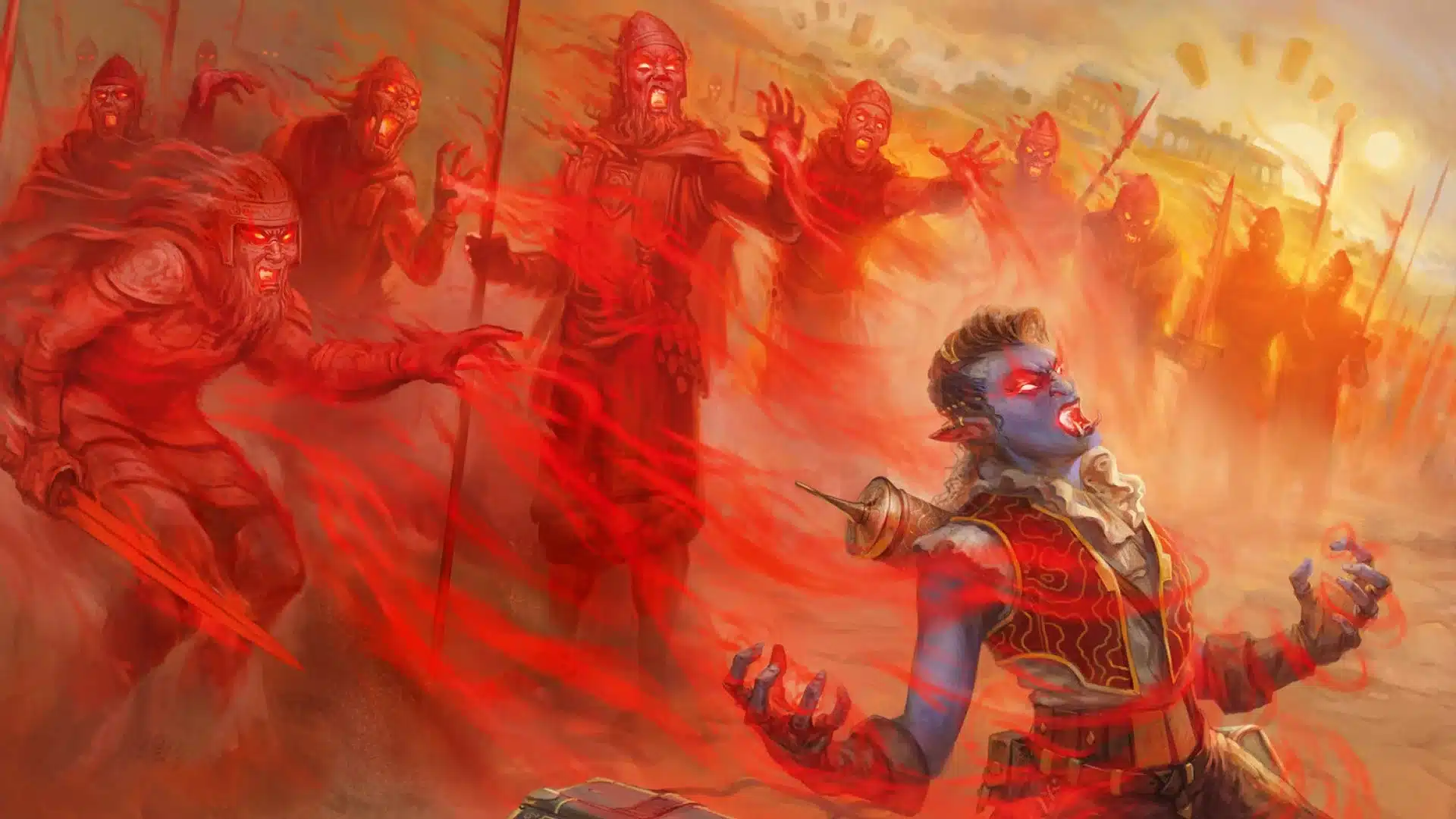

Now that it’s the most popular Magic format by far, Commander is no stranger to controversy. Whether it’s calls for bans on overpowered cards, or concerns about pricey auto-includes, the Commander community often has a bone to pick. This week, MTG players are coming together to discuss their shared dislike of
Fog
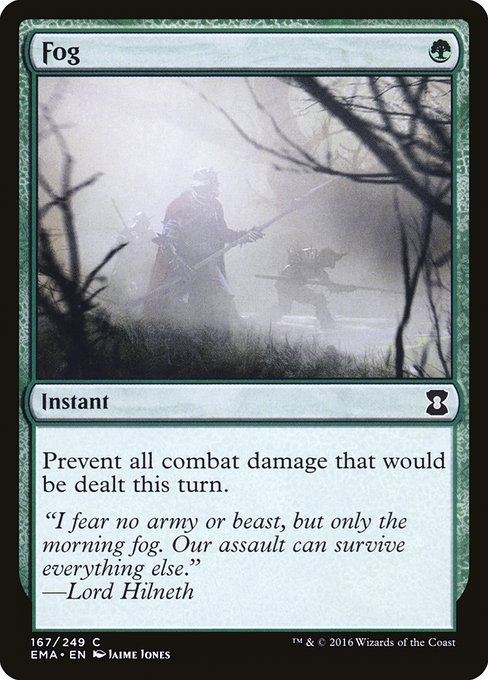 Fog
Prevent all combat damage that would be dealt this turn.
effects like
Glacial Chasm
Fog
Prevent all combat damage that would be dealt this turn.
effects like
Glacial Chasm
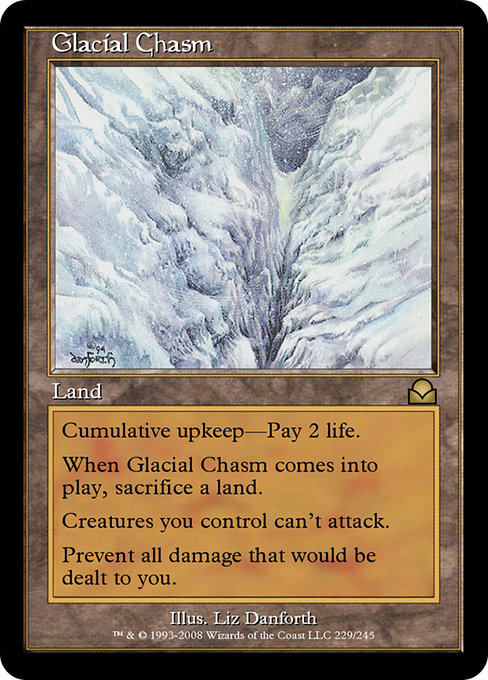 Glacial Chasm
Cumulative upkeep—Pay 2 life. (At the beginning of your upkeep, put an age counter on this permanent, then sacrifice it unless you pay its upkeep cost for each age counter on it.)
Glacial Chasm
Cumulative upkeep—Pay 2 life. (At the beginning of your upkeep, put an age counter on this permanent, then sacrifice it unless you pay its upkeep cost for each age counter on it.)
When this land enters, sacrifice a land.
Creatures you control can't attack.
Prevent all damage that would be dealt to you.
, and the problem they cause in the Commander format.
The Problem With Glacial Chasm and Fog Effects in MTG
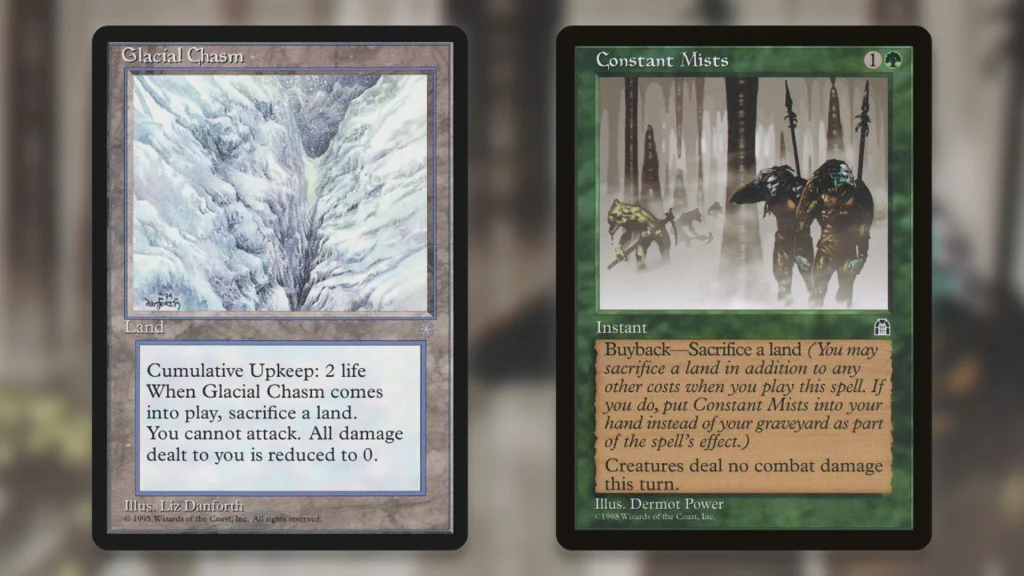
MTG player PolarPenguin_ kicked off this conversation on r/magicTCG earlier today with a simple question: Why do Fog effects make people salty? While some players in the thread, like KaizerVonLoopy, had positive things to say about this effect type, the prevailing opinion mostly matched the initial question.
In terms of reasoning, respondents to PolarPenguin_’s thread had a range of issues with Fogs in Commander. For many, the problem is one of anticlimax: you spend time building up a lethal board presence, then a single card cancels out your big alpha strike, leaving you vulnerable. It’s actually a fairly similar dynamic to countermagic, but for combat, as HarpEgirl noted. Given how many players find those cards frustrating, it’s not surprising a similar dynamic exists with Fogs.
This issue is exacerbated by the trend towards combat-focused strategies at lower-bracket Commander tables. As ItsMeDardroth pointed out, most decks at this level rely entirely on alpha strikes to close out games, lacking the typical combos you see in higher brackets. Shutting down this single avenue to victory, an avenue that many consider the most “fair” way to win games, no less, feels understandably annoying for those affected.
These are all criticisms of Fog effects in general, but many in PolarPenguin_’s thread singled out a few examples in particular:
Glacial Chasm
Glacial Chasm
Cumulative upkeep—Pay 2 life. (At the beginning of your upkeep, put an age counter on this permanent, then sacrifice it unless you pay its upkeep cost for each age counter on it.)
When this land enters, sacrifice a land.
Creatures you control can't attack.
Prevent all damage that would be dealt to you.
,
Constant Mists
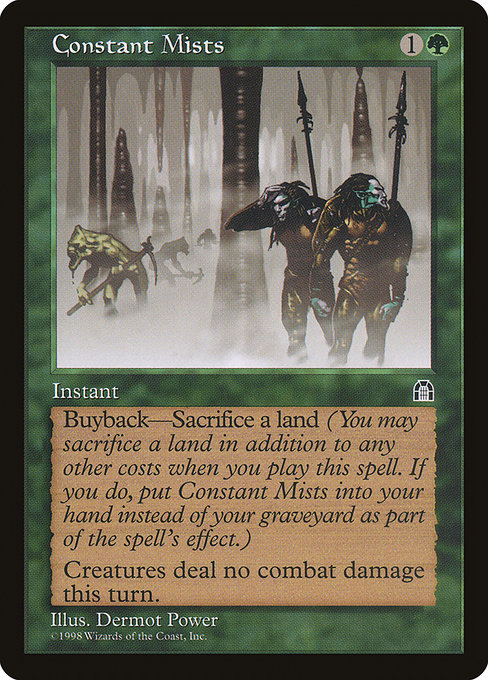 Constant Mists
Buyback—Sacrifice a land. (You may sacrifice a land in addition to any other costs as you cast this spell. If you do, put this card into your hand as it resolves.)
Constant Mists
Buyback—Sacrifice a land. (You may sacrifice a land in addition to any other costs as you cast this spell. If you do, put this card into your hand as it resolves.)
Prevent all combat damage that would be dealt this turn.
, and
Spore Frog
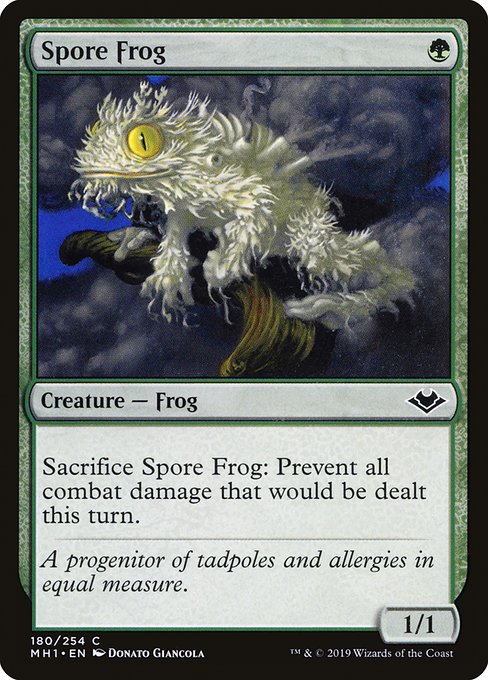 Spore Frog
Sacrifice this creature: Prevent all combat damage that would be dealt this turn.
. What sets this trio apart from other Fogs is that they can easily be repeated. In land-focused decks, it’s trivial to loop both Chasm and Mists, and you can do the same with Spore Frog in decks like
Muldrotha, the Gravetide
Spore Frog
Sacrifice this creature: Prevent all combat damage that would be dealt this turn.
. What sets this trio apart from other Fogs is that they can easily be repeated. In land-focused decks, it’s trivial to loop both Chasm and Mists, and you can do the same with Spore Frog in decks like
Muldrotha, the Gravetide
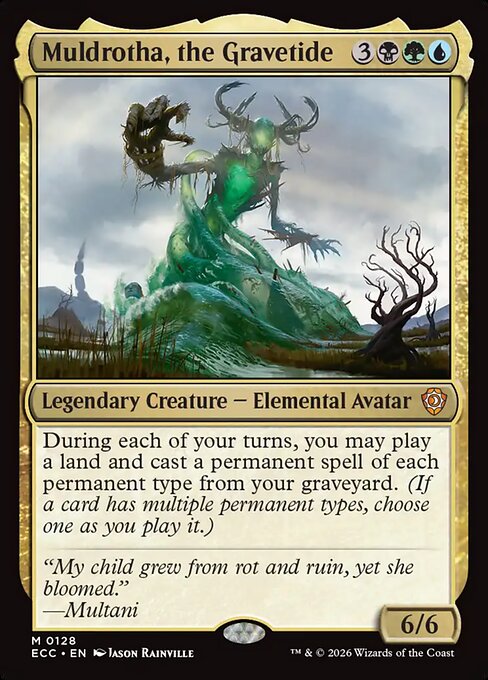 Muldrotha, the Gravetide
During each of your turns, you may play a land and cast a permanent spell of each permanent type from your graveyard. (If a card has multiple permanent types, choose one as you play it.)
.
Muldrotha, the Gravetide
During each of your turns, you may play a land and cast a permanent spell of each permanent type from your graveyard. (If a card has multiple permanent types, choose one as you play it.)
.
In these scenarios, Fog effects go from frustrating one-off plays to extended locks, greatly exacerbating the issues already discussed. Just as players hate land-destruction effects like
Armageddon
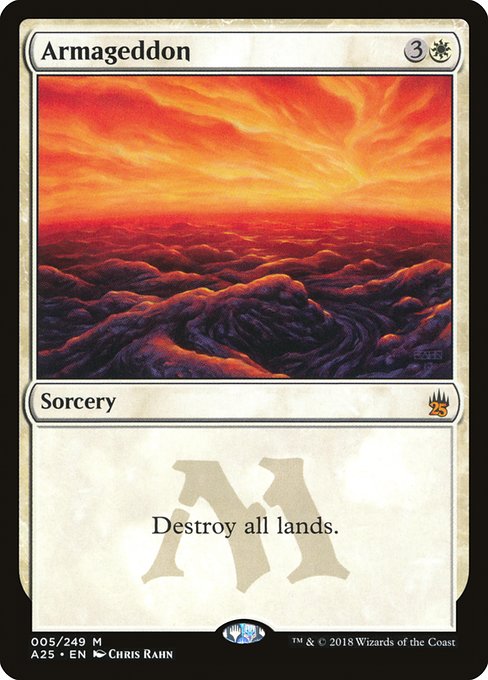 Armageddon
Destroy all lands.
for their purely negative impact on a game, so too do they hate recurring Fogs for the same reasons.
Armageddon
Destroy all lands.
for their purely negative impact on a game, so too do they hate recurring Fogs for the same reasons.
Be Part of the Solution
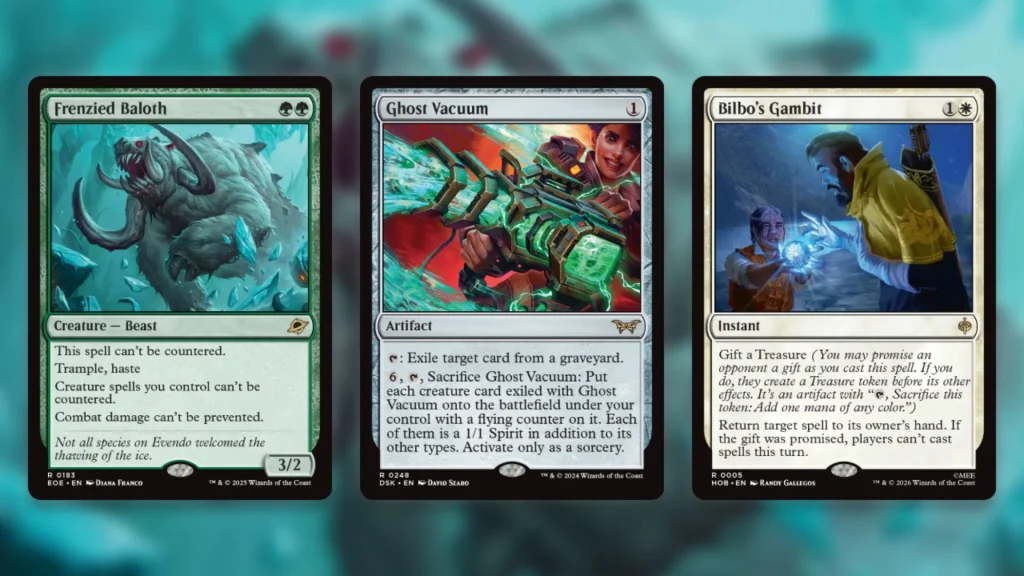
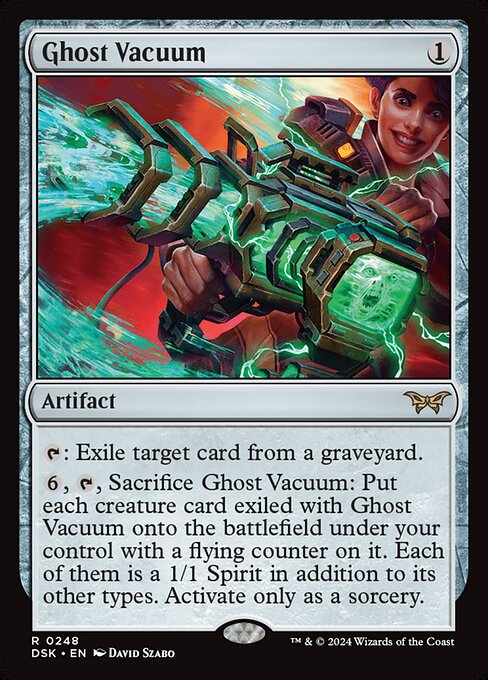
While Fog effects can certainly be salt-inducing, plenty of options exist for playing around them. For the three recurring Fogs, the best counter is instant-speed graveyard hate like
Ghost Vacuum
 Ghost Vacuum
{T}: Exile target card from a graveyard.
Ghost Vacuum
{T}: Exile target card from a graveyard.
{6}, {T}, Sacrifice this artifact: Put each creature card exiled with this artifact onto the battlefield under your control with a flying counter on it. Each of them is a 1/1 Spirit in addition to its other types. Activate only as a sorcery.
. This lets you remove the Fog permanently, so you won’t have to deal with it even if your other countermeasures are disrupted.
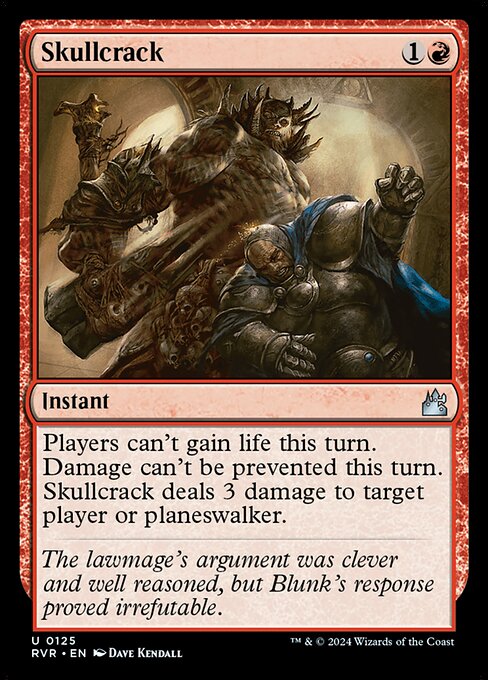
For Fogs in general, “damage can’t be prevented” effects are probably your best option, essentially negating Fogs completely just by existing. Most of these effects are in red, with cards like
Skullcrack
 Skullcrack
Players can't gain life this turn. Damage can't be prevented this turn. Skullcrack deals 3 damage to target player or planeswalker.
providing the effect for one turn, and others like
Spider-Punk
Skullcrack
Players can't gain life this turn. Damage can't be prevented this turn. Skullcrack deals 3 damage to target player or planeswalker.
providing the effect for one turn, and others like
Spider-Punk
 Spider-Punk
Riot (This creature enters with your choice of a +1/+1 counter or haste.)
Spider-Punk
Riot (This creature enters with your choice of a +1/+1 counter or haste.)
Other Spiders you control have riot.
Spells and abilities can't be countered.
Damage can't be prevented.
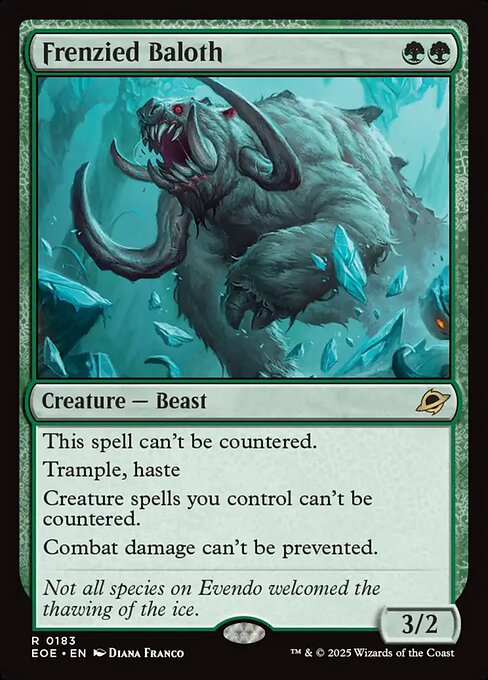
offering it more permanently. Green gets a couple of bangers here as well in
Frenzied Baloth
 Frenzied Baloth
This spell can't be countered.
Frenzied Baloth
This spell can't be countered.
Trample, haste
Creature spells you control can't be countered.
Combat damage can't be prevented.
and
Questing Beast
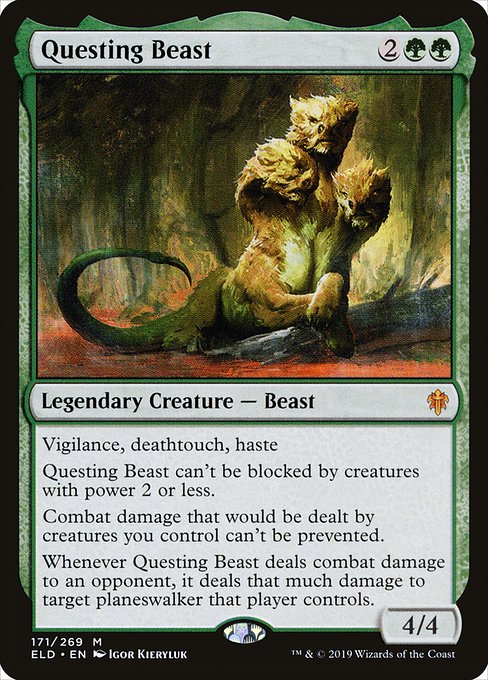 Questing Beast
Vigilance, deathtouch, haste
Questing Beast
Vigilance, deathtouch, haste
Questing Beast can't be blocked by creatures with power 2 or less.
Combat damage that would be dealt by creatures you control can't be prevented.
Whenever Questing Beast deals combat damage to an opponent, it deals that much damage to target planeswalker that player controls.
.
Everlasting Torment
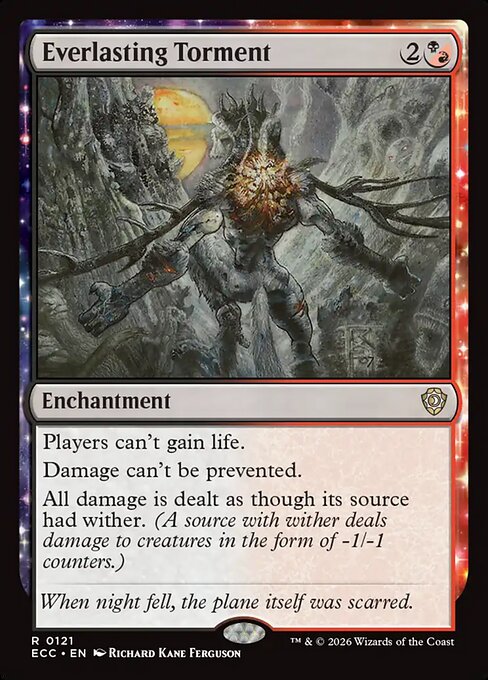 Everlasting Torment
Players can't gain life.
Everlasting Torment
Players can't gain life.
Damage can't be prevented.
All damage is dealt as though its source had wither. (A source with wither deals damage to creatures in the form of -1/-1 counters.)
deserves a special mention, too, for bringing the effect on a resilient enchantment.
Outside of red and green, pickings are far slimmer for anti-Fog tech. White still has options, though, with its array of
Grand Abolisher
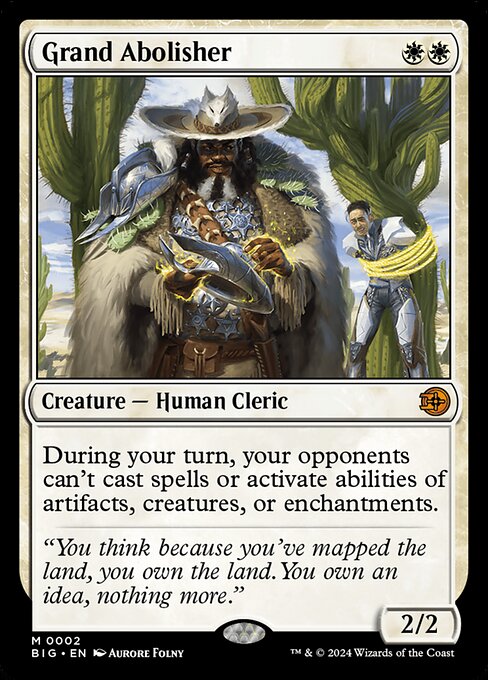 Grand Abolisher
During your turn, your opponents can't cast spells or activate abilities of artifacts, creatures, or enchantments.
-type creatures preventing most Fogs on your turn. You can also lean into countermagic, with ‘delay’-style counterspells, such as
Remand
Grand Abolisher
During your turn, your opponents can't cast spells or activate abilities of artifacts, creatures, or enchantments.
-type creatures preventing most Fogs on your turn. You can also lean into countermagic, with ‘delay’-style counterspells, such as
Remand
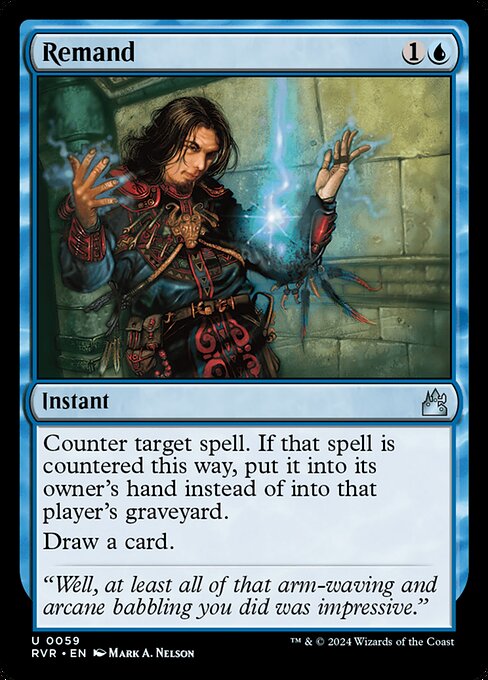 Remand
Counter target spell. If that spell is countered this way, put it into its owner's hand instead of into that player's graveyard.
Remand
Counter target spell. If that spell is countered this way, put it into its owner's hand instead of into that player's graveyard.
Draw a card.
and
Bilbo’s Gambit
 Bilbo’s Gambit
Gift a Treasure (You may promise an opponent a gift as you cast this spell. If you do, they create a Treasure token before its other effects. It's an artifact with "{T}, Sacrifice this token: Add one mana of any color.")
Bilbo’s Gambit
Gift a Treasure (You may promise an opponent a gift as you cast this spell. If you do, they create a Treasure token before its other effects. It's an artifact with "{T}, Sacrifice this token: Add one mana of any color.")
Return target spell to its owner's hand. If the gift was promised, players can't cast spells this turn.
, being particularly effective. Since you typically only need to push through a Fog once to win, the extra value here is appreciated.
What’s great about these counterplay options is that they serve other functions in your deck beyond just stopping Fogs. As several players noted in the thread, dedicating deck slots solely to dealing with these effects just isn’t feasible for most lists, so cards like these, with overlapping utility, are much better bets. Frenzied Baloth, Spider-Punk, and Grand Abolisher are particularly nice, since they also help against countermagic, dealing with two low-bracket bugbears in one slot.
Overall, while Fogs can definitely be annoying for specific decks, plenty of options exist for dealing with them, whatever colors you’re running. If you recognize your own struggles in PolarPenguin_’s thread, then consider adding one or two to your lists to give yourself an edge.
Stick with us here at mtgrocks.com: the best site for Magic: The Gathering coverage. Be sure to check out our deckbuilder for your next big brew, and our brand new MTG Rocks Podcast!