



Whichever way you slice it, getting into Magic: The Gathering in 2026 can feel pretty overwhelming. With over three decades of history and many formats to choose from, there’s a ton to know even before you play your first land.
To help ease the process, I’ve put together a list of the best MTG products new players can buy. Even if you’re a complete beginner, these will set you on the path to Magic mastery and give you a solid foundation for your collection.
Beginner Box
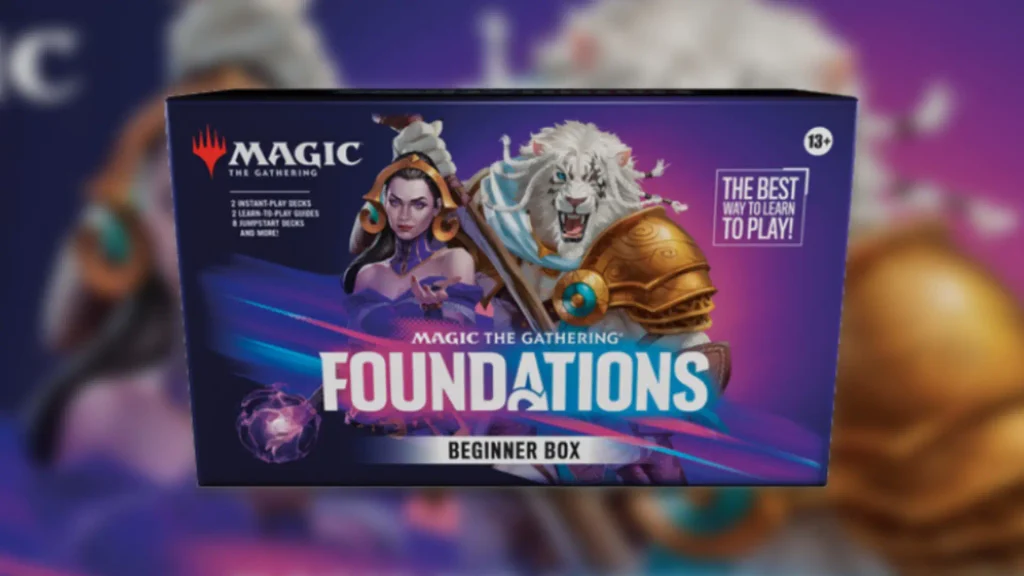
If you’re literally just starting out in MTG, then your best bet is to pick up a Beginner Box. This product is designed with the sole purpose of teaching new players the rules of the game, and it does so admirably.
Each Beginner Box comes with a number of Jumpstart-style (more on that later) decks for you to play with, two of which are specifically set up as tutorial decks. These decks are arranged in a particular order, letting you play out a pre-determined game to learn all of Magic’s core mechanics. With the included reference booklet and “how to play” guide, you should be slinging spells in no time.
Once you’ve learned the ropes, the Beginner Box also includes eight other decks you can try out to test your newly acquired skills. All of these decks are aimed at beginners, and there are enough here to accommodate two players, so the Beginner Box is ideal for learning with a friend.
Several versions of the Beginner Box are available, with the first introduced alongside 2024’s Foundations. Since then, we’ve had a couple of Universes Beyond variants, specifically Avatar: The Last Airbender and Marvel Super Heroes.
All three offer the same new player experience, just with different cards and theming. Price-wise, the Foundations Beginner Box has an MSRP of $29.99, while the other two versions go for $34.99, so if you don’t care about either Avatar or Marvel, Foundations is the best value.
Starter Kit
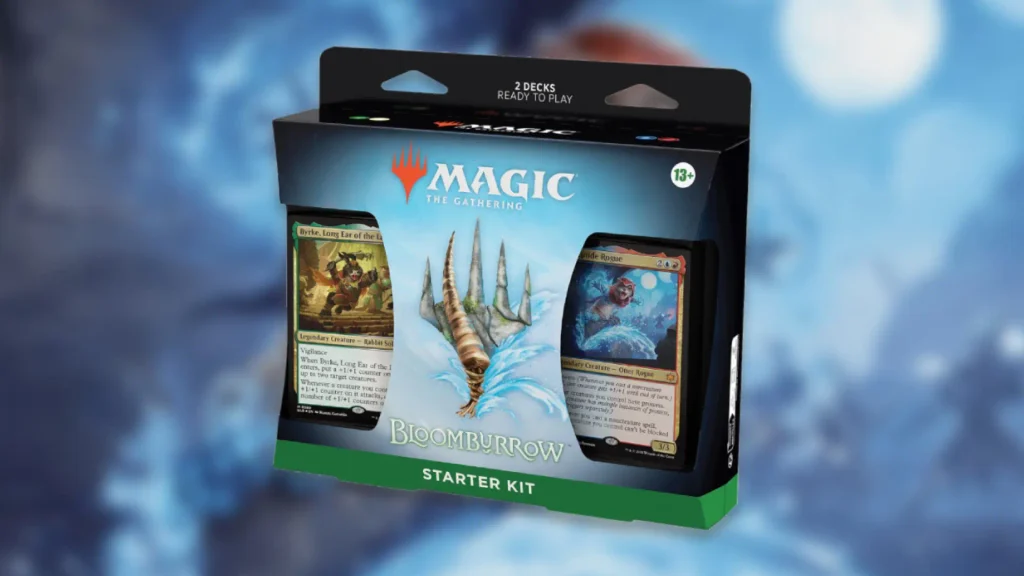
The Starter Kit is the next step up from the Beginner Box, providing two specific decks, but this time as full 60-card decks. This is a great way to get used to the typical flow of constructed Magic, since that’s the deck size all such formats use.
As with the Beginner Box, you get a “how to play” guide with each Starter Kit, plus reference cards to help you master the rules. There are no full tutorial decks here, however, so this can be a nice way to remove, or at least loosen, the training wheels somewhat.
Notably, Starter Kits also come with an MTG Arena redemption code, letting you access your decks on your Arena account if you have one. If you intend to play both digital and paper Magic, this is a big upside, as it gives your collection a nice head start in both.
There are a number of different Starter Kits available, ranging from generic lists tied to set-specific kits like Lord of the Rings and Assassin’s Creed. A few of these, Bloomburrow, Final Fantasy, and Lord of the Rings, come with exclusive cards you can’t get anywhere else, so those are the ones to grab if you don’t have a preference.
MSRP for Starter Kits is $19.99, though you can often find them for less online. These make an ideal follow-up to the Beginner Box, or even a great first step in their own right if you’re confident enough to eschew the full-on tutorial.
Jumpstart Packs
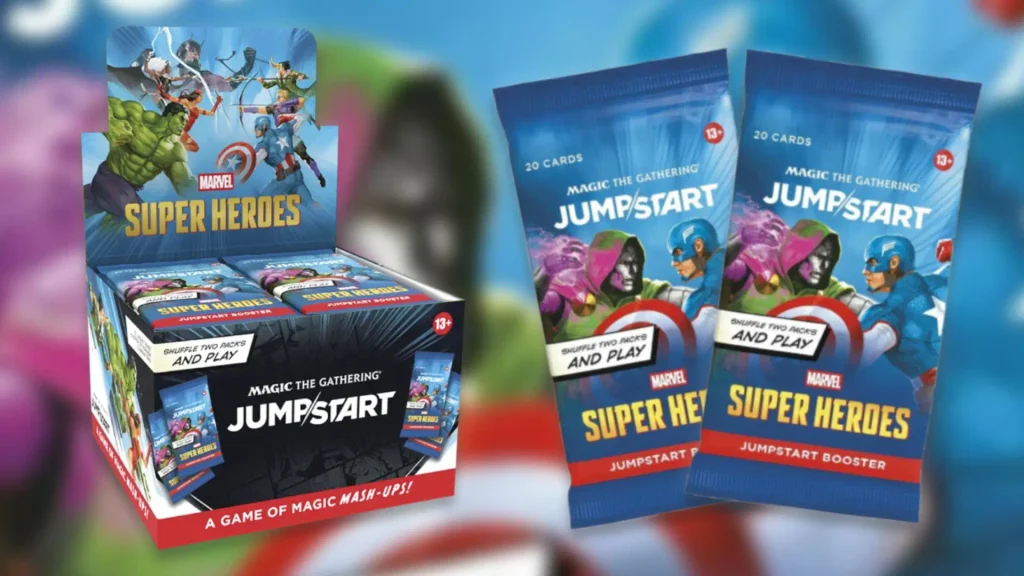
Once you’ve got a thorough grounding in Magic’s core rules, your next port of call should be Jumpstart. This is a series of sets designed for quick games, with any two packs combining to form a battle-ready 40-card deck.
There are many upsides to playing MTG this way, but the sheer accessibility is probably the biggest. All you need is four packs and a friend, and you can get a game going right away. Keep the card lists for each pack you open, and you can even take the decks apart and put them back together in different ways for variety.
Playing Jumpstart will let you explore more complex MTG mechanics and synergies, building on your core education wonderfully. It’s also a great way to get acquainted with Limited-style Magic, as it’s essentially a streamlined take on Sealed, especially if you buy a box and choose which packs to pair from a pool.
For new players, pretty much any Jumpstart set will be a great stepping stone. Some are definitely better than others, mind you, specifically those that come with new, exclusive cards. These include sets like Foundations Jumpstart and Marvel Super Heroes Jumpstart, as well as the original two Jumpstart sets from 2021 and 2022.
Playing with these Jumpstart sets will not only teach you a lot, but will also help you start building your collection. These sets contain powerful new cards, some of which can be very expensive, as well as notable reprints that can find homes in many decks. Just be wary that Jumpstart sets are eternal legal, so the cards inside aren’t playable in Standard unless they’ve also been printed in a Standard-legal set.
Commander Precons
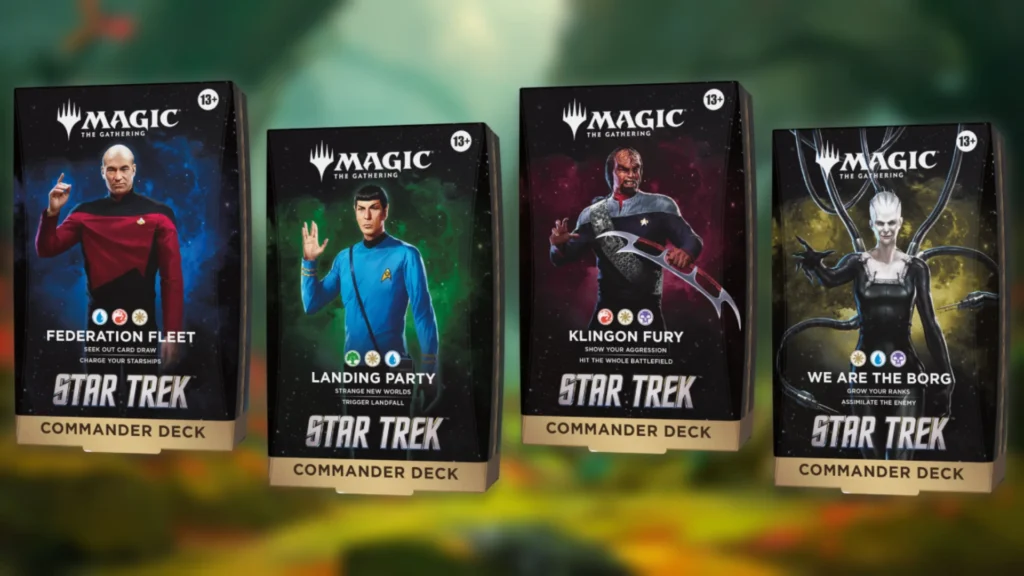
We’ve talked about 60-card and 40-card Magic, but the most popular way to play the game nowadays is 100-card Magic, or Commander. Once you understand the core rules and have a solid grasp of the mechanics from your Jumpstart games, you’re ready to try Magic’s multiplayer format with a Commander precon.
These are complete, 100-card decks, designed by Wizards to play great right out of the box. Naturally, there’s a lot of variety in power level here, and some precons are much better than others for new players. That said, you can pick up any of these and join a Commander pod right away.
As with Jumpstart, Commander precons are also a great way to build up your collection at a reasonable price. Most precons nowadays come with a solid suite of proven reprints and exciting new cards, which will serve you well when building more Commander decks in the future.
While Commander is one of the worst ways to learn MTG, with a solid foundation from the previous products we’ve discussed here, you should be able to hold your own. Since it’s so widely played, a precon deck will let you play much more Magic on average than investing in a deck for a specific constructed format. Since precons typically retail for around $49.99 (or higher for Universes Beyond decks), this is much cheaper than any other option.
Specific Singles
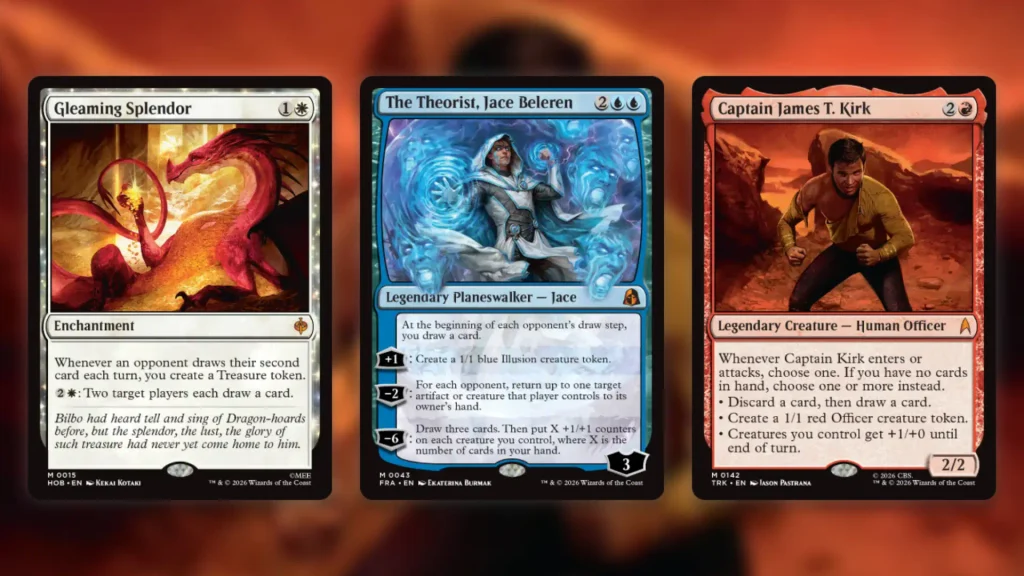
Once you’ve played your way through all the products above, your MTG education is pretty much complete. From here, you need to decide which formats you’re going to play, be it Standard or Modern, Pauper or Commander.
Whichever path you decide to take, the best product from here on out is just straight-up single cards. While buying booster packs, bundles, and other random products is exciting, it’s also incredibly wasteful financially.
Unless you’re buying in huge quantities, the chances of you getting the cards you need for a coherent deck this way are near-zero. Value-wise, you’re unlikely to make a profit buying sealed product, and even if you do, the valuable cards you get may not be the ones you need.
For this reason, you’ll want to plan the decks you’re going to build and simply buy the cards you need on the secondary market. There are countless online retailers you can buy these from, but for our money, TCGplayer is the best option for those based in the US, and Cardmarket for those in Europe.
Buying single cards can be complicated, since their prices rise and fall constantly like stocks on the stock market. It can be hard to know whether to buy a pricey card or wait for a better opportunity when you’re just starting out. One good way to learn more about how the MTG market works is to check out our finance articles here on MTG Rocks, which break down movements in detail and put them in a wider context. While none of it is financial advice, it should at least broaden your knowledge.
Stick with us here at mtgrocks.com: the best site for Magic: The Gathering coverage. Be sure to check out our deckbuilder for your next big brew, and our brand new MTG Rocks Podcast! MTGRocks’ editorial and corrections policy lets us create content you can trust.