



Though they’re often seen as one of the more mundane elements of the game, especially by new players, lands are arguably the most important cards in all of Magic. Not only do they give you the mana necessary to actually play the game, but they often come with helpful, sometimes format-defining, bonuses on top.
With over 1,200 lands in MTG today, whittling them down to the very best is no mean feat. Nevertheless, that’s what we’ve attempted here today: a ranking of the most powerful, impactful lands in the game’s history. Note that we’ve split our list into mana fixing lands and utility lands, since it’s almost impossible to compare lands across the two categories.
The Best Mana Fixing Lands In MTG
5 | The Rainbow Pain Lands
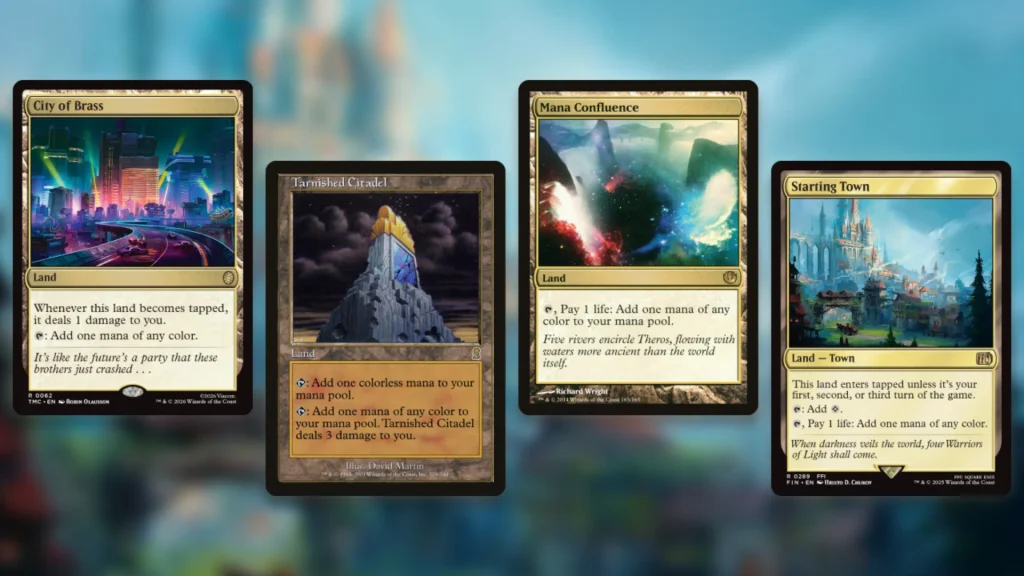
No matter what colors or format you’re playing, the rainbow pain lands will have your back with the mana you need. This unofficial cycle began with City of Brass way back in Arabian Nights, and the core principle has remained the same since.
There’s some variation between these four cards, with Tarnished Citadel and Starting Town coming with downsides, in exchange for the upside of painlessly tapping for colorless. Overall, however, the concept of trading life for fixing carries across all four, to powerful effect. Thanks to this, these lands not only see a huge amount of Commander play, even up into cEDH, but also a ton of use in constructed, to boot.
4 | The Surveil Lands
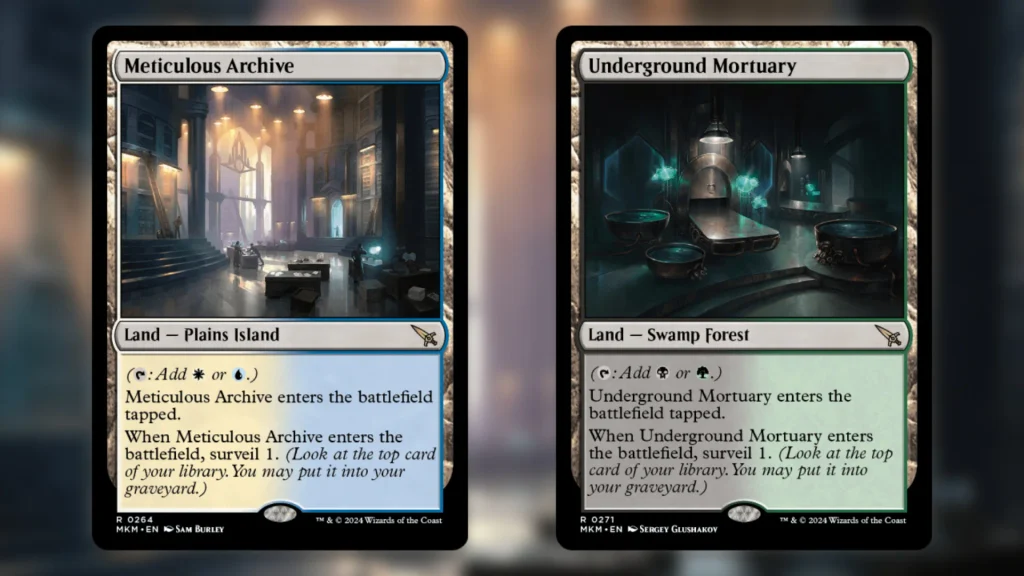
While they were wildly undervalued at first, the Surveil Lands have grown to be accepted as a top-tier land cycle over time. Entering tapped is a major downside, but Surveil is a huge plus, offering card selection and legitimate value for graveyard decks like Karador, Ghost Chieftain.
These lands also come with basic land types, which means you can tutor them up with Fetch Lands and other cards like Farseek. This adds a new level of utility to such effects, even if you only run one or two Surveil Lands in your deck. Thanks to this power and flexibility, the Surveil Lands see healthy play in constructed Magic, and are full-on staples in Commander as well.
3 | The Shock Lands
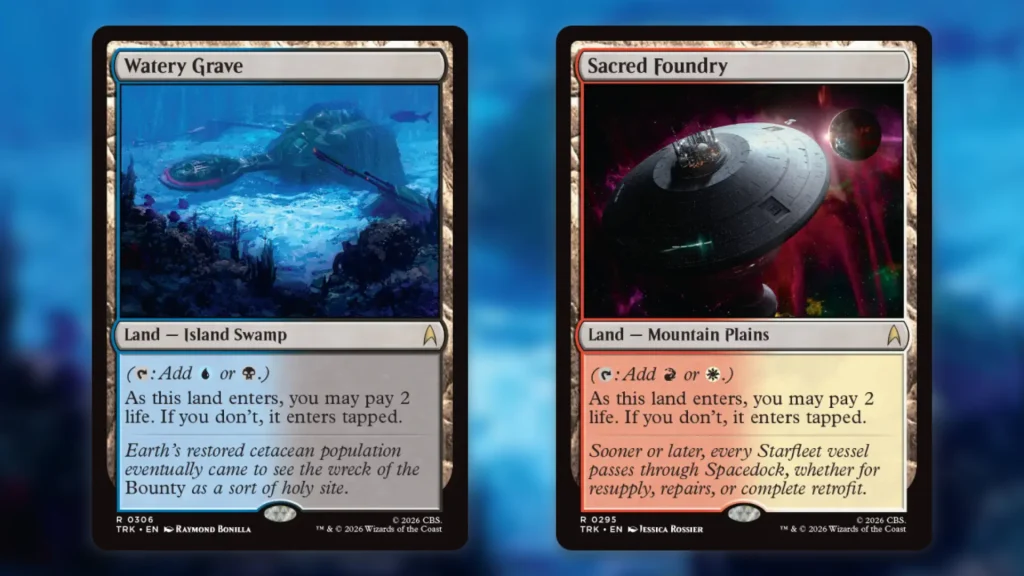
The closest thing to the original Dual Lands that Wizards has ever, and likely will ever, print, the Shock Lands are an absolutely classic cycle. Two life is a small price to pay for untapped fixing, especially in Commander where life totals start at 40. Players have even found ways to abuse this “downside” in constructed formats, by rapidly cutting their life totals in Death’s Shadow lists, for example.
Thanks to their basic land types, the Shock Lands are fully fetchable, which gives players in all formats easy access to fixed, untapped mana. Unsurprisingly, these lands are the first port of call for players almost everywhere they’re legal, seeing staggering play.
2 | The Dual Lands
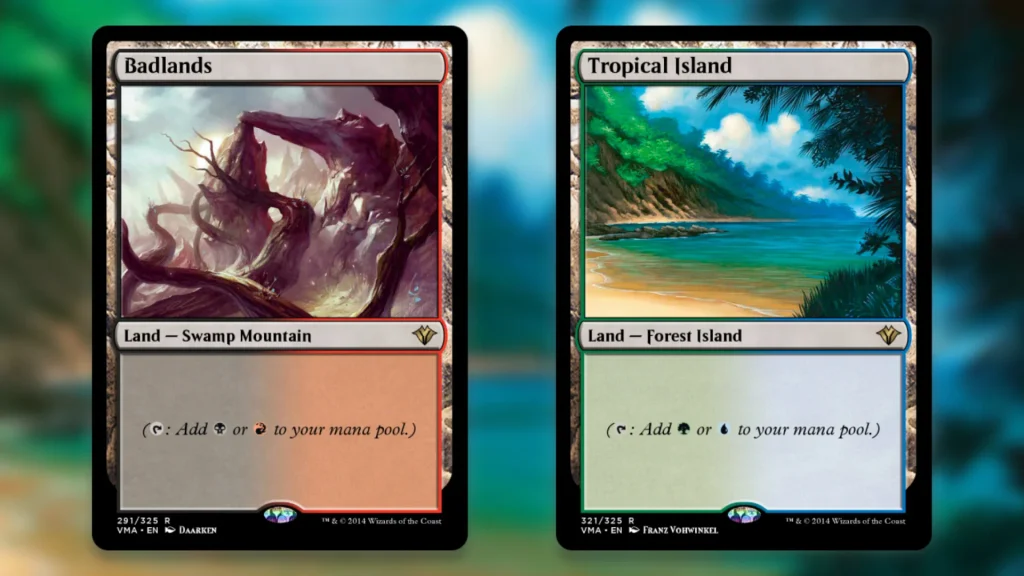
The originals, and still the best, the Dual Lands arrived with Magic’s very first expansion and haven’t been bettered since. They’re the perfect duals: they enter untapped, with no condition attached, and come with land types so they can be fetched with ease. Other than the fact that they’re a significant design mistake by Wizards’ own admission, it’s hard to find any faults with this cycle.
On the plus side, since Dual Lands are only legal in Legacy, Vintage, and Commander, they haven’t taken over MTG in its entirety. Unfortunately, they do remain a massive barrier to entry for Legacy specifically, with price tags ranging from $1,000-3,000 even on the low end. Since they’re part of Magic’s infamous Reserved List, it’s unlikely that these prices will ever come down, either.
1 | The Fetch Lands
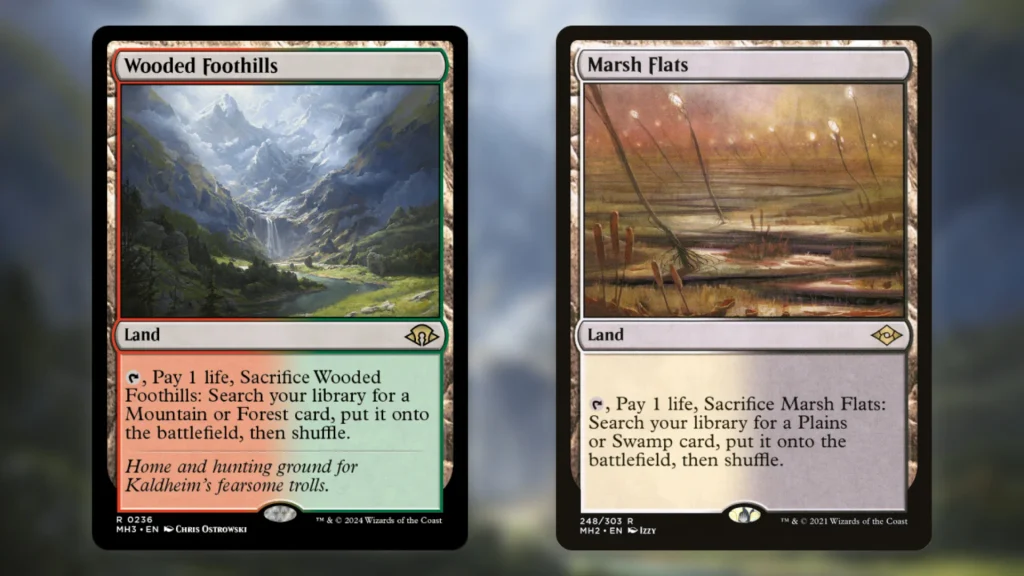
It’s no exaggeration to say that the Fetch Lands are the lands around which the rest of Magic’s mana ecosystem revolves. By grabbing non-basic lands with land types, Fetches can get you any color you need, making them essentially five-color lands. That these lands enter untapped, unconditionally, is huge too, putting them leagues ahead of similar options like Fabled Passage.
Fixing aside, the Fetch Lands also have a ton of additional utility, whether it’s grabbing a Surveil land to load the ‘yard, or a Mystic Sanctuary to recur a spell. They also fuel cards like Deathrite Shaman, shuffle your deck for Sylvan Library, and provide two Landfall triggers for Commanders like Omnath, Locus of Creation. Thanks to this overwhelming versatility, the Fetch Lands are super-staples in every MTG format where they’re legal.
The Best Utility Lands In MTG
6 | Gemstone Caverns
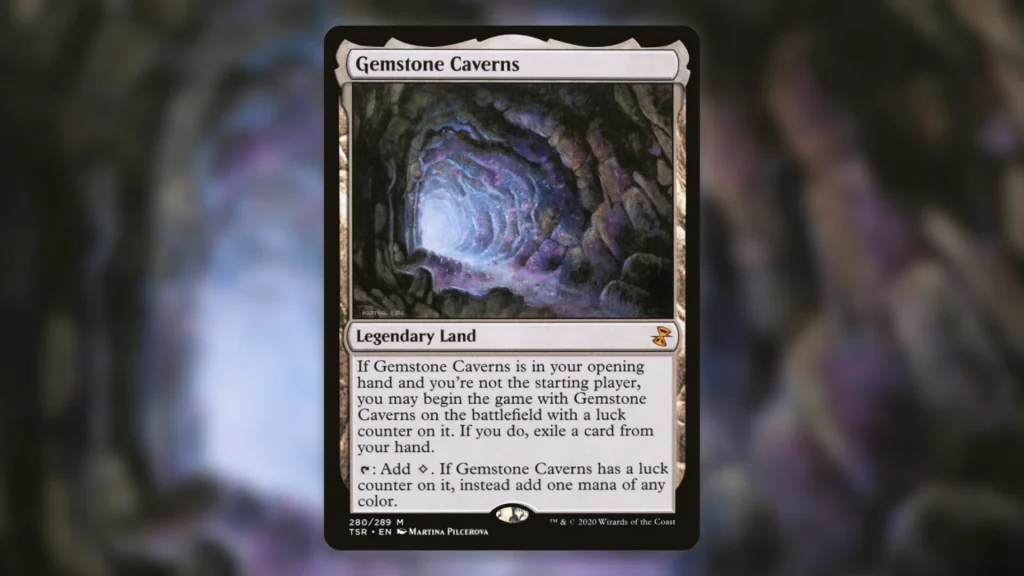
Fast mana artifacts like Mox Diamond and Chrome Mox are notoriously powerful at all levels of MTG, and Gemstone Caverns offers the same effect on a land. While there are a couple of hoops to jump through, it’s not terribly difficult to start with this in play as a free five-color land, especially in Commander.
While it’s technically great everywhere, since its floor is just an untapped colorless land, Gemstone Caverns is particularly prolific in fast combo decks. Modern lists like Eldrazi Bloodchief Combo and Ruby Storm, in particular, make great use of the card. It also sees extensive play in cEDH, helping pretty much every deck in the format rush to its combo win sooner.
5 | The Channel Lands
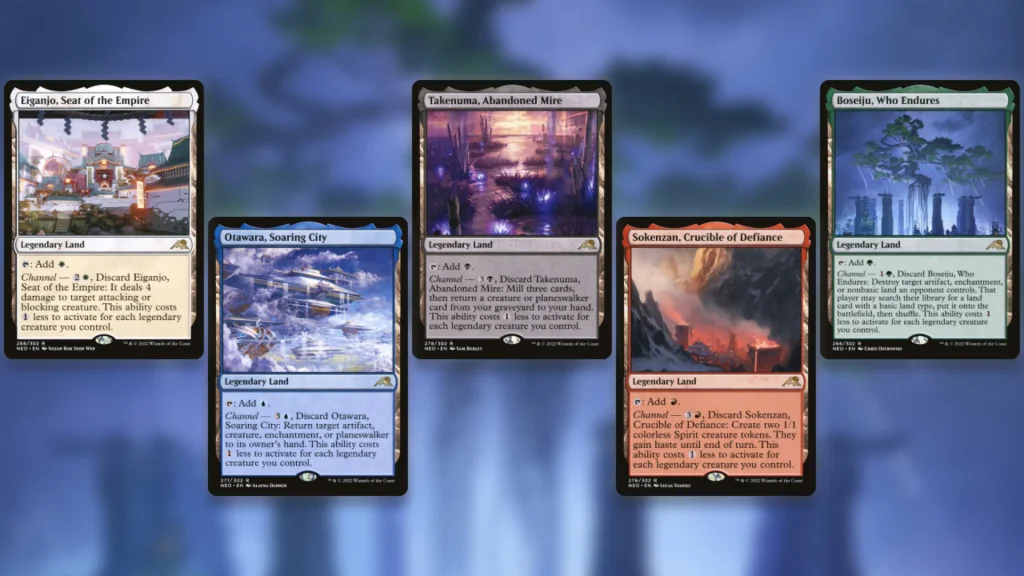
The five legendary Channel Lands from Kamigawa: Neon Dynasty are a high point in MTG land design, essentially offering powerful spells attached to untapped lands. Since Channel is an activated ability, said “spells” can’t even be countered by conventional means, making them better than running actual comparable spells in many cases.
Boseiju and Otawara are the most powerful and popular members of this cycle by far, with both seeing serious play in Pioneer, Modern, Legacy, and Vintage. They’re also massive staples in Commander, with Boseiju showing up in over 843,000 decks, and Otawara in 783,000. By providing crucial interaction in free land slots, this duo has become an indispensable part of Magic at all levels.
The rest of the cycle more than pulls its weight, too, with all three seeing solid play in Pioneer at the very least. Even on the very low end, with Sokenzan, we’re still looking at a play rate of over 148,000 decks in Commander, too.
4 | Mishra’s Workshop
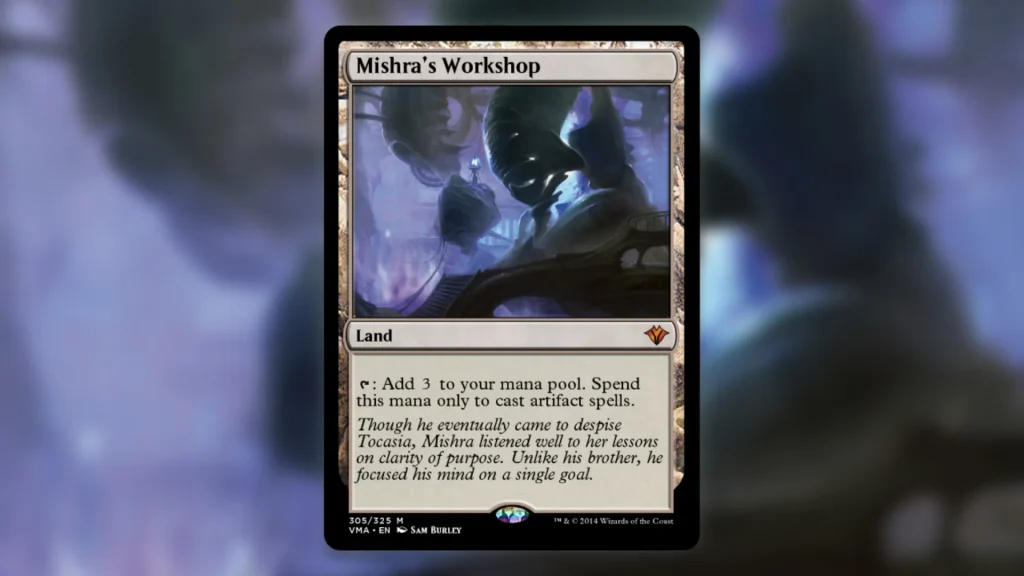
Given Wizards’ aversion to printing lands that produce even two mana, Mishra’s Workshop, which produces three, is unsurprisingly a power outlier. Granted, said mana can only be spent on artifacts, but that hasn’t stopped the card from proving utterly dominant. It does its best work in Vintage, where it lends its name to the best deck in the format by far, appearing there as a full four-of.
Since Mishra’s Workshop was sensibly banned in Legacy at the inception of the format, Commander is the only other place it’s free to wreak havoc. The card somehow escaped the initial Game Changer list, but Wizards quickly corrected the mistake and added it to the April 2025 update. This, paired with the card’s $3,000 price tag, limits its impact there, but it still shows up in cEDH-level artifact lists like Magda, Brazen Outlaw.
3 | The Sol Lands
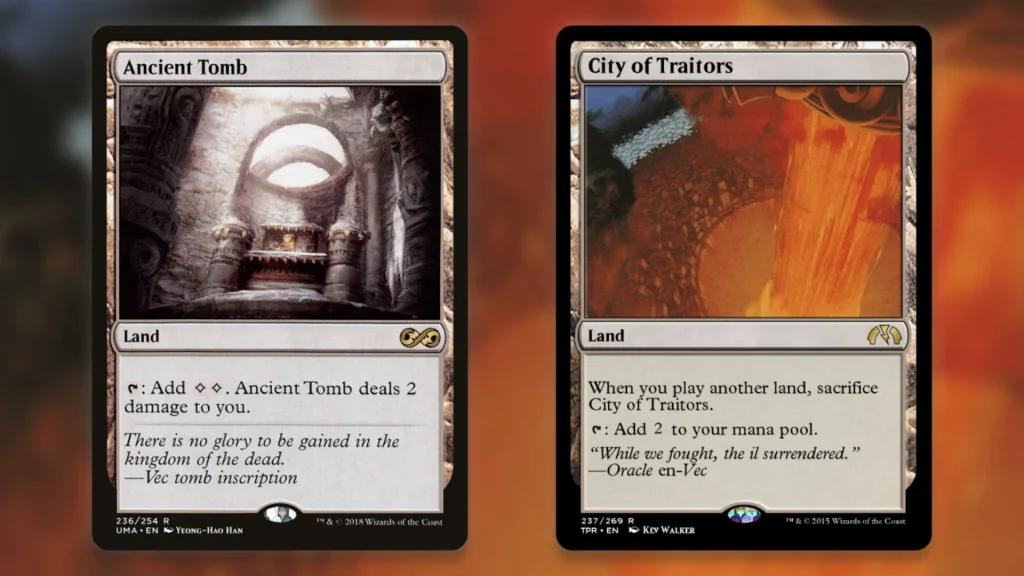
Both Ancient Tomb and City of Traitors break one of the cardinal rules of MTG land design by tapping for two mana unconditionally. This lets them easily snowball out of hand, even with their significant downsides holding them back.
Ancient Tomb is the more successful member of this duo by far, being a full-on staple in Legacy, Vintage, and even Premodern. It was also pre-banned in Historic and banned in Brawl, keeping it out of Magic’s digital-only formats for the most part. In Commander, it’s a dominant force, appearing in over 895,000 decks, and earning a spot on the Game Changers list on the very first ballot.
City of Traitors is similarly playable in Magic’s older formats, but it sees far less play in Commander. Due to its devastating downside, it’s really reserved for ultra-fast decks or those that can play lands from their graveyard with some regularity. That said, it still shows up in a respectable 126,000 decks, including some cEDH classics like Etali, Primal Conqueror.
2 | Urza’s Saga
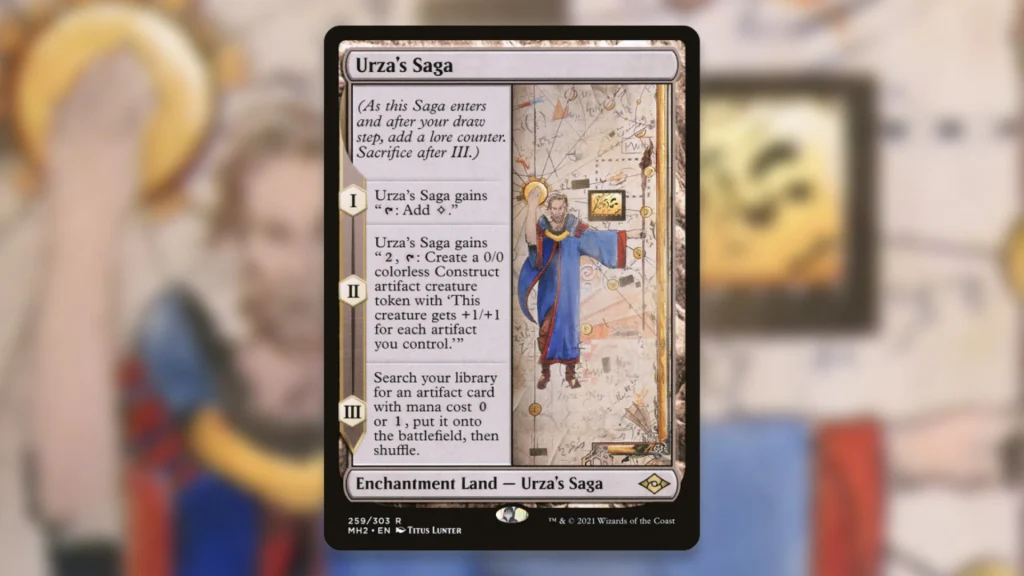
Few cards in Magic history have cast a shadow as large as Urza’s Saga, arguably one of the strongest designs the game has ever seen. Being an untapped land that can produce two powerful tokens is strong enough, but the tutor aspect here really pushes things over the edge. It was this aspect of the card, in fact, that eventually got it restricted in Vintage in August 2024.
Even post-restriction, Urza’s Saga still sees plenty of play in Vintage, in Worskhop and Tinker decks especially. Its constructed success extends to Modern and Legacy, too, where it primarily grabs key pieces for decks like Amulet Titan and Bloodchief Combo. It’s also a very solid fair card, showing up in decks like Affinity purely for its ability to quickly develop your board early on.
Urza’s Saga is similarly successful in Commander, where over 681,000 decks run the card overall. Whether it’s offering fair value to artifact decks like Ultron, Artificial Malevolence, or giving an edge to cEDH lists like Urza, Lord High Artificer, Saga has no shortage of homes. In terms of sheer versatility, Urza’s Saga is undeniably one of the best lands in all of MTG.
1 | The Urza’s Saga Legendary Lands
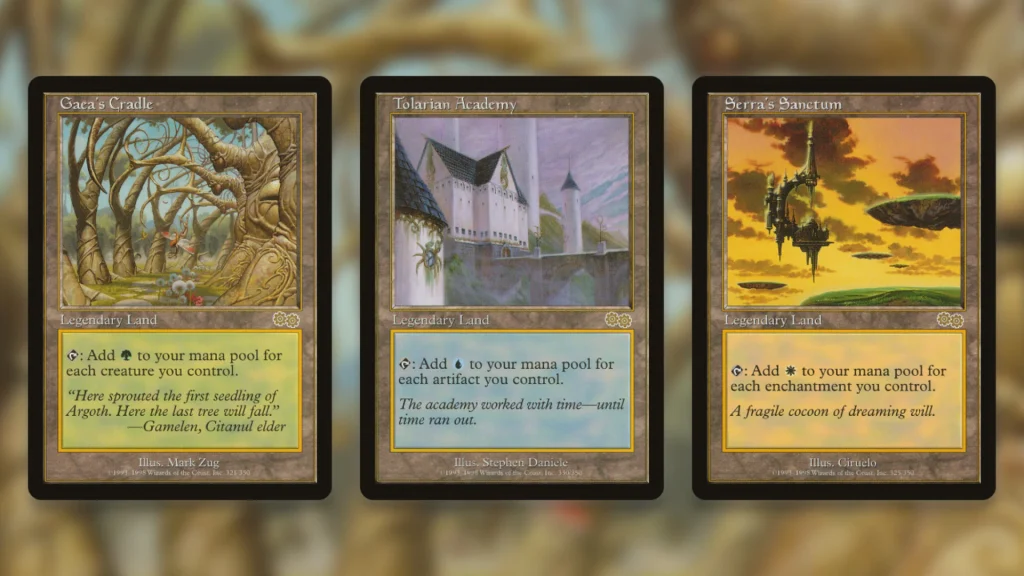
The infamously unbalanced legendary land cycle from Urza’s Saga gave us, pound for pound, three of the most broken MTG lands of all time. Each member of this trio taps for a mana of its color based on the number of permanents of a certain type you control, allowing for some truly ridiculous bursts in certain strategies.
Tolarian Academy is the worst offender here by far, a card so powerful that it got itself banned in Legacy and Restricted in Vintage back in December 1998. More recently, Tolarian Academy was totally banned in Commander in 2010, and pre-banned in Oathbreaker in 2023. Nowadays, Academy is only seen in Vintage, where it admittedly plays a key role in decks like Worskhops and Tinker.
Wizards has been kinder to Gaea’s Cradle and Serra’s Sanctum over time, with both being founding members of the Commander Game Changers list but nothing else. Cradle sees a good amount of play in Commander as a win condition in cEDH decks like Kinnan, Bonder Prodigy, as well as Legacy play in Cradle Control and Elves brews. Sanctum is less impressive in Commander, appearing in just 52,300 decks, but it has established a solid niche for itself in Enchantress decks in Premodern.
As a group, this trio of lands represents one of the most serious design mistakes Wizards ever made. They’re also, by questionable virtue of this, three of the best lands that MTG has ever, or likely will ever, see.
Stick with us here at mtgrocks.com: the best site for Magic: The Gathering coverage. Be sure to check out our deckbuilder for your next big brew, and our brand new MTG Rocks Podcast!