


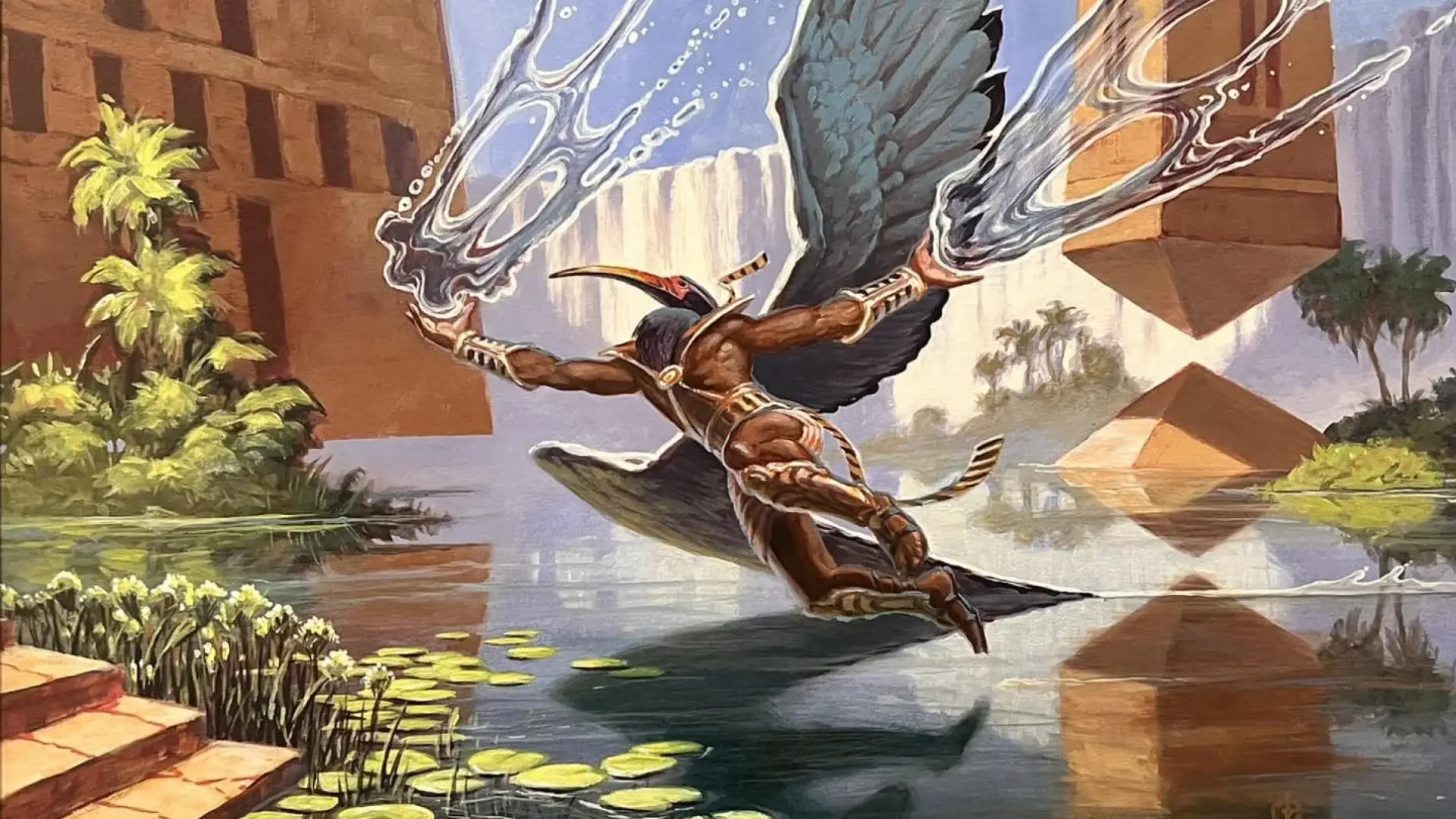

While they were fairly underwhelming in the beginning, creatures have evolved, over Magic’s turbulent 33-year lifespan, into the game’s most potent threats. Pretty much every deck in every format now revolves around one key creature or another. Creatures have also eaten the lion’s share of recent bans, as Wizards pushes the envelope a little too hard on their power level.
With over 18,000 unique creatures to choose from, whittling them down to the best of the best is no mean feat. We’ve attempted to do so here, however, basing our rankings on overall power level and multi-format impact. These are, in our opinion, the best creatures that have ever been printed in MTG.
Honorable Mention | The Evoke Elementals
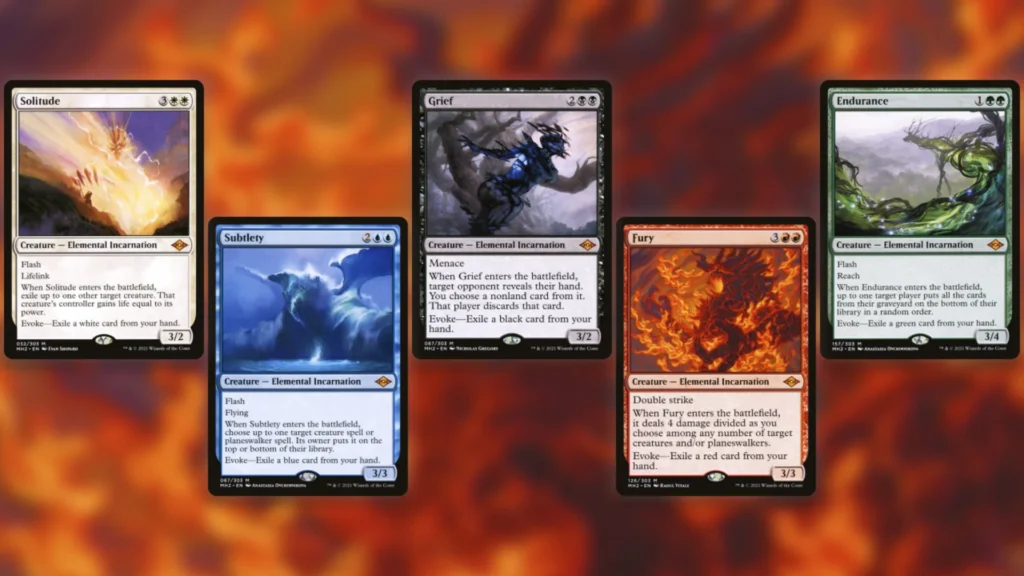
Few cycles in Magic have inspired as much collective dread as the Modern Horizons 2 Evoke Elementals. Each is a free spell in the classic Force of Will sense of the phrase, capable of coming down out of nowhere at any stage of the game.
Grief and Fury are by far the most notorious members of the cycle, both catching bans in Modern for their role in the format-warping Rakdos Scam deck. When paired with cards like Not Dead After All, this duo could effectively decide games on the very first turn. Grief also ended up banned in Legacy, thanks to its potent synergy with Reanimate and Animate Dead in Reanimator lists.
Add in Subtlety, which was banned in Brawl as part of a wider effort to combat free countermagic in the format, and the Evoke Elementals have a lot of bans between them. All five were even pre-banned in Historic when they came to Magic Arena as part of Modern Horizons 3. Despite these efforts by Wizards to clip their wings, however, the Evoke Elementals still see a huge amount of multi-format play.
Solitude is by far the most impressive of the cycle these days, seeing a ton of use in Modern decks from Esper Reanimator to Boros Energy, and Legacy play in Death and Taxes as well. The other four are no slouches either, mind you, with all of the Modern-legal ones seeing use there. Endurance and Subtlety are particularly prolific in the format, being key cards in Living End decks.
While this cycle doesn’t scale quite as well in Commander, all five of them still see healthy play there, with Endurance notably showing up in over 112,000 decks by EDHREC numbers. Overall, while their status as design mistakes is undeniable at times, so too is the impact the Evoke Elementals have had on Magic as a whole.
10 | Deathrite Shaman
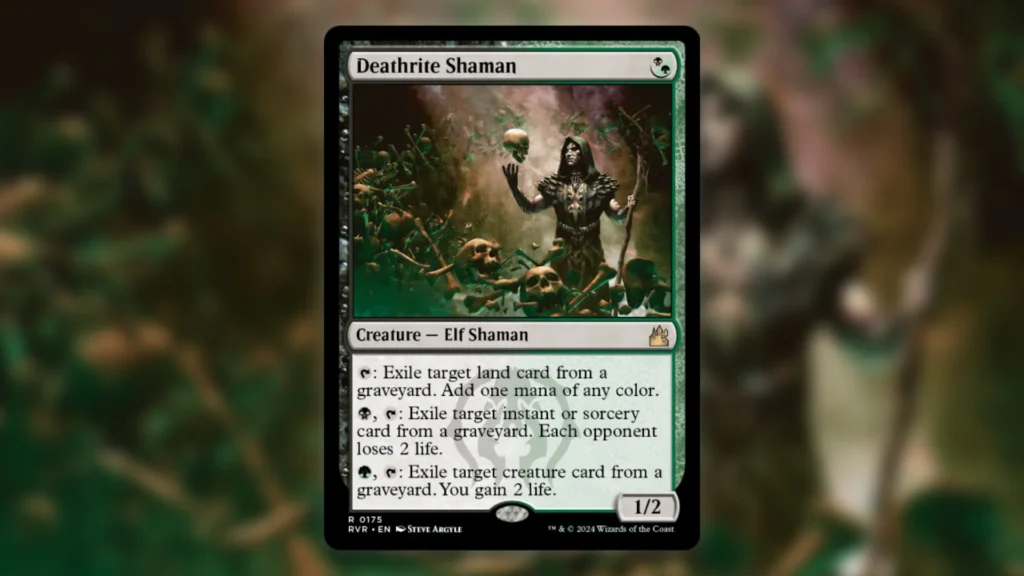
Often referred to as a “one-mana planeswalker” on account of its massive versatility, Deathrite Shaman is one of the strongest creatures Magic has ever seen. For just one mana, of flexible colors, it serves as a Birds of Paradise in Fetchland-heavy formats. It also offers incidental graveyard hate, a decent body, and a relevant creature type for good measure.
Unsurprisingly, this unparalleled utility earned Deathrite Shaman a ban in Modern back in February 2014. As Wizards noted then, the card was simply too good, for too many decks, at too many stages of the game. While many players have since advocated for an unban of the card, it still remains illegal in the format even 12 years later.
Deathrite Shaman even proved too good for Legacy, where its presence pushed Grixis Delver decks into a dominant position in the format. This was compounded by giving blue decks easy access to too many colors, and incidentally hating on Reanimator decks. Eventually it all got too much, and Wizards banned Deathrite Shaman in Legacy in July 2018, admitting it to an exclusive club of overpowered cards.
While these bans have stopped Deathrite Shaman from being a problem, it’s still very much a playable card in today’s game. It does the bulk of its work in Commander, where over 213,000 decks include it. Factor in Vintage play in BUG lists, and there’s plenty of life in the old Elf yet.
9 | Esper Sentinel
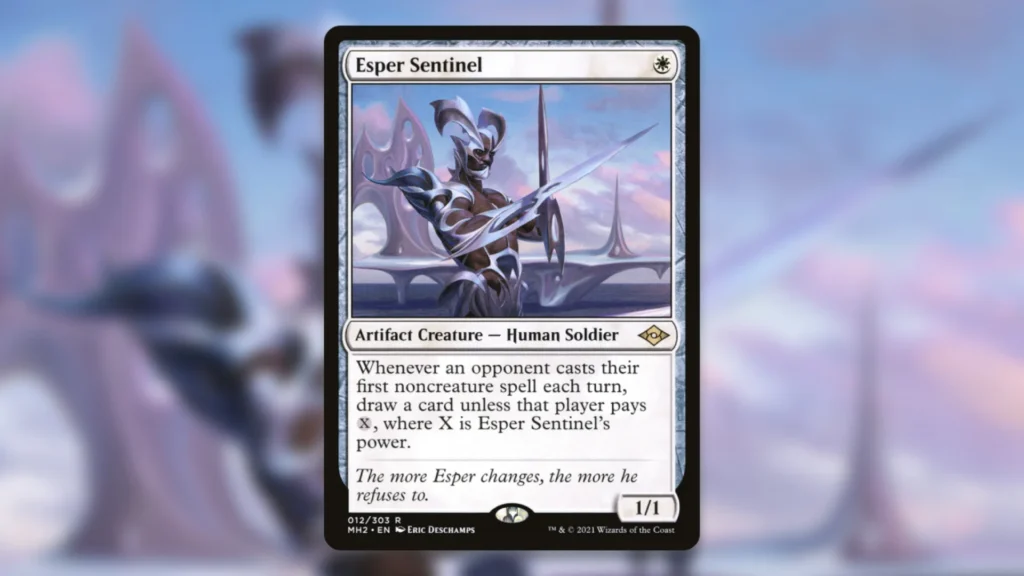
Following in the oft-shunned footprints of Rhystic Study and Mystic Remora, Esper Sentinel is one of the best Commander draw engines the game has ever seen. With three opponents in the mix, the card gives you three chances to draw a card each turn, which quickly adds up to an insurmountable advantage.
Esper Sentinel does its best work in cEDH, where the interaction-heavy nature of the metagame all but guarantees a ton of draws from it. Pretty much every white deck in the format, from Tymna/Kraum to Sisay, Weatherlight Captain, runs the card to great effect. It even single-handedly props up the value of certain tutors in the format, like Ranger-Captain of Eos and Tezzeret, Cruel Captain.
Even in the lower Commander brackets, Esper Sentinel still puts in a serious shift. Artifact decks like Toph, the First Metalbender very much enjoy its artifact typing, and it sees plenty of play in more generic decks like Y’shtola, Night’s Blessed, too. In fact, with over 836,000 decks running Esper Sentinel, it’s the fifth most-played white card in Commander as a whole.
Though Esper Sentinel is less impressive outside of Commander, its sheer efficiency has still earned it a few homes. For example, both Hammer Time decks in Modern and Death and Taxes decks in Legacy often run the card as a value engine. With solid multi-format play under its belt, Esper Sentinel is undeniably one of the best creatures MTG has ever seen.
8 | Orcish Bowmasters
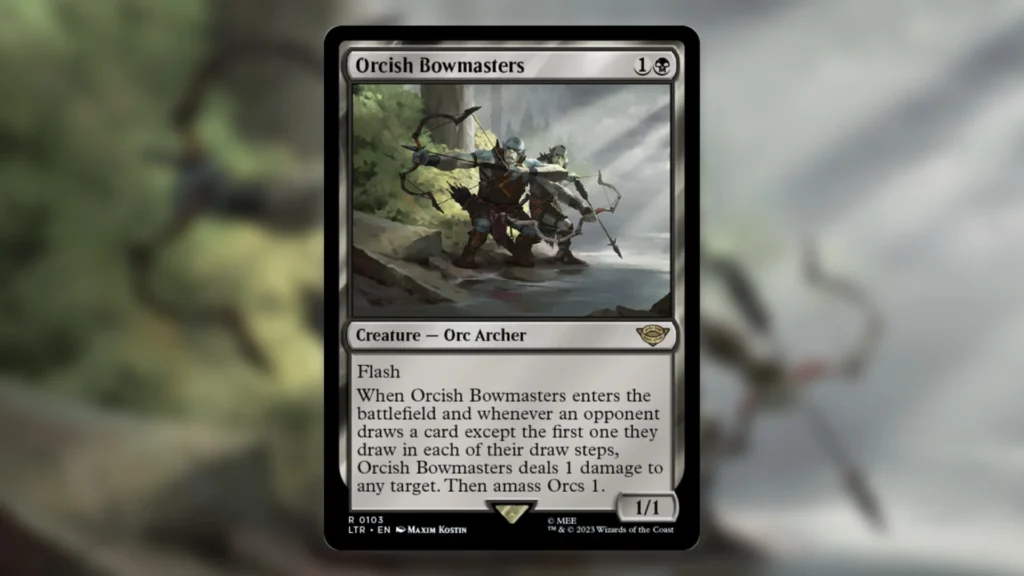
A clear consequence of Magic’s Lord of the Rings set skipping Standard, Orcish Bowmasters is one of the most absurdly pushed two-drops we’ve ever seen. By offering a cheap, flexible ping effect on a scaling threat, the card has single-handedly made one-toughness creatures a risky proposition in multiple formats.
Bowmasters is perhaps most prominent in Commander, where its trigger scales beautifully with multiple opponents. In fact, the card was so good in the format that Wizards actually made it a Game Changer in April 2025. This was part of a wider move to combat cards that punish card draw in the format, which Bowmasters certainly does by building up a huge body and controlling the board through pings.
This label has done little to disrupt the card’s play rate, however, as it’s still a staple in pretty much every black cEDH deck. Many lower-bracket lists, like Sauron, the Dark Lord and Valgavoth, Harrower of Souls run the card, too, for both synergy and a straight-up efficient threat.
Over in constructed, Orcish Bowmasters is arguably just as good, seeing a huge amount of play in Modern and Legacy. Dimir Tempo/Frog decks in both formats love the card for its raw efficiency, and it sees play in more specialized decks like Modern Necrodminance and Legacy Doomsday as well. It even sees a healthy amount of use in Vintage, as a solid two-drop for Lurrus decks.
Orcish Bowmasters’s widespread play and punishing, un-fun play patterns have led many players to call for its ban in various formats over the years. While Wizards has often noted that they’re “keeping an eye on it,” so far this oppressive Orc has escaped unscathed.
7 | Psychic Frog
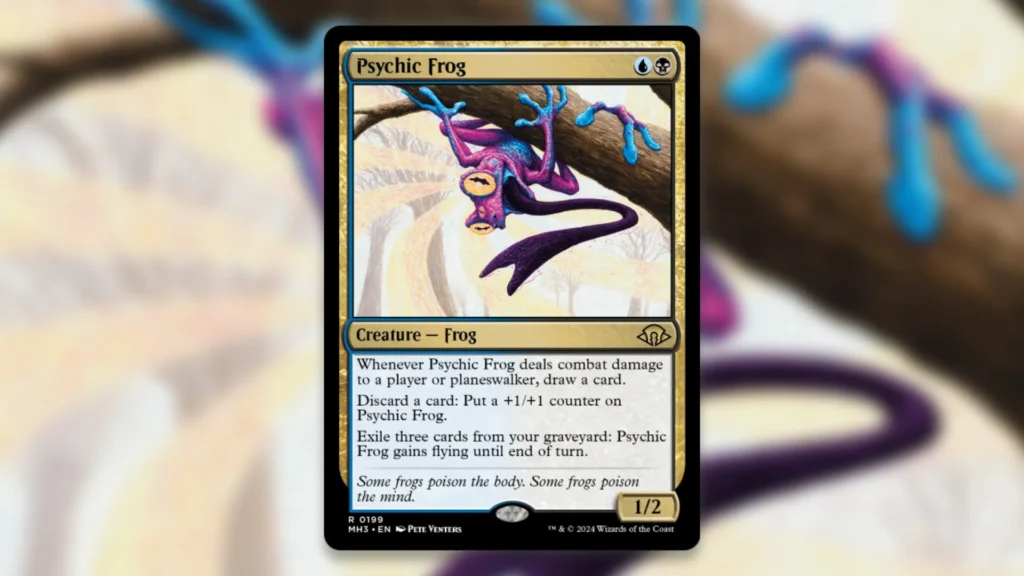
Modern Horizons 3 was packed with cards that pushed things a bit too far power level wise, and Psychic Frog was one of the very worst offenders. Combining a free discard outlet with a scaling evasive threat and card advantage, there’s not much this little Frog can’t do.
Psychic Frog proved particularly problematic in Legacy, where it propelled Dimir Reanimator lists to the top of the format. It also homogenized other strategies like Dimir Murktide, discouraging exploration of the other colors. Ultimately, the card was deemed too good for Legacy, and Wizards bonked the Frog with the ban hammer in December 2024.
While this change nipped the worst of Frog in the bud, it remains highly effective in other formats. It sees a ton of play in Modern in particular, where it’s a key part of Goryo’s Vengeance decks as a way to set up early Atraxa, Grand Unifier plays. It also plays a key role in Dimir Midrange as a multi-tool that sets up Murktide Regent and helps flip Tamiyo.
Psychic Frog even sees a fair amount of play in Vintage, as a stellar engine piece for Lurrus decks in the format. While its Commander presence is less impressive, it still shows up in over 72,000 decks, with Discard decks like Hashaton loving it in particular. No format is free from the influence of Magic’s most fearsome Frog, and its slimy reign will likely continue for a while yet.
6 | Ragavan, Nimble Pilferer
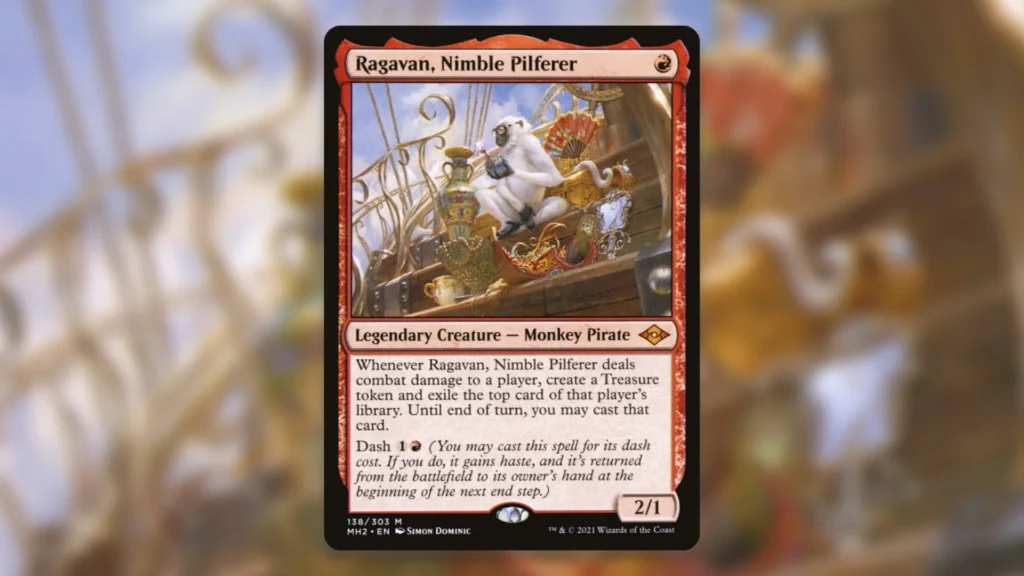
Ragavan is the poster child for modern-day power creep in Magic, highlighting just how far we’ve come since the days of Jackal Pup being playable. For one mana, this Monkey lets you generate both Treasures and card advantage, while using Dash to stay safe from removal when needed. Unsurprisingly, given its stacked text box, this legend caused all kinds of problems for Magic.
Ragavan’s wrath was most keenly felt in Legacy, where it gave Izzet Delver decks even more snowball potential than before. Backed up with protection like Force of Will, Ragavan let Delver take over games with ease, and pushed the deck to a worryingly high metagame share. Consequently, Ragavan was banned in Legacy in January 2022, and has remained so ever since.
With Legacy off the table, Ragavan took to terrorizing Modern instead, where it quickly became one of the most-played creatures in the format. While mainly seen as an aggressive one-drop in Boros Energy decks, Ragavan also regularly appears in Domain Aggro decks.
Over in Commander, Ragavan is much less polarizing, but no less played, showing up in over 369,000 decks. With a ton of cEDH lists like Etali, Primal Conqueror including it, Ragavan has certainly infiltrated the highest levels of multiple formats.
5 | Thassa’s Oracle
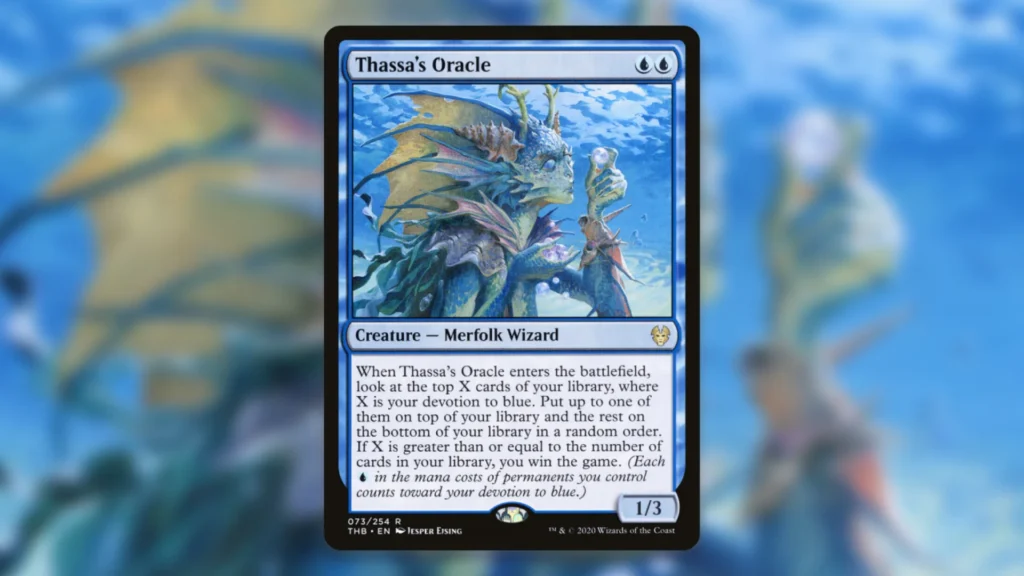
Pound for pound, Thassa’s Oracle is probably the most effective alternate win condition that Magic has ever printed. If you can mill yourself out, which is doable in a wide range of ways, then this is a two-mana creature that wins you the game on the spot.
Thassa’s Oracle is most effective with Demonic Consultation and Tainted Pact, both of which let you mill yourself out on demand. These combos have long been the optimal strategy for winning in Commander, and the focus for the vast majority of cEDH decks as a result. Consequently, Thassa’s Oracle was made a Game Changer as soon as the system came into effect.
There are plenty of other ways to abuse Thassa’s Oracle too, as seen in the card’s success in Legacy and Vintage. Across both formats, it’s the key piece in a range of combo decks, notably being the best way to close out games after resolving Doomsday. It’s also the main win condition in Cephalid Breakfast, a combo deck all about milling yourself out with Nomads en-Kor and Cephalid Illusionist.
Add in some play in Pioneer Scapeshift as a win condition, and Thassa’s Oracle is a true multi-format all-star. It would likely be a dominant player in Historic, too, if Wizards hadn’t banned it for its shenanigans with Tainted Pact. Essentially, as long as Combo decks exist in Magic, Thassa’s Oracle will be one of the best enablers they have.
4 | White Plume Adventurer
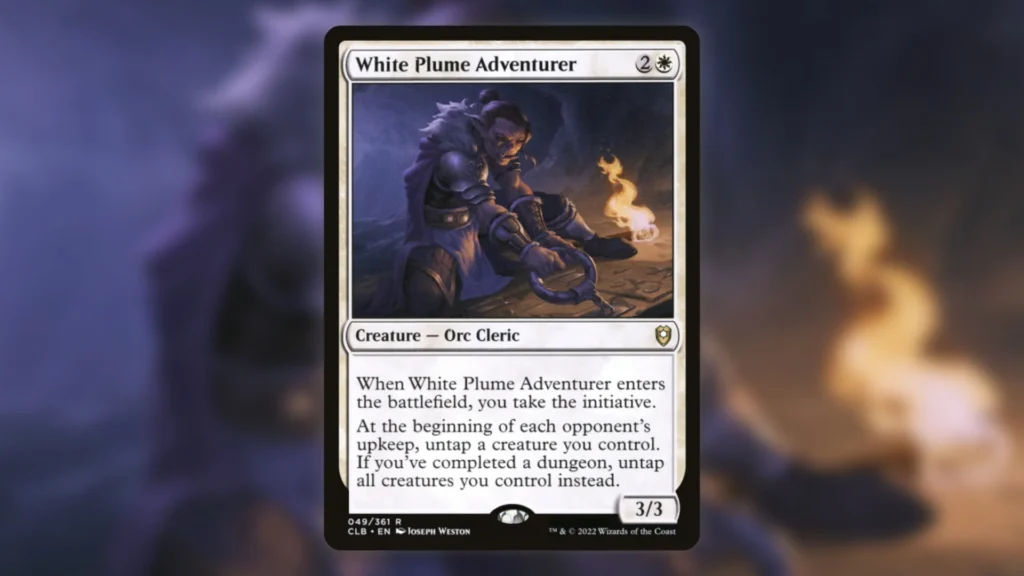
While it looked like little more than a fun, political Commander mechanic at first, The Initiative proved to be a serious problem in Magic’s older formats. This was largely down to White Plume Adventurer, a cheap creature that can set up this snowbally mechanic for you very early in the game.
In Legacy, White Plume Adventurer, paired with fast mana like Ancient Tomb and Chrome Mox, could grab you the Initiative on turn one. With cheap interaction like Solitude to keep the opponent’s board clear, this quickly dominated games, and indeed the metagame. As a result, Adventurer’s reign of terror was cut short when Wizards banned the card in Legacy in March 2023.
White Plume Adventurer lives on today in Vintage, however, where it remains a key card in the Mono-White Initiative decks. With more access to fast mana, it’s even more powerful in this format, pushing the deck to top-tier status in the current metagame.
Ironically, White Plume Adventurer is probably least impressive in Commander, the very format it was actually designed for. The card does very much still have homes, however, appearing in casual Dungeon decks like Sefris of the Hidden Ways, and serious cEDH lists like Tayam, Luminous Enigma. While it’s not the flashiest card in the world, White Plume Adventurer is a great lesson in the power of reliable value.
3 | Hermit Druid
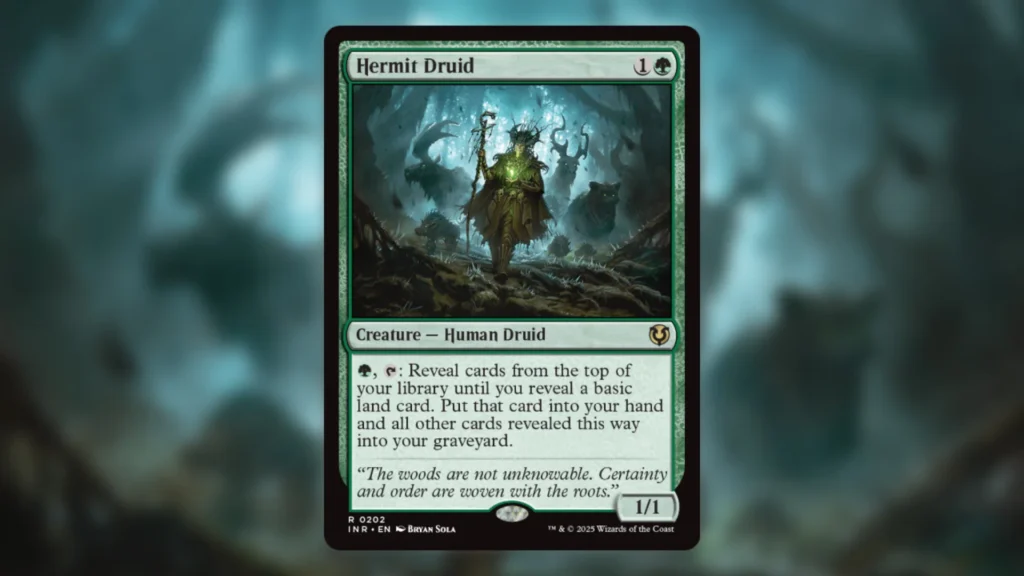
Like its cousins Balustrade Spy and Undercity Informer, Hermit Druid is a card with one clear purpose. You use it to mill your own deck out completely, and pretty much nothing else. Since all you need to do to enable this line is run no basics in your deck, it’s a trivial condition for most decks to meet. As a result, the card is a premier combo piece in multiple formats.
Hermit Druid is so imposing an enabler, in fact, that it was actually banned in Legacy as soon as the format was established back in 2004. While this has limited the card’s opportunities over the years, it has found a strong niche for itself these days in Premodern Full English Breakfast lists. In this convoluted combo deck, Druid dumps your deck so you can stack it with Battlefield Scrounger, setting up your various Volrath’s Shapeshifter wins.
Premodern aside, Hermit Druid is also a fantastic piece in various Commander lists. It’s often played reasonably fair, as a way to mill big chunks of your deck for value in Teval, the Balanced Scale. It does still see some combo play up in cEDH as well, however, appearing regularly as a key card in Tymna/Thrasios Turbo Druid variants.
2 | Lurrus Of The Dream-Den
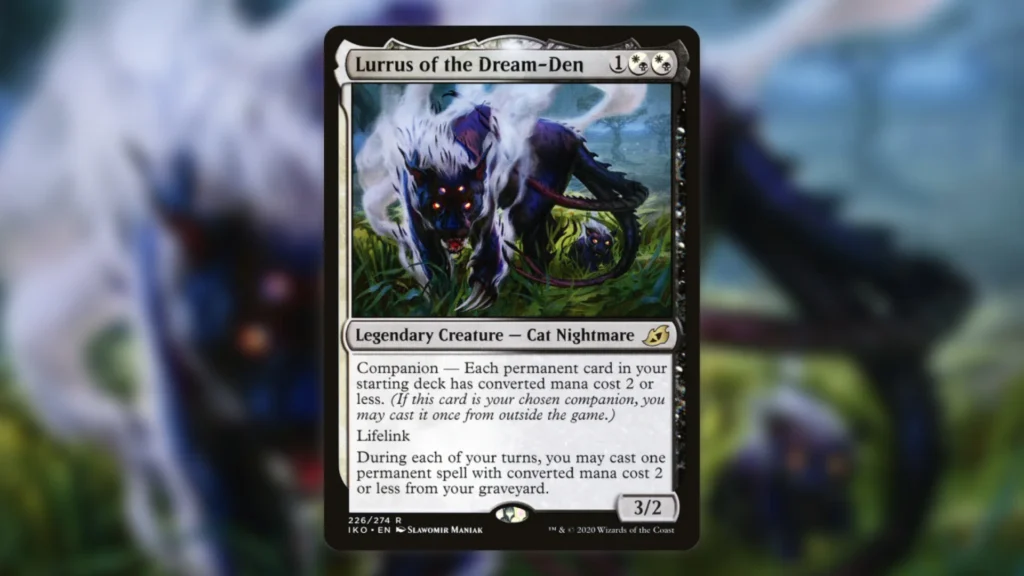
In its pre-errata form, Lurrus was arguably the most powerful card, never mind creature, ever printed in Magic. That its post-errata version, which adds a three-mana tax to put it into your hand, is still incredible speaks volumes of its power level.
In a feat few cards can boast of, Lurrus played a major role in having the entire Companion mechanic altered by Wizards in June 2020. Prior to this, the card had already been banned in both Legacy and Vintage, owing to the ridiculous consistency it brought to decks like Delver. Post-errata Lurrus was unbanned in Vintage, but it never got another shot in Legacy.
While you’d expect Lurrus to slow down following a major errata, this actually wasn’t the end of its problematic impact on Magic. It continued to be a domineering presence in both Modern and Pioneer even with the tax attached, pushing decks to run more cheap cards and reducing variety. Consequently, Lurrus caught the ban hammer in both formats in March 2022, leaving Commander and Vintage as its only remaining homes.
In a wild turn of events for a new card, Lurrus went on to thrive in Vintage, even getting an entire archetype named after it. To this day, it remains a top-tier strategy in the format, owing to Lurrus’s ability to recast cards like Black Lotus from the graveyard. This, paired with Lurrus’s colossal impact on MTG as a whole, easily marks it as one of the game’s best creatures.
1 | Nadu, Winged Wisdom

Magic has seen some serious design mistakes over the last few years, but none are more egregious than Nadu, Winged Wisdom. When paired with free activated abilities, like that on Shuko, Nadu turned your board into a terrifying draw engine. With a Landfall creature like Springheart Nantuko in the mix, it essentially let you pop off for an instant win.
These Nadu combo lines were powerful, but the real issue was that they were non-deterministic. As they weren’t guaranteed infinites, you had to play them out each time, resolving tons of triggers and going through your deck card by card while your opponent watched. It was a miserable experience for all involved, and it dominated Pro Tour Modern Horizons 3, forcing Wizards’ hand.
Nadu was banned in Modern just a couple of months later, and bans in Commander and Legacy followed soon after. Nadu even caught bans in several unofficial MTG formats, including Duel Commander and Value Vintage.
Following this huge sweep of bans, Nadu, Winged Wisdom was essentially banished from Magic entirely, seeing no play at all in its last bastion of Vintage. Ultimately, this is probably for the best: by Wizards’ own admission Nadu was a colossal design mistake, after all. While it no longer sees play, Nadu remains as a cautionary tale for card designers, and probably the best MTG creature of all time from a power standpoint.
Stick with us here at mtgrocks.com: the best site for Magic: The Gathering coverage. Be sure to check out our deckbuilder for your next big brew, and our brand new MTG Rocks Podcast!