




Ever since 2020, Wizards of the Coast has been churning out preconstructed Commander decks. Nowadays, it’s incredibly rare that a set doesn’t have at least one precon, while some releases can have upwards of five. While this has given us a lot of fantastic Commanders and support pieces over the years, they’re far from perfect.
Not only do Commander precons have a few of their own issues, but they’re arguably not the precons we need. Even if we didn’t have more than enough precons to last a lifetime already, competitive formats need some love, too. In particular, MTG sorely needs precons for Standard, Pioneer, and beyond to help bring down rising costs.
Fixing Standard’s Finances

At this point, it’s no secret that Standard, and most MTG formats, honestly, are far too expensive. The growing popularity of MTG, largely thanks to Universes Beyond, has pushed prices up across the board, especially for Commander staples. Since Standard sets are full of new staples nowadays, too, it’s not uncommon for decks to cost hundreds of dollars.
Due to this, it’s little wonder that MTG players will take basically any opportunity to complain about the game’s rising costs. Latching onto a recent Blogatog post about Shock Lands in Standard, for instance, players lamented the cost of land bases. With a wide range of complaints being shared on Reddit, there’s clearly a desire for more affordable lands.
Unfortunately, even when Wizards prints new and interesting rare dual lands, these quickly become part of the problem. Since they’re often very slow to be reprinted, cycles like the Surveil Lands are upwards of $15. Even Shock Lands, which thankfully do get reprinted every so often, are $11 at their peak.
With these prices in mind, it’s clear that something needs to be done about the state of Standard. We can’t keep hoping that Wizards bans overpowered cards like the $47
Badgermole Cub
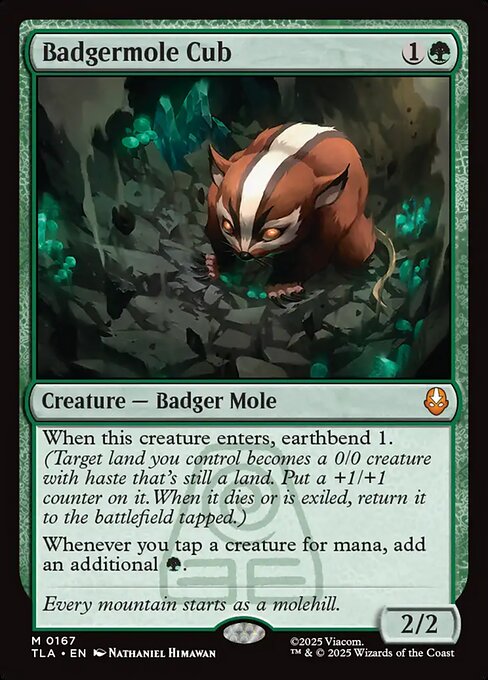 Badgermole Cub
When this creature enters, earthbend 1. (Target land you control becomes a 0/0 creature with haste that's still a land. Put a +1/+1 counter on it. When it dies or is exiled, return it to the battlefield tapped.)
Badgermole Cub
When this creature enters, earthbend 1. (Target land you control becomes a 0/0 creature with haste that's still a land. Put a +1/+1 counter on it. When it dies or is exiled, return it to the battlefield tapped.)
Whenever you tap a creature for mana, add an additional {G}.
to keep prices down. Realistically, out of all the formats MTG has, Standard should arguably be the one getting precons.
In an ideal world, these precons could not only keep land prices down, but competitive staples, too. They’d also be perfect for players looking to get into competitive Magic, which Standard constantly struggles with. Despite being positioned as the go-to competitive format, there’s no clear cost-effective entry way.
Modern Problems, Modern Solutions

Unfortunately, while Standard precons could solve cost issues and provide an easy access point for players, they’re not perfect. Pricing, for instance, is a sore spot, as while Wizards doesn’t really acknowledge the secondary market, it definitely has an impact. This can be seen in the past Challenger Decks that Wizards has made, which are often budget versions of the actual tournament-winning decks.
As if pricing wasn’t enough of a problem, printing speed might just flat-out kill hope for Standard precons. Now that we’re getting six Standard sets per year, the churn rate in the format is obscenely high. Couple this with the routine ban windows, and any Standard deck can theoretically be pushed out in a matter of months.
Since it roughly takes one year to print an MTG product, as evidenced by Secret Lair print-to-demand times, tournament-winning decks could be irrelevant when their precons are released. While this is disappointing, given Standard needs the most love, it doesn’t mean the entire idea has to be scrapped entirely. Instead, Wizards could focus on formats like Modern, or even the practically forgotten Pioneer, which have slower churn.
Sadly, given a competitive Modern deck can set you back over $1,000, selling precons near this price point seems insane. That said, if the choice is buying singles for the $1,600 Izzet Metalcraft deck, or a precon that’s $1,000, the answer is obvious. As nice as this would be, however, it’s hard to think Wizards would sell so much for so cheap.
Even if it was viable to sell a deck containing $1,600 of value for $1,000, it remains to be seen who’d buy it. Wizards doesn’t exactly print or work in small numbers, which means dials need to be tweaked somewhere to improve buyability.
The Place of Pioneer
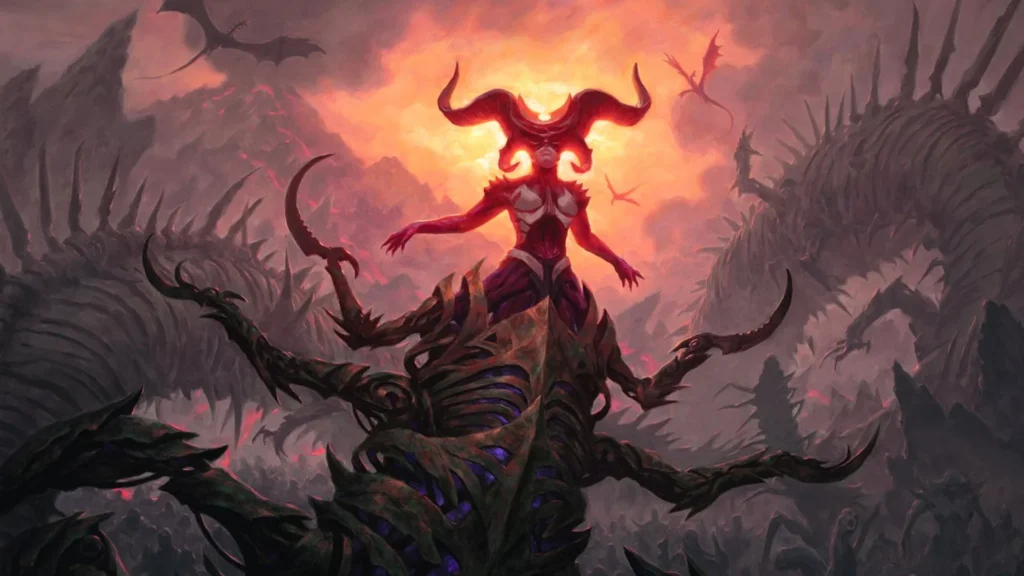
If Wizards of the Coast handles it right, Pioneer could be an absolute godsend for Magic: The Gathering. While it has its own unique strategies and feel, there’s plenty of crossover with Standard, giving cards a home post-rotation. Thanks to this crossover, as well, a Pioneer precon could help bring down Standard prices rather quickly.
In theory, Pioneer precons could still suffer a pricing problem, especially for decks like Golgari Midrange. Thanks to playsets of
Badgermole Cub
Badgermole Cub
When this creature enters, earthbend 1. (Target land you control becomes a 0/0 creature with haste that's still a land. Put a +1/+1 counter on it. When it dies or is exiled, return it to the battlefield tapped.)
Whenever you tap a creature for mana, add an additional {G}.
and
Sheoldred, the Apocalypse
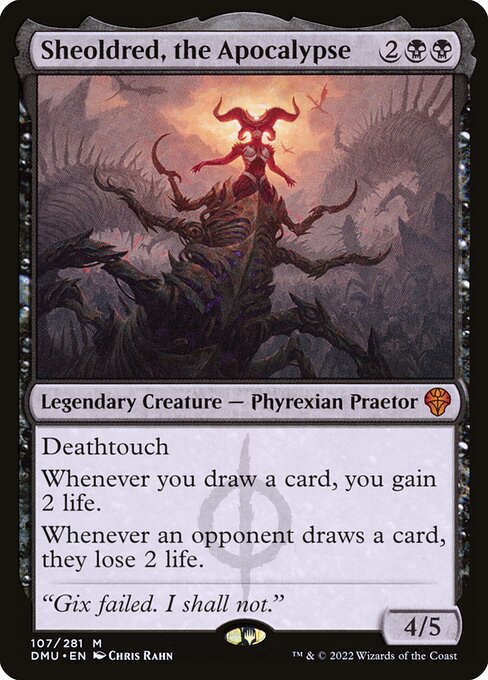 Sheoldred, the Apocalypse
Deathtouch
Sheoldred, the Apocalypse
Deathtouch
Whenever you draw a card, you gain 2 life.
Whenever an opponent draws a card, they lose 2 life.
, you’re spending almost $500 before getting to lands. Hopefully, the new utterly hideous Sheoldred reprint can solve one of these problems, but Wizards honestly needs to do better.
Now that we don’t have a consistent source of reprints from Masters sets, Wizards needs to find an alternative. A Pioneer precon, priced at around $100, would absolutely do that, and the value disparity would have them flying off shelves. Even if no one was actually using them to play Pioneer, if there’s one thing MTG players love, it’s value.
Realistically, alongside Pioneer precons, Wizards ought to give the format more love, too. The fact that we’re getting an RCQ season next year is a good start, but Pioneer should be a key part of the competitive calendar. This, in turn, would give Pioneer precons more of a purpose and even open the door for World Championship-style decks.
Reality is Boring
As if fixing pricing problems and improving the Pioneer pipeline wasn’t useful enough, these precons shouldn’t cause oversaturation complaints. Unlike regular Commander precons, with new cards and support demanding attention, Pioneer precons should just be reprints. Due to this, anyone who’s not interested in playing with these decks or snapping up a deal could easily ignore them.
Unfortunately, as much as Pioneer precons could solve so many problems currently facing MTG, I wouldn’t hold your breath for them. Not only would you be holding your breath for a year while they get printed, but tanking reprint value isn’t good for business. Even if it’s not explicitly acknowledged, high-value cards are a fantastic marketing tool for sets and bonus sheets.
With this in mind, I sadly can’t realistically see any future in which Wizards goes ahead and prints tournament-ready competitive precons for any format. I’d more than welcome Wizards of the Coast proving me wrong, but I can’t say I’m hopeful.
Stick with us here at mtgrocks.com: the best site for Magic: The Gathering coverage. Be sure to check out our deckbuilder for your next big brew, and our MTG Rocks Podcast!