


At this point, it’s not surprising to continue seeing Wilds of Eldraine cards have a big impact on a variety of Constructed formats. In Pioneer, there are a ton of cards from the set that see lots of play in tier one archetypes. From
Sleight of Hand
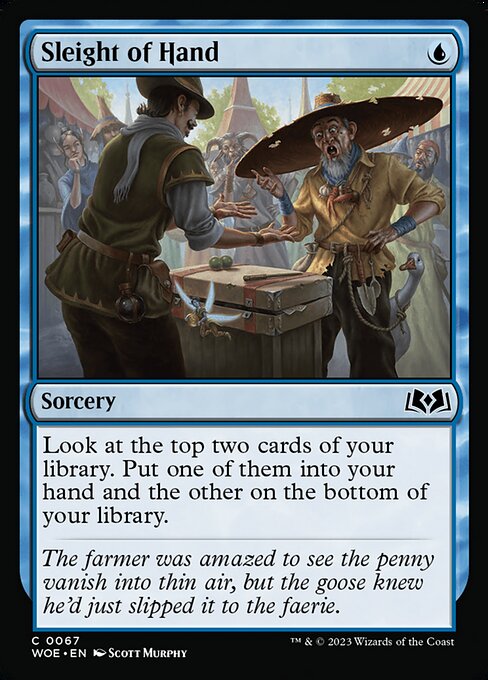 Sleight of Hand
Look at the top two cards of your library. Put one of them into your hand and the other on the bottom of your library.
in Izzet Phoenix to The Huntsman’s Redemption in Gruul midrange, many strategies received significant upgrades.
Sleight of Hand
Look at the top two cards of your library. Put one of them into your hand and the other on the bottom of your library.
in Izzet Phoenix to The Huntsman’s Redemption in Gruul midrange, many strategies received significant upgrades.
While there are less Wilds of Eldraine cards that see consistent Modern play, two extremely important ones come to mind. First,
Agatha’s Soul Cauldron
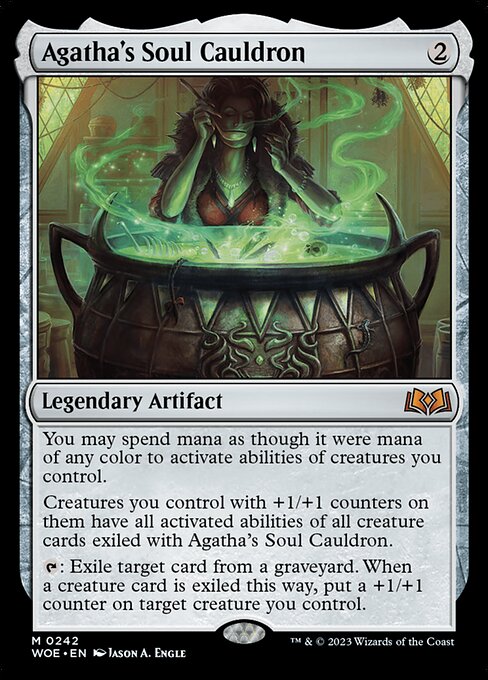 Agatha’s Soul Cauldron
You may spend mana as though it were mana of any color to activate abilities of creatures you control.
Agatha’s Soul Cauldron
You may spend mana as though it were mana of any color to activate abilities of creatures you control.
Creatures you control with +1/+1 counters on them have all activated abilities of all creature cards exiled with Agatha's Soul Cauldron.
{T}: Exile target card from a graveyard. When a creature card is exiled this way, put a +1/+1 counter on target creature you control.
became a staple in
Yawgmoth, Thran Physician
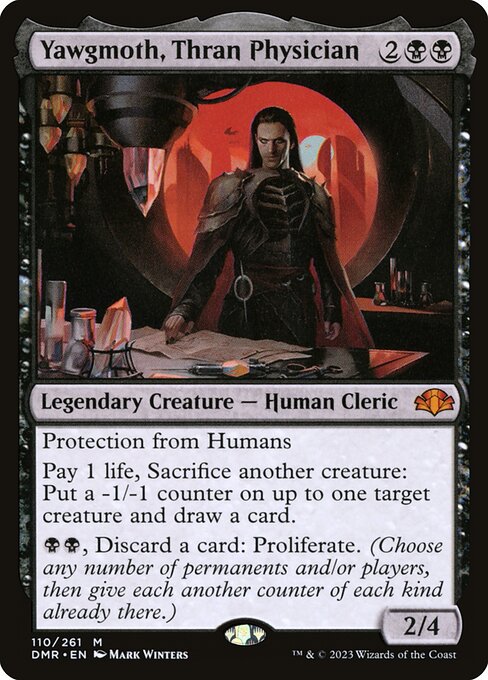 Yawgmoth, Thran Physician
Protection from Humans
Yawgmoth, Thran Physician
Protection from Humans
Pay 1 life, Sacrifice another creature: Put a -1/-1 counter on up to one target creature and draw a card.
{B}{B}, Discard a card: Proliferate. (Choose any number of permanents and/or players, then give each another counter of each kind already there.)
combo decks as well as
Hardened Scales
 Hardened Scales
If one or more +1/+1 counters would be put on a creature you control, that many plus one +1/+1 counters are put on it instead.
decks. Next,
Up the Beanstalk
Hardened Scales
If one or more +1/+1 counters would be put on a creature you control, that many plus one +1/+1 counters are put on it instead.
decks. Next,
Up the Beanstalk
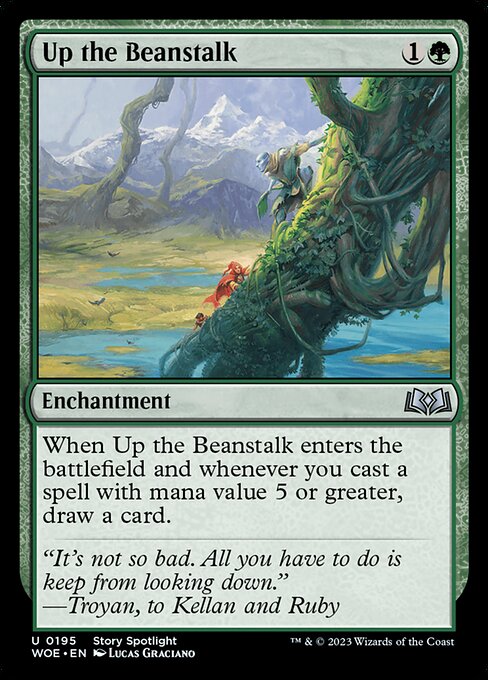 Up the Beanstalk
When this enchantment enters and whenever you cast a spell with mana value 5 or greater, draw a card.
provided multi-color
Leyline Binding
Up the Beanstalk
When this enchantment enters and whenever you cast a spell with mana value 5 or greater, draw a card.
provided multi-color
Leyline Binding
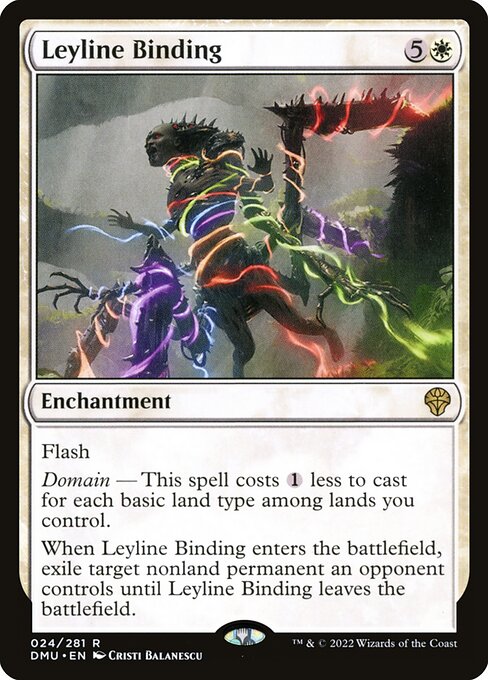 Leyline Binding
Flash
Leyline Binding
Flash
Domain — This spell costs {1} less to cast for each basic land type among lands you control.
When this enchantment enters, exile target nonland permanent an opponent controls until this enchantment leaves the battlefield.
decks with an excellent source of card advantage.
Up the Beanstalk was such a powerful addition to the Modern format that many players have been using
Shardless Agent
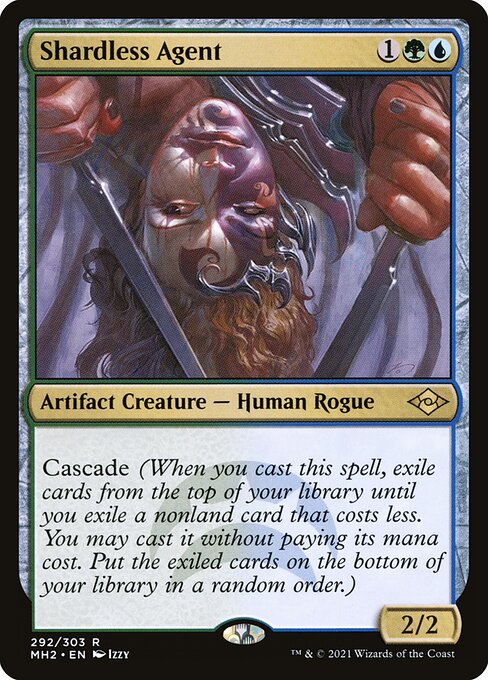 Shardless Agent
Cascade (When you cast this spell, exile cards from the top of your library until you exile a nonland card that costs less. You may cast it without paying its mana cost. Put the exiled cards on the bottom in a random order.)
to reliably Cascade into it instead of cards like
Living End
Shardless Agent
Cascade (When you cast this spell, exile cards from the top of your library until you exile a nonland card that costs less. You may cast it without paying its mana cost. Put the exiled cards on the bottom in a random order.)
to reliably Cascade into it instead of cards like
Living End
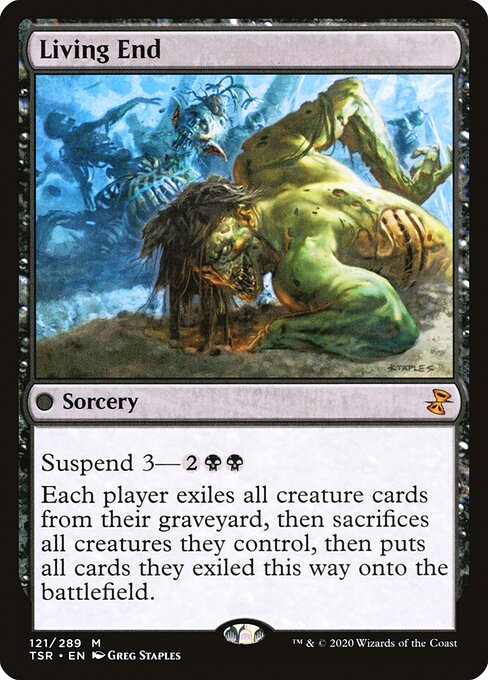 Living End
Suspend 3—{2}{B}{B}
Living End
Suspend 3—{2}{B}{B}
Each player exiles all creature cards from their graveyard, then sacrifices all creatures they control, then puts all cards they exiled this way onto the battlefield.
or
Crashing Footfalls
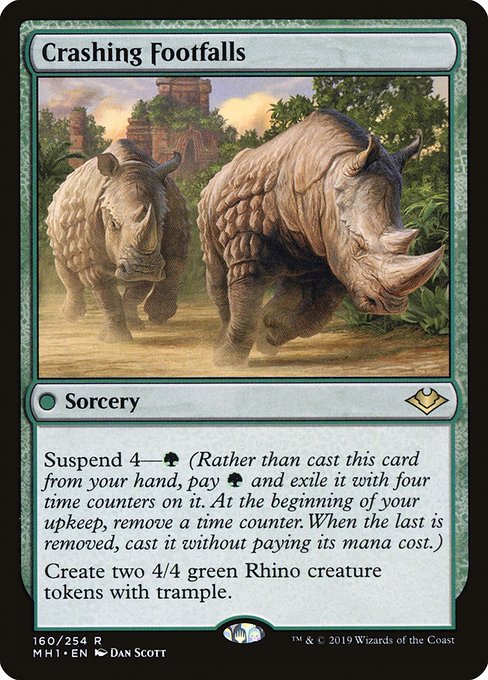 Crashing Footfalls
Suspend 4—{G} (Rather than cast this card from your hand, pay {G} and exile it with four time counters on it. At the beginning of your upkeep, remove a time counter. When the last is removed, you may cast it without paying its mana cost.)
Crashing Footfalls
Suspend 4—{G} (Rather than cast this card from your hand, pay {G} and exile it with four time counters on it. At the beginning of your upkeep, remove a time counter. When the last is removed, you may cast it without paying its mana cost.)
Create two 4/4 green Rhino creature tokens with trample.
. Additionally, Up the Beanstalk has the potential to draw so many cards that some players even play more than 60 cards!
While multi-color Leyline Binding builds are definitely the most popular shells for Up the Beanstalk, some players continue to brew around the elite two-drop. In fact, just this week, someone went 5-0 in a Magic Online Modern League with an intriguing combo deck utilizing a playset of Up the Beanstalk. The deck has some typical inclusions to maximize Up the Beanstalk, such as
Fury
 Fury
Double strike
Fury
Double strike
When this creature enters, it deals 4 damage divided as you choose among any number of target creatures and/or planeswalkers.
Evoke—Exile a red card from your hand.
and
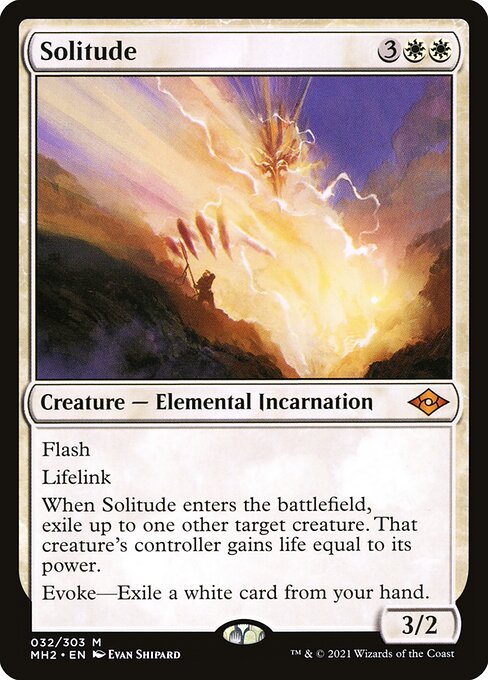
Solitude
 Solitude
Flash
Solitude
Flash
Lifelink
When this creature enters, exile up to one other target creature. That creature's controller gains life equal to its power.
Evoke—Exile a white card from your hand.
, but the core of the deck is rather unique. The deck is extremely synergistic, so let’s take a look at exactly what this deck is trying to accomplish.
Birthing Pod Variant

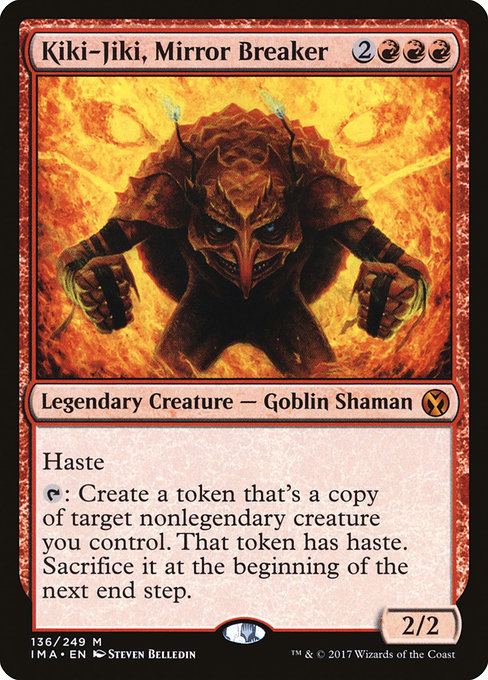
This deck’s main gameplan is actually to win via an infinite combo. The infinite combo revolves around
Kiki-Jiki, Mirror Breaker
 Kiki-Jiki, Mirror Breaker
Haste
Kiki-Jiki, Mirror Breaker
Haste
{T}: Create a token that's a copy of target nonlegendary creature you control, except it has haste. Sacrifice it at the beginning of the next end step.
and
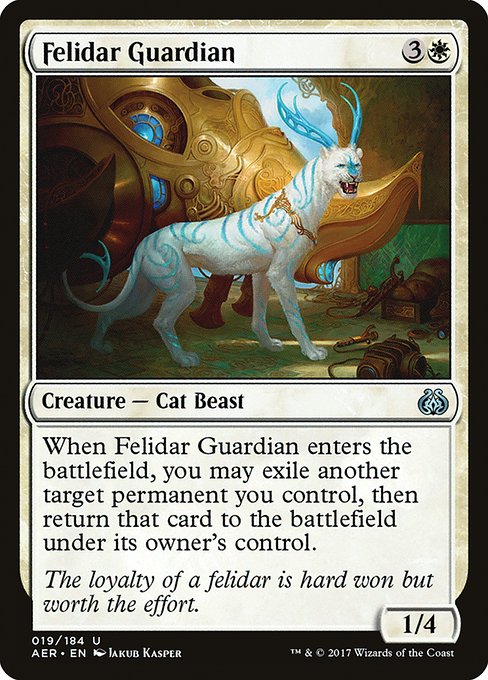
Felidar Guardian
 Felidar Guardian
When this creature enters, you may exile another target permanent you control, then return that card to the battlefield under its owner's control.
. With those two cards in play, you can tap Kiki-Jiki to make a copy of Feildar Guardian. When this copy enters the battlefield, you can blink Kiki-Jiki, and it will re-enter untapped. Because Kiki-Jiki and the copies of Felidar Guardian have Haste, you can make another copy of Felidar Guardian, and repeat this process until you have made enough copies of Felidar Guardian to simply attack the opponent and win.
Felidar Guardian
When this creature enters, you may exile another target permanent you control, then return that card to the battlefield under its owner's control.
. With those two cards in play, you can tap Kiki-Jiki to make a copy of Feildar Guardian. When this copy enters the battlefield, you can blink Kiki-Jiki, and it will re-enter untapped. Because Kiki-Jiki and the copies of Felidar Guardian have Haste, you can make another copy of Felidar Guardian, and repeat this process until you have made enough copies of Felidar Guardian to simply attack the opponent and win.
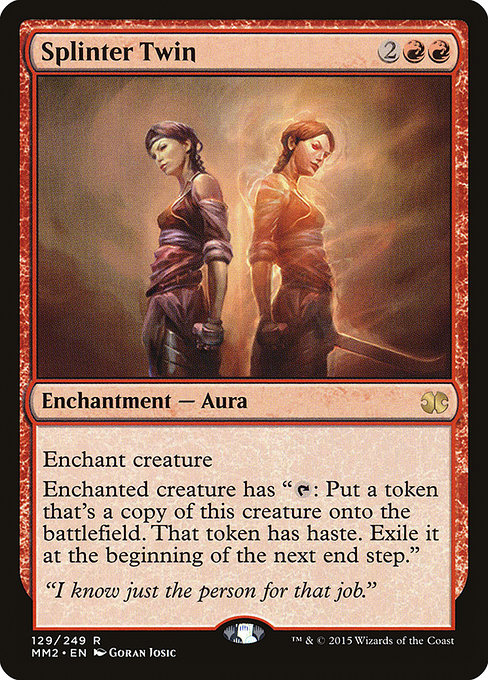
This win condition is quite similar to the
Splinter Twin
 Splinter Twin
Enchant creature
Splinter Twin
Enchant creature
Enchanted creature has "{T}: Create a token that's a copy of this creature, except it has haste. Exile that token at the beginning of the next end step."
and
Pestermite
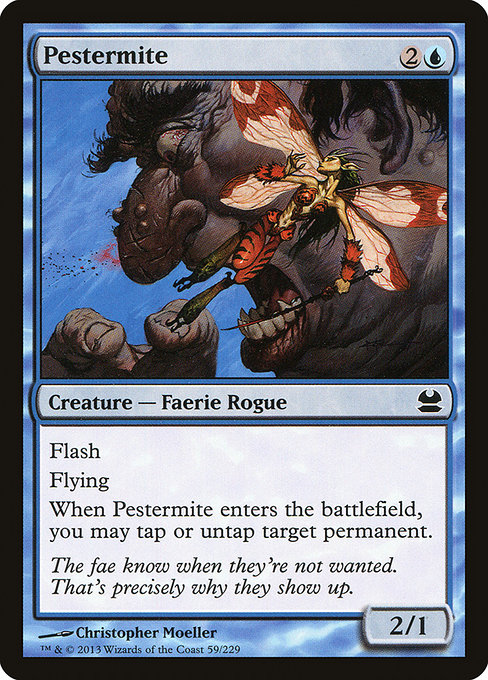 Pestermite
Flash
Pestermite
Flash
Flying
When this creature enters, you may tap or untap target permanent.
combo of old. The difference here is that this deck only plays one copy of Kii-Jiki and two copies of Felidar Guardian. Rather than relying on casting a four-mana card, then a five-mana card which can be quite mana-intensive, this deck actually uses Planebound Accomplice and
Vivien on the Hunt
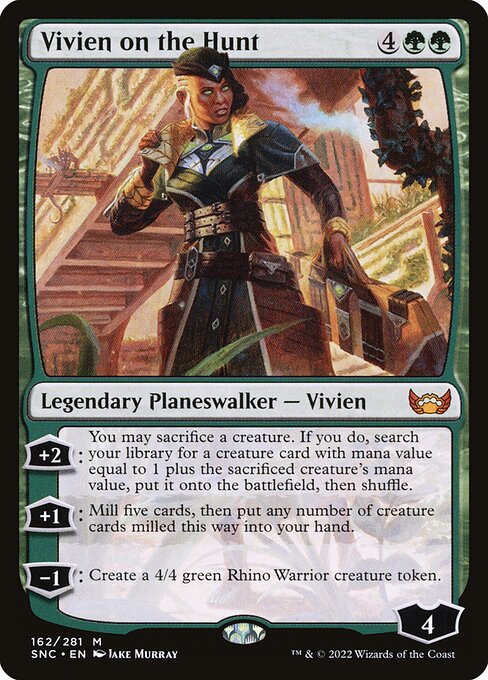 Vivien on the Hunt
+2: You may sacrifice a creature. If you do, search your library for a creature card with mana value equal to 1 plus the sacrificed creature's mana value, put it onto the battlefield, then shuffle.
Vivien on the Hunt
+2: You may sacrifice a creature. If you do, search your library for a creature card with mana value equal to 1 plus the sacrificed creature's mana value, put it onto the battlefield, then shuffle.
+1: Mill five cards, then put any number of creature cards milled this way into your hand.
−1: Create a 4/4 green Rhino Warrior creature token.
to get the combo assembled.
With Planebound Accomplice in play, you can put Viven into play for one mana. Much like
Birthing Pod
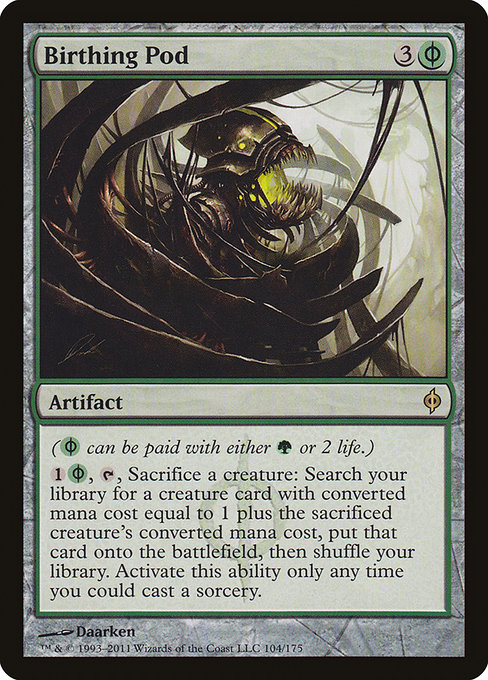 Birthing Pod
({G/P} can be paid with either {G} or 2 life.)
Birthing Pod
({G/P} can be paid with either {G} or 2 life.)
{1}{G/P}, {T}, Sacrifice a creature: Search your library for a creature card with mana value equal to 1 plus the sacrificed creature's mana value, put that card onto the battlefield, then shuffle. Activate only as a sorcery.
, a card banned in Modern, Vivien lets you sacrifice a Creature and put into play a Creature with mana value equal to the sacrificed Creature’s mana value plus one. Using this ability, you can execute the following steps to assemble the Kiki-Jiki and Felidar Guardian combo out of nowhere:
- Use Vivien’s +2 ability to sacrifice Planebound Accomplice, finding Felidar Guardian
- Use Felidar Guardian to blink Vivien, then sacrifice Felidar Guardian to Vivien’s ability and find
Karmic Guide
 Karmic Guide
Flying, protection from black
Karmic Guide
Flying, protection from black
Echo {3}{W}{W} (At the beginning of your upkeep, if this came under your control since the beginning of your last upkeep, sacrifice it unless you pay its echo cost.)
When this creature enters, return target creature card from your graveyard to the battlefield. - Use Karmic Guide to bring back Felidar Guardian from your graveyard to play, blink Vivien, and sacrifice Felidar Guardian again to Vivien’s ability, finding Kiki-Jiki
- Use Kiki-Jiki to make a copy of Karmic Guide, bringing back Felidar Guardian with its triggered ability
- Execute the combo as normal
Read More: MTG LOTR Holiday Release Card Makes Waves in Highly Competitive Format!
Ephemerate Package

In addition to being able to win with Vivien and Planebound Accomplice, this deck is also capable of doing a good “Scam” impression. Rather than Evoking
Grief
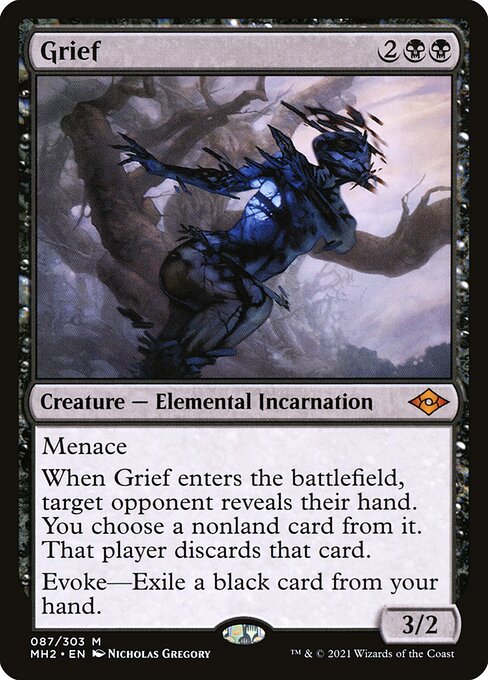 Grief
Menace
Grief
Menace
When this creature enters, target opponent reveals their hand. You choose a nonland card from it. That player discards that card.
Evoke—Exile a black card from your hand.
or Fury alongside
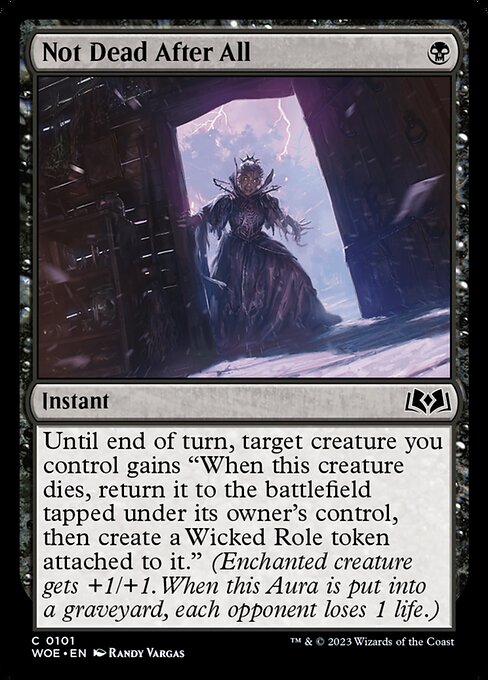
Not Dead After All
 Not Dead After All
Until end of turn, target creature you control gains "When this creature dies, return it to the battlefield tapped under its owner's control, then create a Wicked Role token attached to it." (Enchanted creature gets +1/+1. When this token is put into a graveyard, each opponent loses 1 life.)
to get multiple triggers on turn one and keep the Creature around, this deck can Evoke Fury or Solitude, then use
Ephemerate
Not Dead After All
Until end of turn, target creature you control gains "When this creature dies, return it to the battlefield tapped under its owner's control, then create a Wicked Role token attached to it." (Enchanted creature gets +1/+1. When this token is put into a graveyard, each opponent loses 1 life.)
to get multiple triggers on turn one and keep the Creature around, this deck can Evoke Fury or Solitude, then use
Ephemerate
 Ephemerate
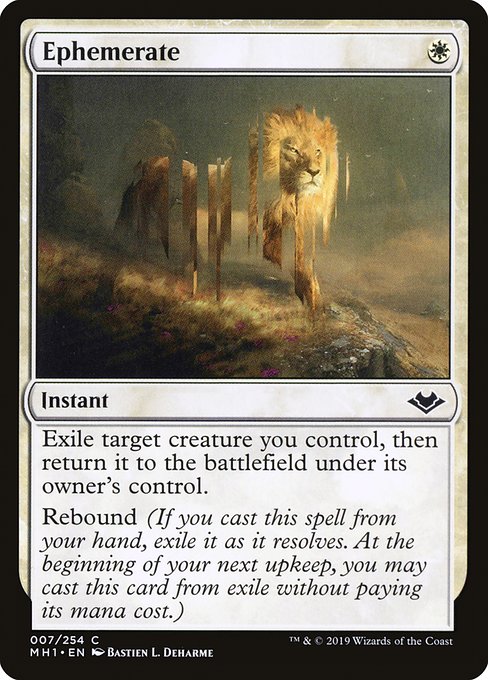
Exile target creature you control, then return it to the battlefield under its owner's control.
Ephemerate
Exile target creature you control, then return it to the battlefield under its owner's control.
Rebound (If you cast this spell from your hand, exile it as it resolves. At the beginning of your next upkeep, you may cast this card from exile without paying its mana cost.)
to blink the Creature and bypass the Evoke trigger that way.
What’s nice is that this deck plays a ton of Creatures with relevant enters-the-battlefield effects, making Ephemerate a very strong card. Against decks with lots of cheap Creatures, Evoking Fury or Solitude and using Ephemerate is a great strategy.
In more attrition-based matchups, it’s quite realistic to start casting your five drops and generating value. In this sense, Karmic Guide has use even outside of the combo as a way to bring back Solitude or Fury. This deck is somewhat reliant on finding Evoke Creatures and Planebound Accomplice, though, so to help with that, there are three copies of
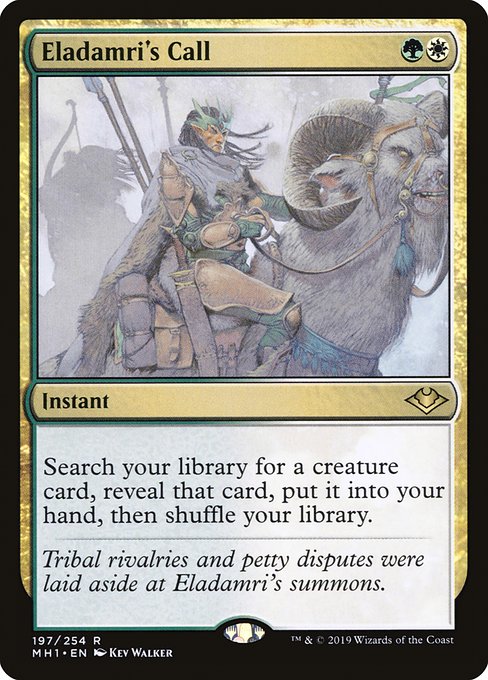
Eladamri’s Call
 Eladamri’s Call
Search your library for a creature card, reveal that card, put it into your hand, then shuffle.
in the mix.
Eladamri’s Call
Search your library for a creature card, reveal that card, put it into your hand, then shuffle.
in the mix.
Read More: $40 MTG Deck Goes Undefeated in Hostile Environment!
Strengths and Weaknesses
The reality is, this deck is a bit clunky overall. Many of the requisite cards for the combo, while not poor on their own, cost a decent chunk of mana to cast normally. This deck can definitely have consistency issues as a result. For example, you may get stuck with Vivien in your hand without Planebound Accomplice, as getting to six mana isn’t always easy. Getting to Evoke Fury and Solitude can help buy you time, but that still requires you to pitch a card from your hand to do so.
Even if you cast Planebound Accomplice with Vivien in hand, as kami-inu pointed out above, there are a number of ways the combo can be disrupted. This is a major weakness for a deck focused on a six-mana card. After all, this combo has been around for over a year, but has yet to make much noise. What has changed that might make this archetype more resilient than before?
The big difference here is the inclusion of Up the Beanstalk alongside the Evoke Elementals. While adding Up the Beanstalk may not seem like that big of a deal, it really does solve a lot of the deck’s issues. First of all, you can Evoke Solitude or Fury without having to worry too much about card disadvantage in the process. Getting to draw cards also helps enable you to keep hitting your Land drops and potentially cast some of your top-end combo pieces.
Without a source of card advantage, this deck would be quite vulnerable to interaction from the opponent. Up the Beanstalk gives you a better chance at playing a longer game and fighting through removal and Counterspells. The Ephemerate Package gives you a decent shot against Creature-based decks like Hammer Time, while having access to the combo as well as Reprieve helps a lot against opposing combo and Cascade decks. It is quite unlikely that this deck will emerge as a highly competitive top-tier option in Modern. Still, it’s a fun combo deck that has more game now than it did over the last year, so if you’re looking for something unique, consider giving this deck a whirl.
Read More: Format-Warping Merfolk Wizard Sees 400% Price Spike!