


One of the most interesting aspects of MTG that gives the game so much re-playability is the constant ebbing and flowing within the metagames of various formats. Sometimes, all it takes is the emergence of cards from a new set or some innovative ideas for an underutilized deck to make its presence felt. As metagames shift, some strategies are bound to feel stronger or weaker against the field.
For instance, when
Karn, the Great Creator
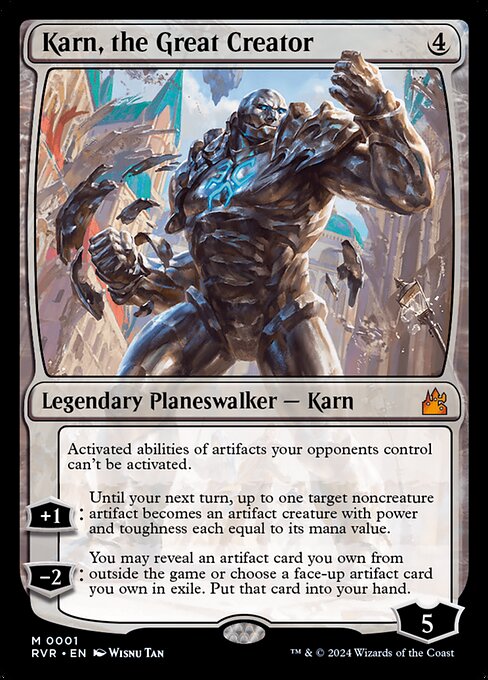 Karn, the Great Creator
Activated abilities of artifacts your opponents control can't be activated.
Karn, the Great Creator
Activated abilities of artifacts your opponents control can't be activated.
+1: Until your next turn, up to one target noncreature artifact becomes an artifact creature with power and toughness each equal to its mana value.
−2: You may reveal an artifact card you own from outside the game or choose a face-up artifact card you own in exile. Put that card into your hand.
got banned in Pioneer, mono-green Devotion mostly fell out of the metagame. This opened the door for some decks that struggled against mono-green, such as Rakdos midrange, to become even more popular. On the flip side, decks like Spirits which thrived off of the mono-green matchup, began representing a smaller portion of the metagame overall.
Today, we are going to focus on one card in particular that has been thriving in recent weeks. Despite being printed over two years ago, the card is seeing more play in Standard as well as Modern than expected. This card is none other than Slogurk, the Overslime. To help answer why this card may finally be getting the respect it deserves, it’s important to take a look at some of the more recent synergies that have developed.
A Match Made in Heaven

While Standard and Modern Slogurk shells are rather different in the ways they maximize the powerful three-drop, there’s one constant: Inti. Inti, Seneschal of the Sun is a relatively new addition to MTG, and it has completely opened the door for a multitude of different strategies to emerge. For example, we recently talked about the rise of Modern Food decks making perfect use of the synergies between
The Underworld Cookbook
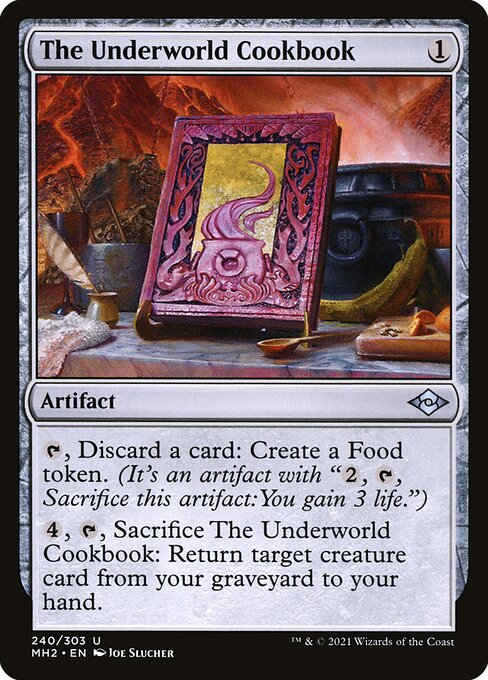 The Underworld Cookbook
{T}, Discard a card: Create a Food token. (It's an artifact with "{2}, {T}, Sacrifice this token: You gain 3 life.")
The Underworld Cookbook
{T}, Discard a card: Create a Food token. (It's an artifact with "{2}, {T}, Sacrifice this token: You gain 3 life.")
{4}, {T}, Sacrifice this artifact: Return target creature card from your graveyard to your hand.
and Inti.
Inti is certainly strong in more aggressively slanted archetypes that can make the most use out of Inti’s first ability. What really sets Inti apart, though, is its second ability. If you are playing a strategy where you are frequently discarding cards, Inti can help generate a ton of additional value and dig through your deck rather quickly.
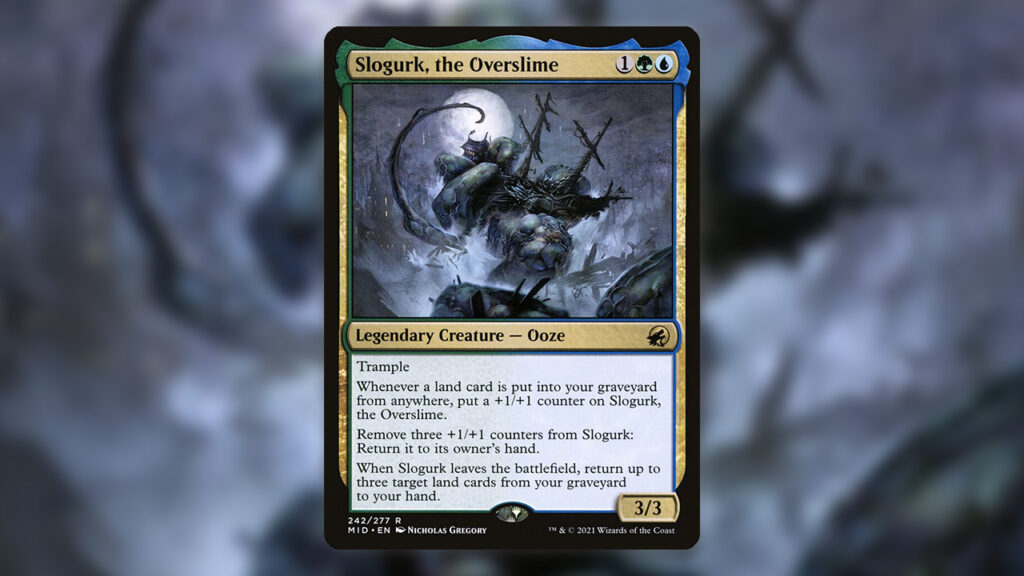
Similarly, Slogurk can grow exceptionally large if the cards you are discarding are Land cards. This alone makes Slogurk a massive threat as an attacker. Once you manage to get three +1/+1 counters on Slogurk, you can now protect it from removal by returning it to your hand, along with three Lands from your graveyard in the process.
Even if Slogurk does die, you still can return some Lands from your graveyard to your hand when Slogurk leaves the battlefield. In Standard, you can pitch these excess Lands to Inti or to
Rona, Herald of Invasion
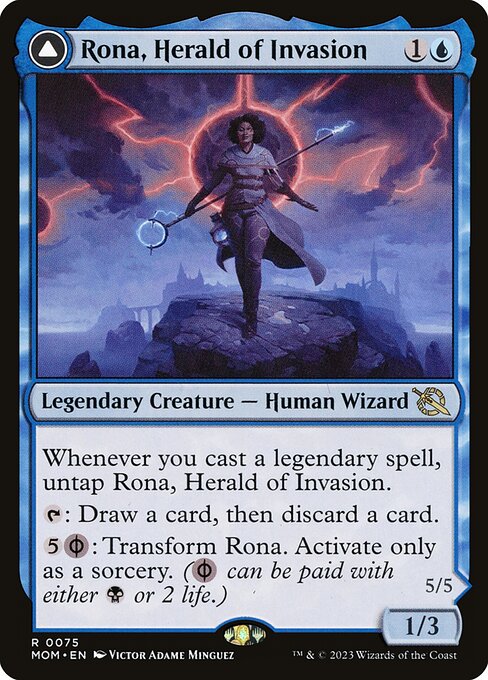 Rona, Herald of Invasion
Whenever you cast a legendary spell, untap Rona.
Rona, Herald of Invasion
Whenever you cast a legendary spell, untap Rona.
{T}: Draw a card, then discard a card.
{5}{B/P}: Transform Rona. Activate only as a sorcery. ({B/P} can be paid with either {B} or 2 life.)
and dig for more cards that impact the board. To help maximize Slogurk and Inti even further, there are groups of Lands in both Standard and Modern that keep the value train rolling.
Read More: MTG Regional Championship Judge Ruling Creates Massive Player Drama!
Abusable Lands

In Standard, the presence of Channel Lands from Kamigawa: Neon Dynasty truly take Inti and Slogurk to the next level. Typically, Slogurk and Inti appear in multi-color legends builds that make use of a ton of legendary Creatures. There’s some wiggle room regarding what legendary Creatures should fill out your flex slots, but Inti, Slogurk, and Rona are the cream of the crop.
By playing all of these legends, you now open the door to be able to efficiently use Channel Lands to your advantage. Obviously, in Modern, Boseiju is a powerhouse that works great with Slogurk. In a slower format like Standard, though,
Takenuma, Abandoned Mire
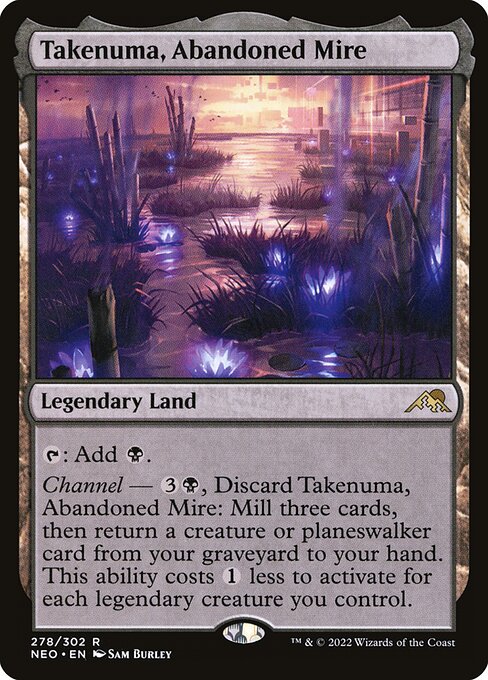 Takenuma, Abandoned Mire
{T}: Add {B}.
Takenuma, Abandoned Mire
{T}: Add {B}.
Channel — {3}{B}, Discard this card: Mill three cards, then return a creature or planeswalker card from your graveyard to your hand. This ability costs {1} less to activate for each legendary creature you control.
is the star of the show. Takenuma helps you return copies of Inti or Slogurk to your hand when they die. Thanks to the mill effect, you can also grow Slogurk at Instant speed, potentially a bunch if you hit a lot of Lands off of the mill.
This deck also plays a playset of
Otawara, Soaring City
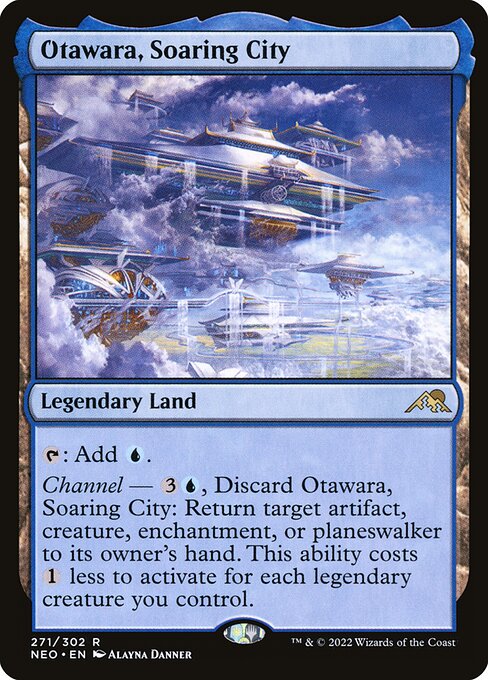 Otawara, Soaring City
{T}: Add {U}.
Otawara, Soaring City
{T}: Add {U}.
Channel — {3}{U}, Discard this card: Return target artifact, creature, enchantment, or planeswalker to its owner's hand. This ability costs {1} less to activate for each legendary creature you control.
, which can be used to either disrupt your opponent’s board or save one of your own Creatures from removal, depending on the matchup. What makes these Lands so incredible here is that Channeling them requires you to discard them.
This not only grows Slogurk, but it also triggers Inti as well, providing even more card advantage. Even if you manage to kill Slogurk, Takenuma can bring it right back. Kill it again, and Slogurk brings Takenuma back and the chain continues. Add in cards like
Spara’s Headquarters
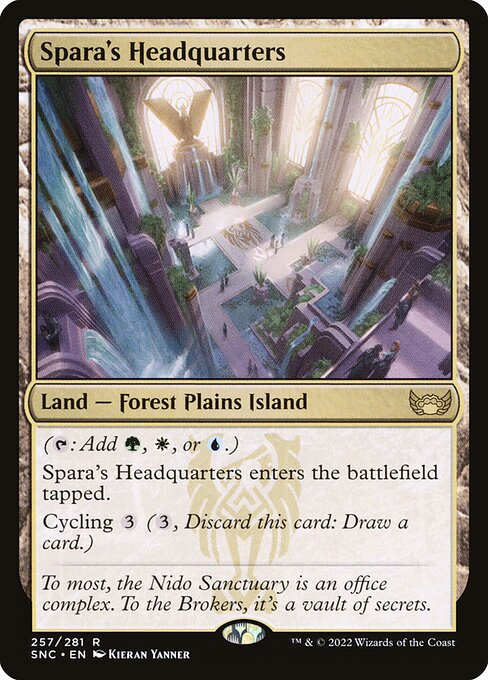 Spara’s Headquarters
({T}: Add {G}, {W}, or {U}.)
Spara’s Headquarters
({T}: Add {G}, {W}, or {U}.)
This land enters tapped.
Cycling {3} ({3}, Discard this card: Draw a card.)
that you can Cycle at will and its crazy just how much value these decks can generate.
Read More: The 14 MTG Best Murders at Karlov Manor Cards!
Going Berserk in Modern Loam

In Modern, the synergies become a lot more ridiculous. Right off the bat, the presence of
Forgotten Cave
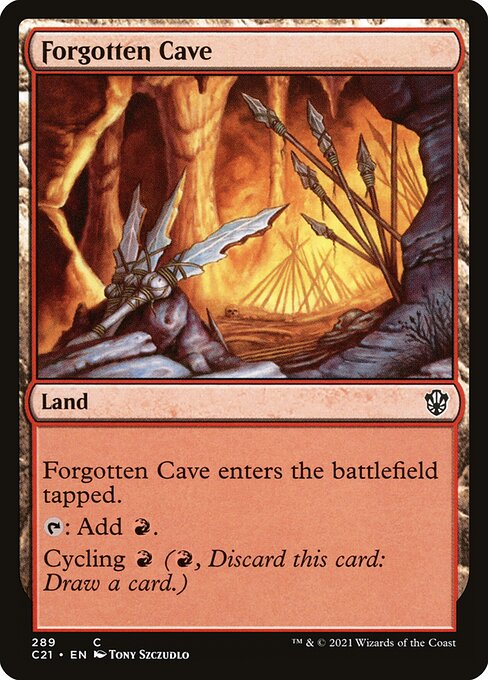 Forgotten Cave
This land enters tapped.
Forgotten Cave
This land enters tapped.
{T}: Add {R}.
Cycling {R} ({R}, Discard this card: Draw a card.)
and Wrenn and Six help you continuously dig through your deck and hit your Land drops. Life from the Loam lets you keep returning Lands to your hand and, thanks to Dredge, you can keep milling over more Lands, growing Slogurk in the process.
These synergies alone make Slogurk and Inti exceptionally scary cards just from the value they generate, but once you find Seismic Assault, there’s a good chance the game just ends on the spot. Seismic Assault lets you convert all of your excess Lands in hand into a bunch of damage to spread around to your liking. Each Land you discard also triggers Inti and grows Slogurk, and once you get three +1/+1 counters on Slogurk, you can return three Lands from your graveyard to your hand for even more Seismic Assault shenanigans.
Slogurk does take some building around to maximize, but given how powerful Slogurk and Inti are, the payoff is certainly there. If your opponent can’t kill Slogurk right away, it threatens to completely take over the game both as a value engine and as an enormous threat. The fact that Slogurk grows whenever a Land enters the graveyard from anywhere gives you so much agency.
Simple things like cracking Fetchlands become much scarier, and cards that can mill a bunch of Lands at once, such as Jace, the Perfected Mind, can let you Trample over your opponent with Slogurk in as little as one attack. If you’re playing a Standard or Modern event in the near future, definitely keep these cards on your radar.
Read More: MTG Players Voice Frustration with Rules Change to Suspend!