


Since Modern was created back in 2011, there have been a multitude of extremely powerful decks that have emerged and required bannings to keep in check. From elite build-around pieces like
Second Sunrise
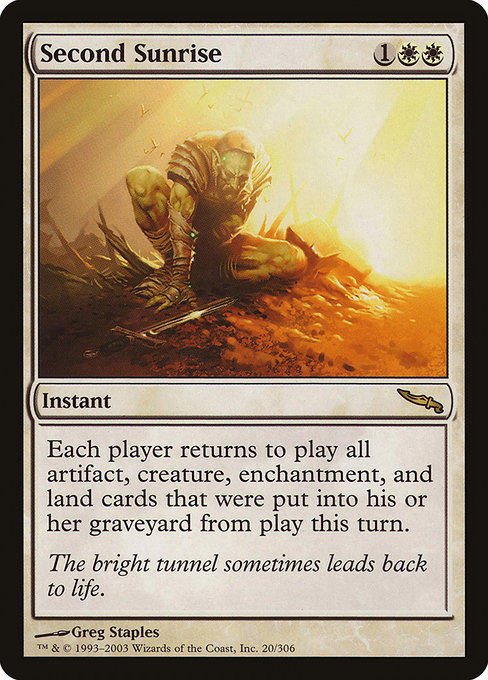 Second Sunrise
Each player returns to the battlefield all artifact, creature, enchantment, and land cards in their graveyard that were put there from the battlefield this turn.
to overly efficient enablers, such as
Mox Opal
Second Sunrise
Each player returns to the battlefield all artifact, creature, enchantment, and land cards in their graveyard that were put there from the battlefield this turn.
to overly efficient enablers, such as
Mox Opal
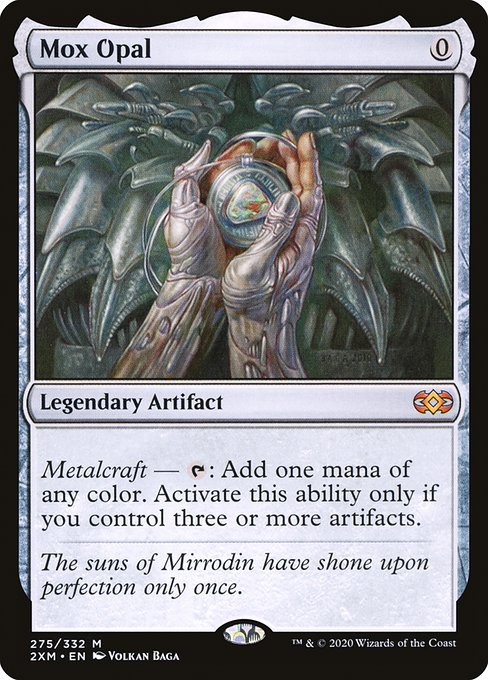 Mox Opal
Metalcraft — {T}: Add one mana of any color. Activate only if you control three or more artifacts.
, Modern has had its fair share of bans over the last decade and change.
Mox Opal
Metalcraft — {T}: Add one mana of any color. Activate only if you control three or more artifacts.
, Modern has had its fair share of bans over the last decade and change.
Most recently,
Violent Outburst
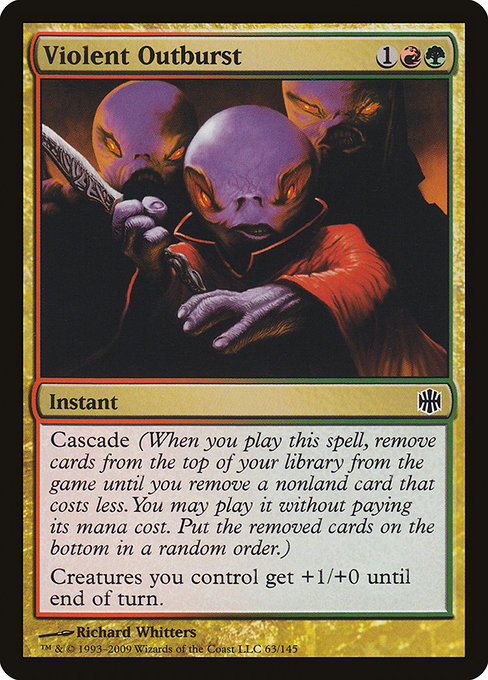 Violent Outburst
Cascade (When you cast this spell, exile cards from the top of your library until you exile a nonland card that costs less. You may cast it without paying its mana cost. Put the exiled cards on the bottom in a random order.)
Violent Outburst
Cascade (When you cast this spell, exile cards from the top of your library until you exile a nonland card that costs less. You may cast it without paying its mana cost. Put the exiled cards on the bottom in a random order.)
Creatures you control get +1/+0 until end of turn.
bit the dust in Modern, weakening
Crashing Footfalls
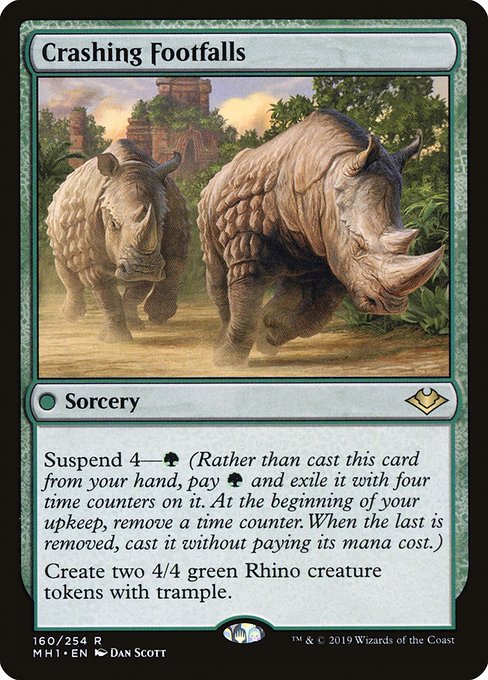 Crashing Footfalls
Suspend 4—{G} (Rather than cast this card from your hand, pay {G} and exile it with four time counters on it. At the beginning of your upkeep, remove a time counter. When the last is removed, you may cast it without paying its mana cost.)
Crashing Footfalls
Suspend 4—{G} (Rather than cast this card from your hand, pay {G} and exile it with four time counters on it. At the beginning of your upkeep, remove a time counter. When the last is removed, you may cast it without paying its mana cost.)
Create two 4/4 green Rhino creature tokens with trample.
and
Living End
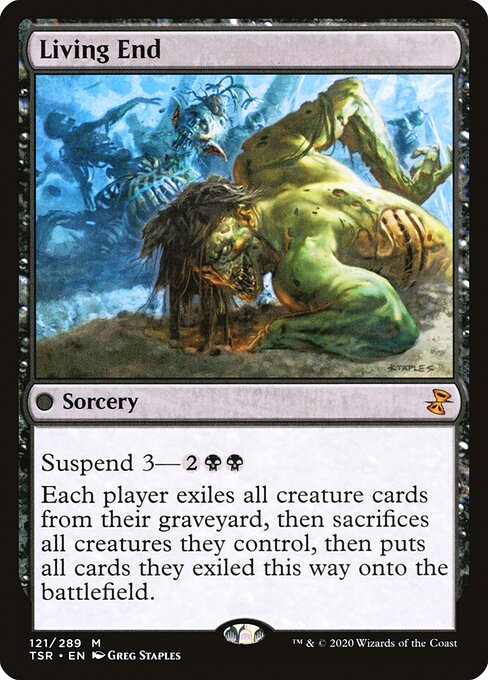 Living End
Suspend 3—{2}{B}{B}
Living End
Suspend 3—{2}{B}{B}
Each player exiles all creature cards from their graveyard, then sacrifices all creatures they control, then puts all cards they exiled this way onto the battlefield.
shells alike. While Violent Outburst has certainly overstayed its welcome, these decks are far from the from the strongest archetypes we’ve seen in Modern.
As more cards continue to earn the banhammer in Modern, we thought it would be interesting to look back at the strongest decks that have ever existed in the Modern format. Notably, Modern has been around for a long time, and frankly, there are a ton of busted decks to choose from. As such, there are bound to be some elite omissions from this list. If anything, this highlights just how absurd the decks that ended up making the cut were at the time. Now, without further ado, here are the top five most broken MTG Modern decks of all time!
#5 Summer Bloom Titan
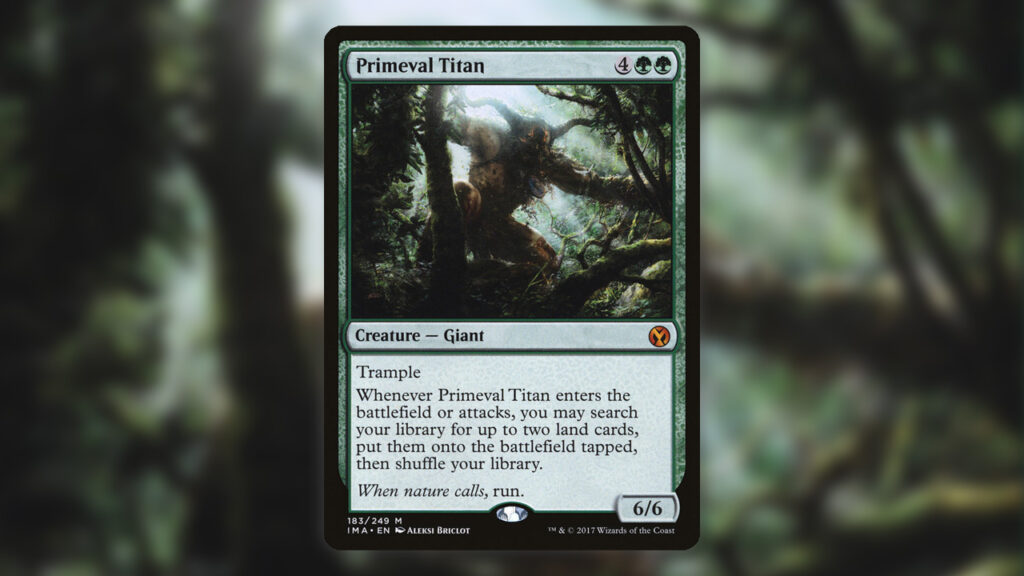
First, we have a deck that, despite receiving a ban back in 2016, is actually somewhat reminiscent of a top tier strategy today. At its base, this deck revolves around Primeval Titan,
Amulet of Vigor
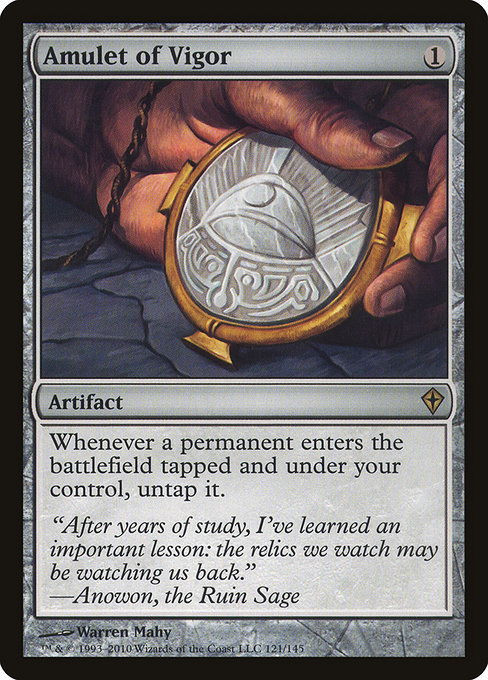 Amulet of Vigor
Whenever a permanent you control enters tapped, untap it.
, and various bounce Lands like
Simic Growth Chamber
Amulet of Vigor
Whenever a permanent you control enters tapped, untap it.
, and various bounce Lands like
Simic Growth Chamber
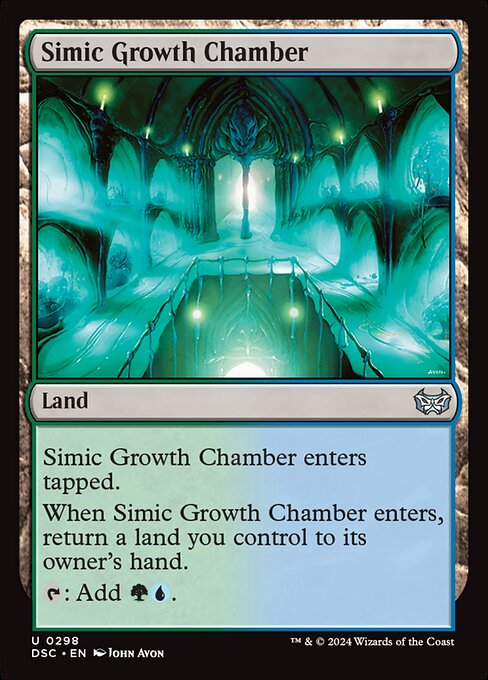 Simic Growth Chamber
This land enters tapped.
Simic Growth Chamber
This land enters tapped.
When this land enters, return a land you control to its owner's hand.
{T}: Add {G}{U}.
to net lots of mana. Back in 2014-2015 when this deck was quite popular, though, the likes of
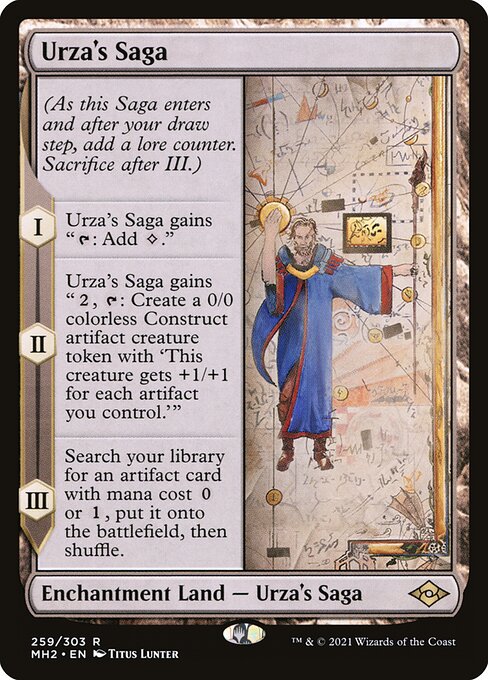
Urza’s Saga
 Urza’s Saga
(As this Saga enters and after your draw step, add a lore counter. Sacrifice after III.)
Urza’s Saga
(As this Saga enters and after your draw step, add a lore counter. Sacrifice after III.)
I — This Saga gains "{T}: Add {C}."
II — This Saga gains "{2}, {T}: Create a 0/0 colorless Construct artifact creature token with 'This token gets +1/+1 for each artifact you control.'"
III — Search your library for an artifact card with mana cost {0} or {1}, put it onto the battlefield, then shuffle.
and
Dryad of the Ilysian Grove
 Dryad of the Ilysian Grove
You may play an additional land on each of your turns.
Dryad of the Ilysian Grove
You may play an additional land on each of your turns.
Lands you control are every basic land type in addition to their other types.
weren’t around yet. So, what made this version of Amulet titan so scary?
The answer is very clear:
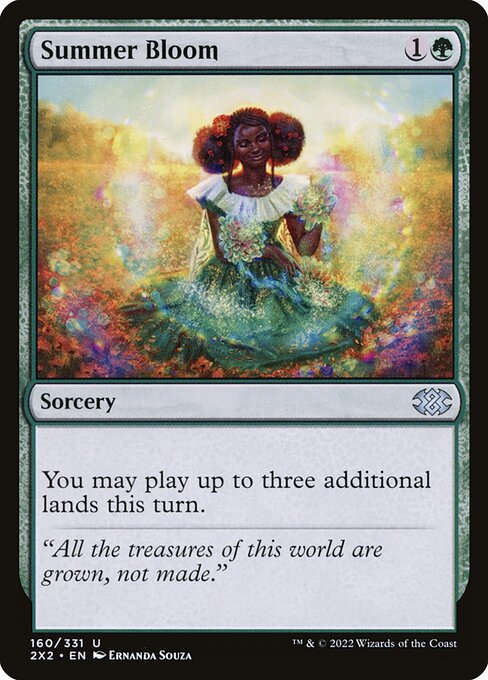
Summer Bloom
 Summer Bloom
You may play up to three additional lands this turn.
. Summer Bloom allowed for incredibly fast starts, especially with Amulet in play. Getting to play three extra Lands meant that, even if you didn’t have access to Amulet, it was trivial to set up Titan for the following turn. Given the presence of Summer Bloom as a major ramp enabler, this deck also made great use of
Hive Mind
Summer Bloom
You may play up to three additional lands this turn.
. Summer Bloom allowed for incredibly fast starts, especially with Amulet in play. Getting to play three extra Lands meant that, even if you didn’t have access to Amulet, it was trivial to set up Titan for the following turn. Given the presence of Summer Bloom as a major ramp enabler, this deck also made great use of
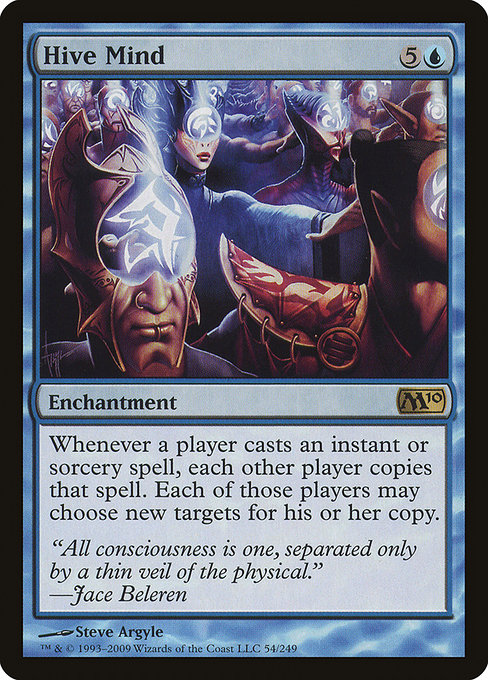
Hive Mind
 Hive Mind
Whenever a player casts an instant or sorcery spell, each other player copies that spell. Each of those players may choose new targets for their copy.
as an alternate win condition.
Hive Mind
Whenever a player casts an instant or sorcery spell, each other player copies that spell. Each of those players may choose new targets for their copy.
as an alternate win condition.
Alongside
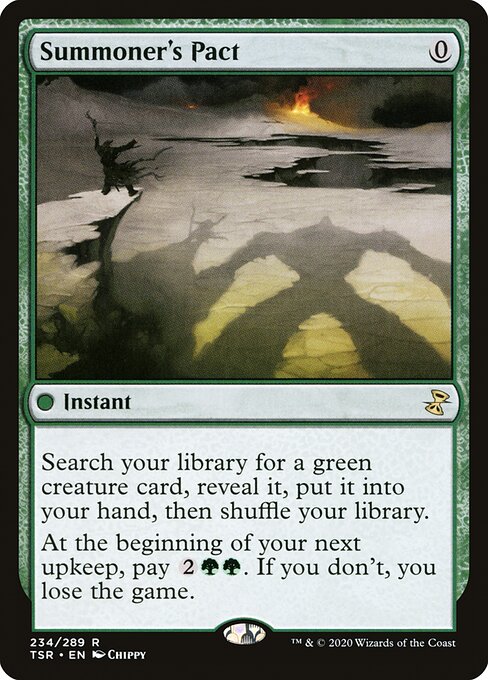
Summoner’s Pact
 Summoner’s Pact
Search your library for a green creature card, reveal it, put it into your hand, then shuffle.
Summoner’s Pact
Search your library for a green creature card, reveal it, put it into your hand, then shuffle.
At the beginning of your next upkeep, pay {2}{G}{G}. If you don't, you lose the game.
or
Pact of Negation
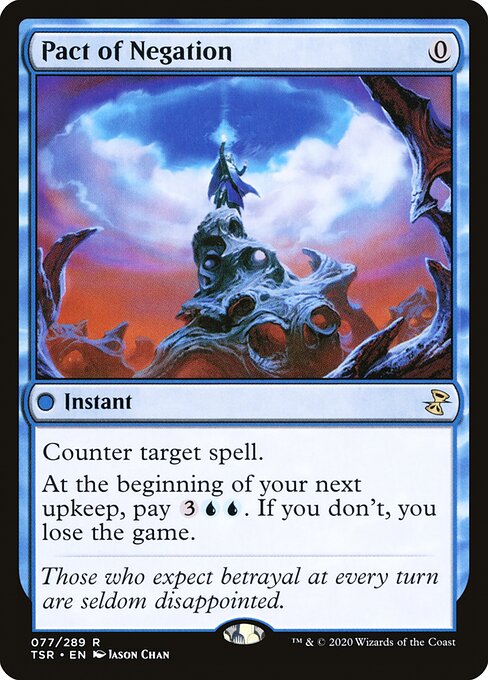 Pact of Negation
Counter target spell.
Pact of Negation
Counter target spell.
At the beginning of your next upkeep, pay {3}{U}{U}. If you don't, you lose the game.
, you could force your opponent to make a copy of your Pact and ultimately lose the game when they failed to pay their Pact trigger on upkeep. This deck isn’t quite as outrageous as the other four on this list, but the sheer speed Summer Bloom offered earns it a spot at the bottom of this list.
You can go a step further with this archetype and include the
Cloudpost
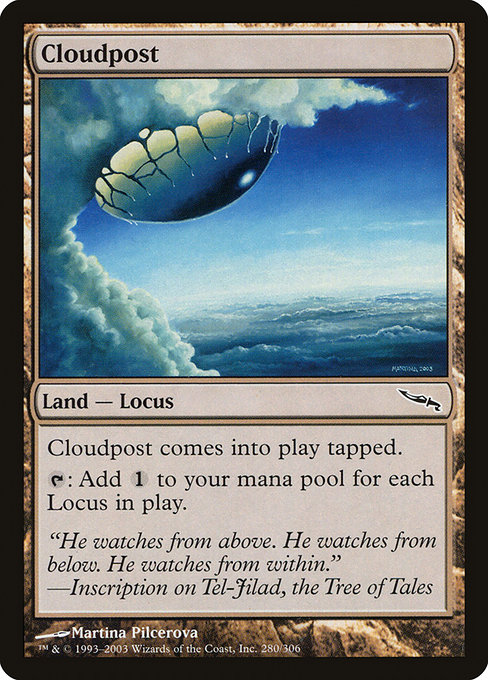 Cloudpost
This land enters tapped.
Cloudpost
This land enters tapped.
{T}: Add {C} for each Locus on the battlefield.
version of the deck that quickly got banned after Modern’s introductory events. This may very well be the most broken deck of all time for the Modern format, but it did not exist for very long.
Read More: Wizards Concerned About MTG Stickers in Competitive Format
#4 KCI
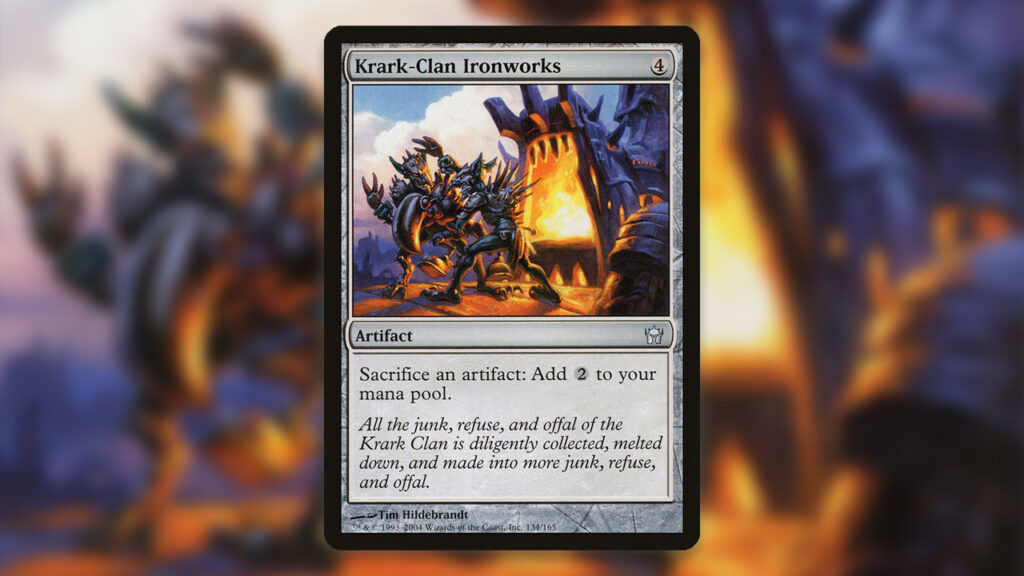
Modern KCI decks utilized the namesake card, Krark-Clan Ironworks, as a combo engine. With Mox Opal,
Myr Retriever
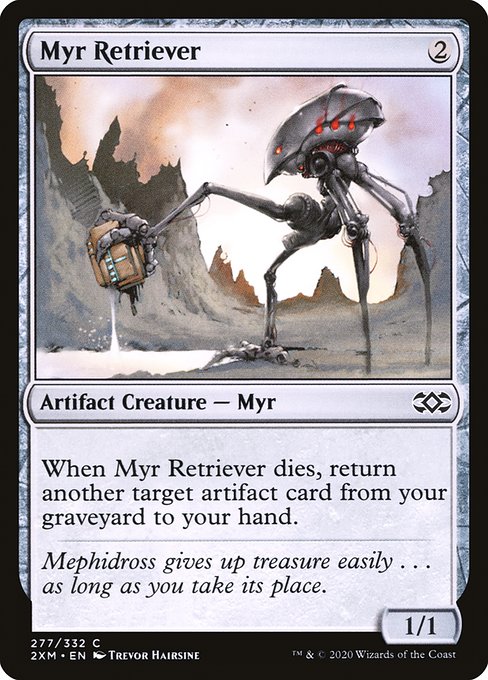 Myr Retriever
When this creature dies, return another target artifact card from your graveyard to your hand.
,
Scrap Trawler
Myr Retriever
When this creature dies, return another target artifact card from your graveyard to your hand.
,
Scrap Trawler
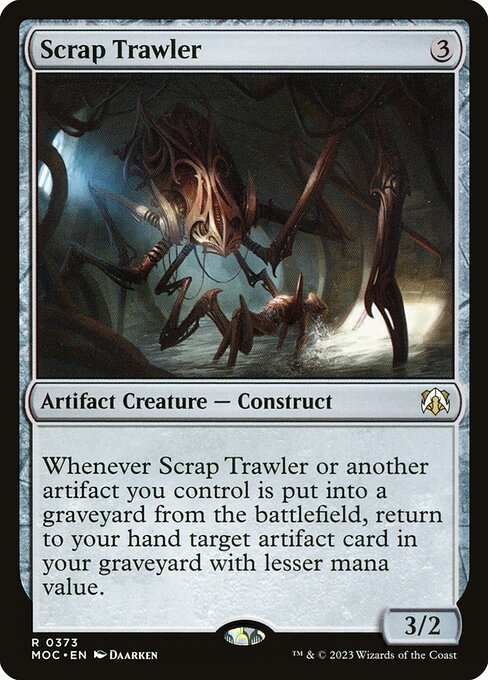 Scrap Trawler
Whenever this creature dies or another artifact you control is put into a graveyard from the battlefield, return to your hand target artifact card in your graveyard with lesser mana value.
, and
Chromatic Star
Scrap Trawler
Whenever this creature dies or another artifact you control is put into a graveyard from the battlefield, return to your hand target artifact card in your graveyard with lesser mana value.
, and
Chromatic Star
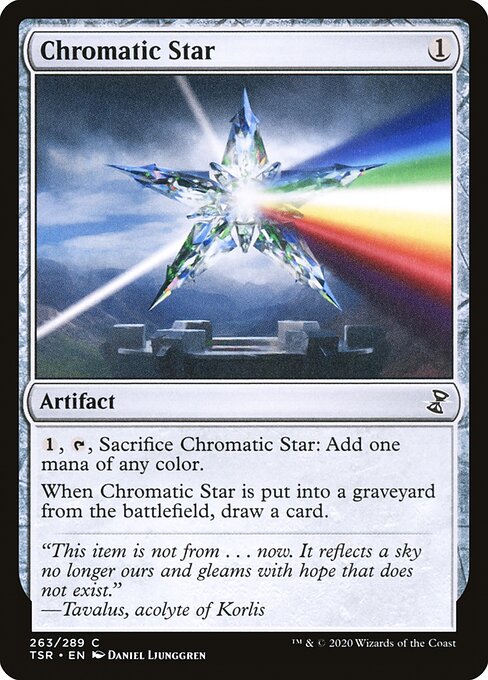 Chromatic Star
{1}, {T}, Sacrifice this artifact: Add one mana of any color.
Chromatic Star
{1}, {T}, Sacrifice this artifact: Add one mana of any color.
When this artifact is put into a graveyard from the battlefield, draw a card.
in the mix, it wasn’t difficult for players to churn through their whole library and generate enough mana to kill the opponent on the spot.
Beyond just its power level, KCI combo was one of the most convoluted combo decks in MTG history. It promoted some corner-case scenarios within the rules that made gameplay very confusing. The deck was also relatively difficult to hate out. Basic Artifact removal spells wasnt super effective, and because Krark-Clan Ironworks’ ability is a mana ability, cards like
Pithing Needle
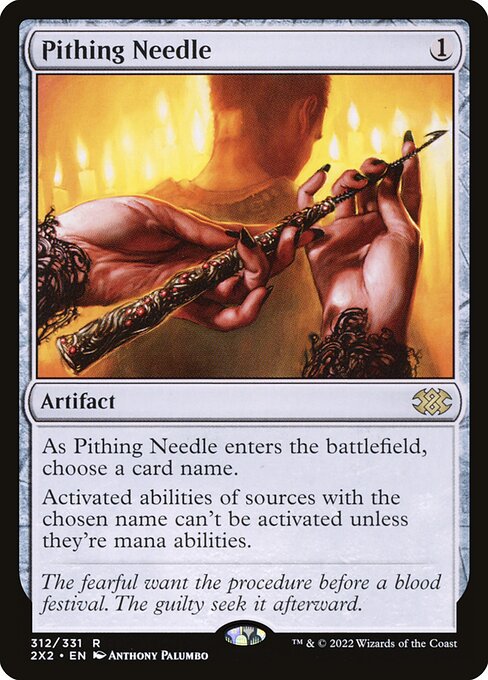 Pithing Needle
As this artifact enters, choose a card name.
Pithing Needle
As this artifact enters, choose a card name.
Activated abilities of sources with the chosen name can't be activated unless they're mana abilities.
didn’t help enough.
Given its complexity, the deck didn’t have quite as overwhelming of a metagame share as it otherwise could have. Don’t let that fool you, though, this deck was busted. For more information on combo lines, take a look here.
Read More: Forgotten MTG Cascade Card Sees 500% Price Spike After Bans!
#3 Valki Cascade

Funnily enough, while Violent Outburst was just recently banned for its role in Crashing Footfalls and Living End decks, there used to be a much more broken Cascade deck available. See, before a major rule change associated with the Cascade mechanic, players were able to cast the flip side of
Valki, God of Lies
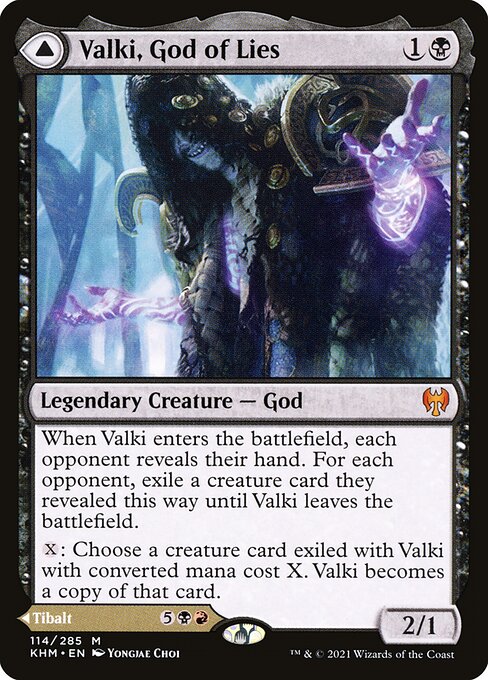 Valki, God of Lies
When Valki enters, each opponent reveals their hand. For each opponent, exile a creature card they revealed this way until Valki leaves the battlefield.
Valki, God of Lies
When Valki enters, each opponent reveals their hand. For each opponent, exile a creature card they revealed this way until Valki leaves the battlefield.
{X}: Choose a creature card exiled with Valki with mana value X. Valki becomes a copy of that card.
with cards like Violent Outburst. Even though Tibalt is a seven-mana Planeswalker, you could simply Cascade into Valki, then choose to cast the Tibalt side instead.
This deck was so dominant that it forced Wizards of the Coast to act hastily and change how modal double-faced cards worked with Cascade. The change forces players to only cast spells via Cascade if their mana costs are less than that of the Cascade spell’s mana value.
If Cascading into Tibalt on turn three weren’t powerful enough, players were also able to utilize
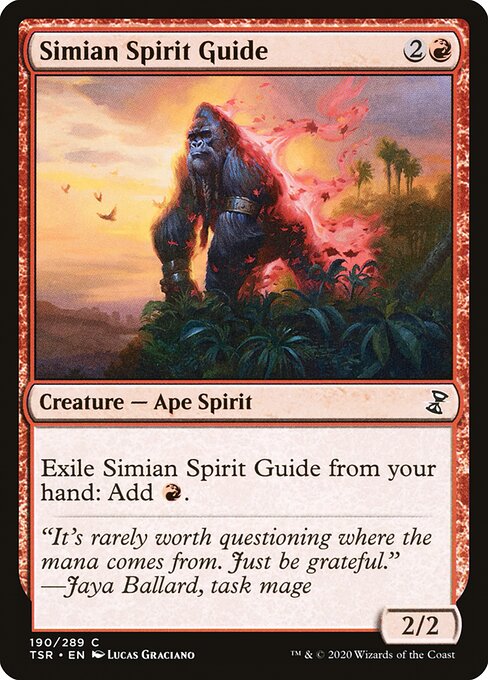
Simian Spirit Guide
 Simian Spirit Guide
Exile this card from your hand: Add {R}.
as an accelerant! This deck was fast, repetitive, and relatively toxic. Luckily, it didn’t last in Modern for too long, because it completely warped the format while it was legal.
Simian Spirit Guide
Exile this card from your hand: Add {R}.
as an accelerant! This deck was fast, repetitive, and relatively toxic. Luckily, it didn’t last in Modern for too long, because it completely warped the format while it was legal.
Read More: Zero-Rare Mono-Blue Standard Deck Thrives on MTG Arena!
#2 Hogaak Nonsense
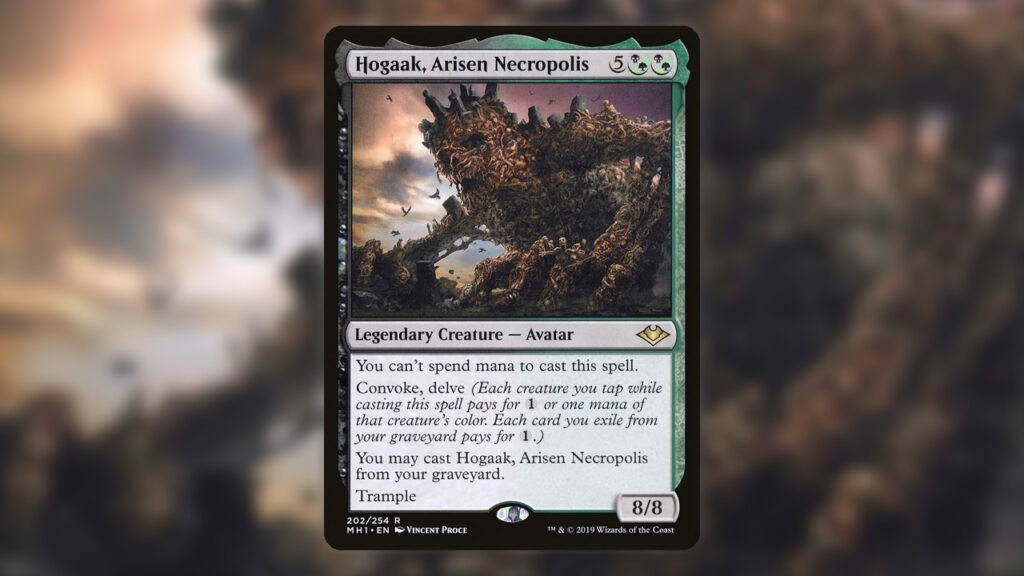
Hogaak is certainly one of the most infamous cards to ever enter the Modern format and is honestly a pretty egregious design. From
Treasure Cruise
 Treasure Cruise
Delve (Each card you exile from your graveyard while casting this spell pays for {1}.)
Treasure Cruise
Delve (Each card you exile from your graveyard while casting this spell pays for {1}.)
Draw three cards.
to
Dig Through Time
 Dig Through Time
Delve (Each card you exile from your graveyard while casting this spell pays for {1}.)
Dig Through Time
Delve (Each card you exile from your graveyard while casting this spell pays for {1}.)
Look at the top seven cards of your library. Put two of them into your hand and the rest on the bottom of your library in any order.
, we’ve seen just how easy it can be to fuel Delve. Even though Hogaak also required two Creatures to help Convoke it out,
Stitcher’s Supplier
 Stitcher’s Supplier
When this creature enters or dies, mill three cards. (Put the top three cards of your library into your graveyard.)
and
Satyr Wayfinder
Stitcher’s Supplier
When this creature enters or dies, mill three cards. (Put the top three cards of your library into your graveyard.)
and
Satyr Wayfinder
 Satyr Wayfinder
When this creature enters, reveal the top four cards of your library. You may put a land card from among them into your hand. Put the rest into your graveyard.
made this trivial.
Satyr Wayfinder
When this creature enters, reveal the top four cards of your library. You may put a land card from among them into your hand. Put the rest into your graveyard.
made this trivial.
From there, you get an 8/8 with Trample to completely rule the battlefield. The fact that this card is such a huge Trampler and could enter play on turn two without a ton of work put in made it very difficult to race. Meanwhile, most graveyard hate pieces like
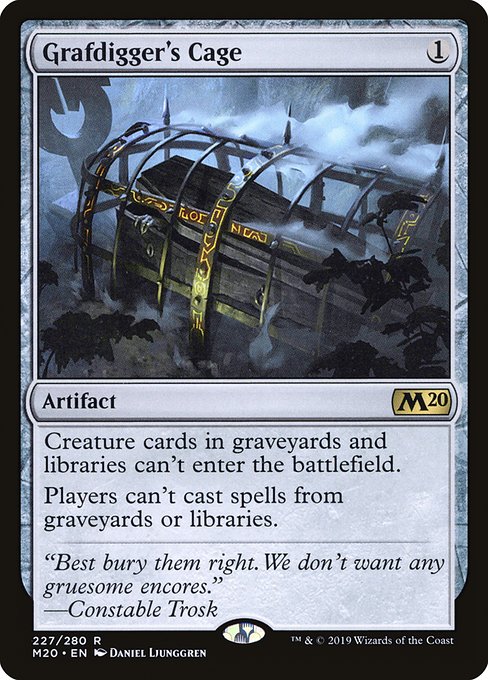
Grafdigger’s Cage
 Grafdigger’s Cage
Creature cards in graveyards and libraries can't enter the battlefield.
Grafdigger’s Cage
Creature cards in graveyards and libraries can't enter the battlefield.
Players can't cast spells from graveyards or libraries.
and
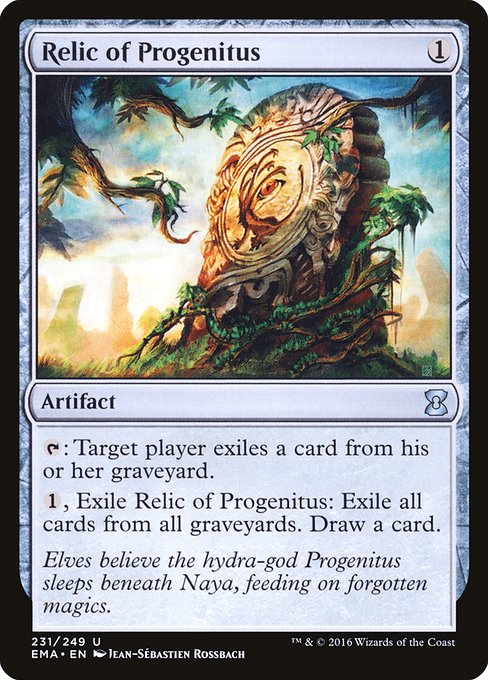
Relic of Progenitus
 Relic of Progenitus
{T}: Target player exiles a card from their graveyard.
Relic of Progenitus
{T}: Target player exiles a card from their graveyard.
{1}, Exile this artifact: Exile all graveyards. Draw a card.
were nowhere near strong enough to hold this deck down. It was easy to refuel your graveyard in the face of Relic, and you could simply cast Hogaak from hand with Cage in play.
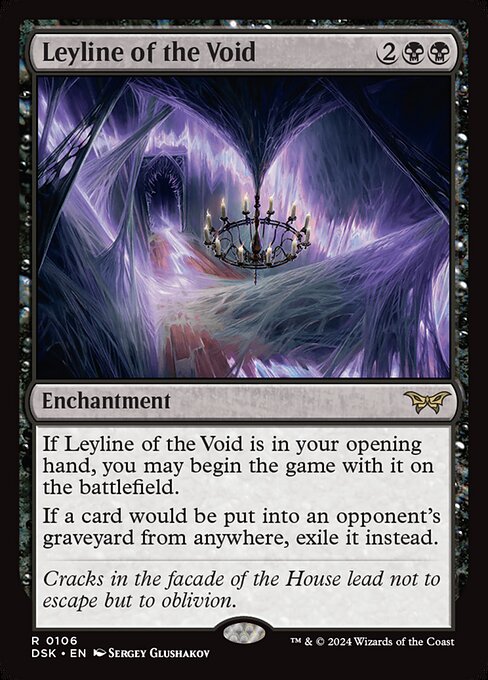
Players went as far as to put
Leyline of the Void
 Leyline of the Void
If this card is in your opening hand, you may begin the game with it on the battlefield.
Leyline of the Void
If this card is in your opening hand, you may begin the game with it on the battlefield.
If a card would be put into an opponent's graveyard from anywhere, exile it instead.
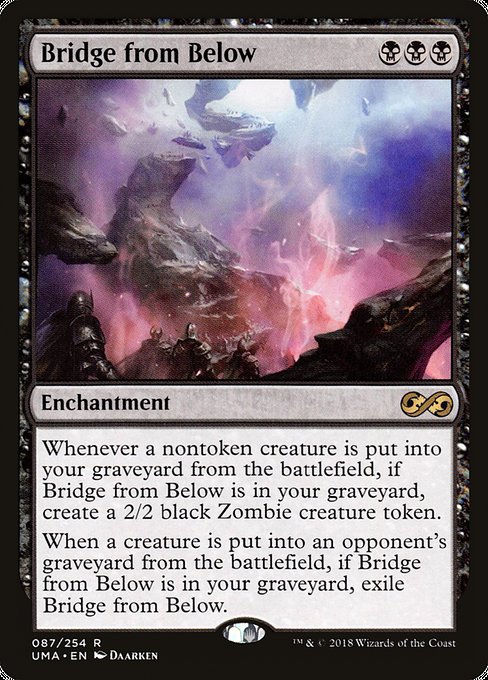
in their maindecks to try to get an edge. If that doesn’t showcase how dominant the Hogaak archetype is, I don’t know what does. The fact that
Bridge from Below
 Bridge from Below
Whenever a nontoken creature is put into your graveyard from the battlefield, if this card is in your graveyard, create a 2/2 black Zombie creature token.
Bridge from Below
Whenever a nontoken creature is put into your graveyard from the battlefield, if this card is in your graveyard, create a 2/2 black Zombie creature token.
When a creature is put into an opponent's graveyard from the battlefield, if this card is in your graveyard, exile this card.
was initially banned to try to slow down the Hogaak deck, only for it to take new form and run rampant is quite amusing. I wouldn’t fault anyone for having Hogaak as the number one most broken archetype ever in their eyes, but we feel there’s one deck that beats it out.
Read More: Quiet MTG Errata Quadruples Support for New Typal Archetype
Eldrazi Winter
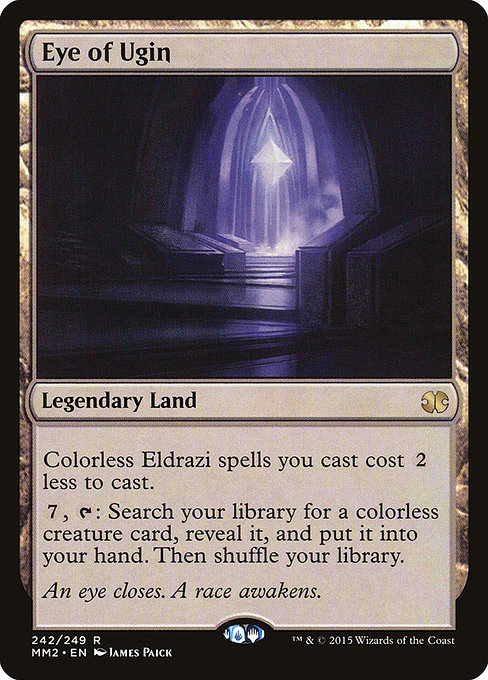
In our view, the most egregious Modern deck of all time was Eldrazi aggro. Commonly referred to as Eldrazi Winter, the period of time while
Eye of Ugin
 Eye of Ugin
Colorless Eldrazi spells you cast cost {2} less to cast.
Eye of Ugin
Colorless Eldrazi spells you cast cost {2} less to cast.
{7}, {T}: Search your library for a colorless creature card, reveal it, put it into your hand, then shuffle.
and a plethora of cheap Eldrazi were legal together was incredibly hostile. Eye of Ugin actually existed in Modern for a long time with no issues. Primarily used as a tutor target for
Expedition Map
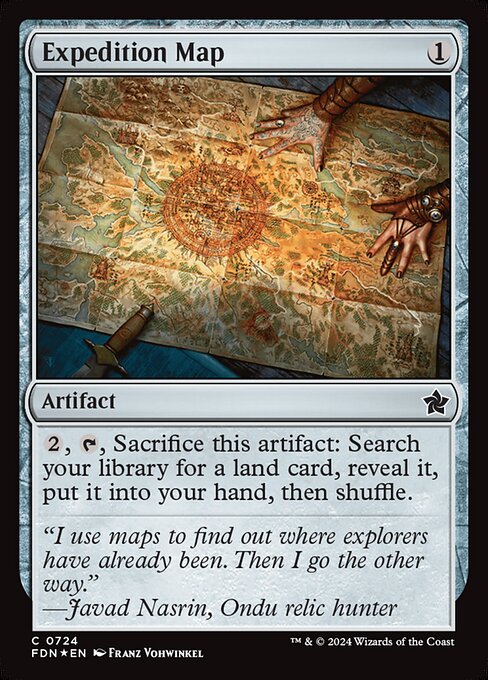 Expedition Map
{2}, {T}, Sacrifice this artifact: Search your library for a land card, reveal it, put it into your hand, then shuffle.
and
Sylvan Scrying
Expedition Map
{2}, {T}, Sacrifice this artifact: Search your library for a land card, reveal it, put it into your hand, then shuffle.
and
Sylvan Scrying
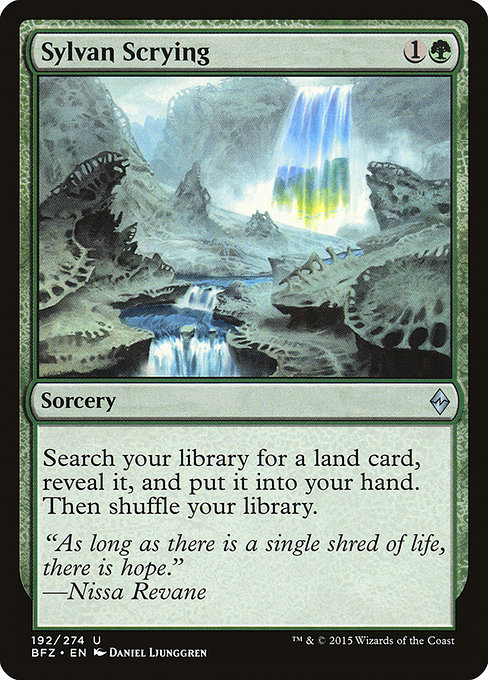 Sylvan Scrying
Search your library for a land card, reveal it, put it into your hand, then shuffle.
out of Tron decks in Modern, Eye of Ugin helped give big mana decks extra inevitability against slower strategies.
Sylvan Scrying
Search your library for a land card, reveal it, put it into your hand, then shuffle.
out of Tron decks in Modern, Eye of Ugin helped give big mana decks extra inevitability against slower strategies.
The issue with Eye of Ugin was that, once Battle for Zendikar and Oath of the Gatewatch entered the fray, all hell broke loose. Now, players had access to cheap Eldrazi like
Eldrazi Mimic
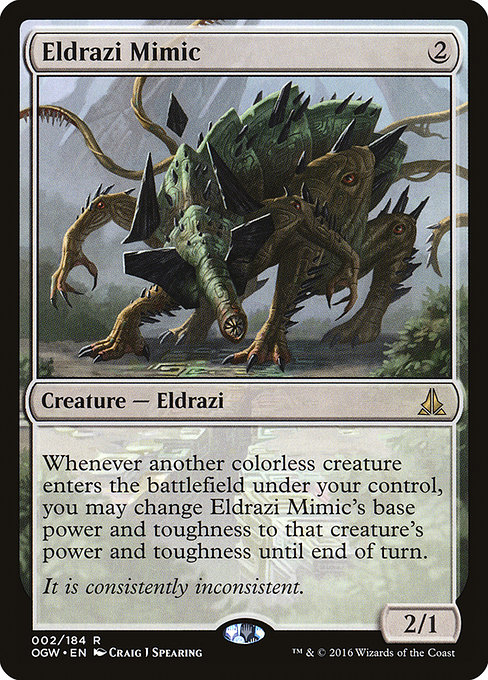 Eldrazi Mimic
Whenever another colorless creature you control enters, you may have this creature's base power and toughness become equal to that creature's power and toughness until end of turn.
and
Endless One
Eldrazi Mimic
Whenever another colorless creature you control enters, you may have this creature's base power and toughness become equal to that creature's power and toughness until end of turn.
and
Endless One
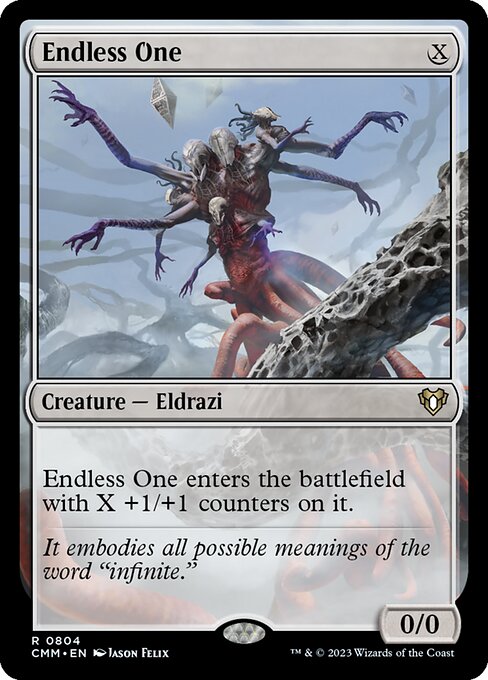 Endless One
This creature enters with X +1/+1 counters on it.
. It wasn’t out of the question to cast a bunch of two-power Eldrazi on turn one after playing Eye of Ugin. Afterwards, a turn two
Thought-Knot Seer
Endless One
This creature enters with X +1/+1 counters on it.
. It wasn’t out of the question to cast a bunch of two-power Eldrazi on turn one after playing Eye of Ugin. Afterwards, a turn two
Thought-Knot Seer
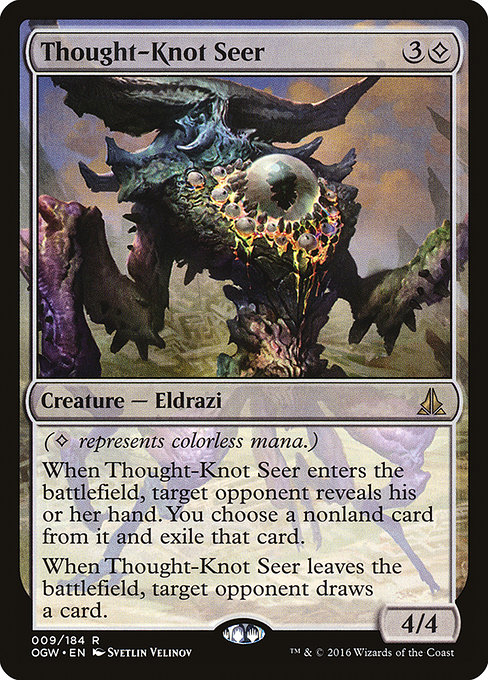 Thought-Knot Seer
({C} represents colorless mana.)
Thought-Knot Seer
({C} represents colorless mana.)
When this creature enters, target opponent reveals their hand. You choose a nonland card from it and exile that card.
When this creature leaves the battlefield, target opponent draws a card.
or even
Reality Smasher
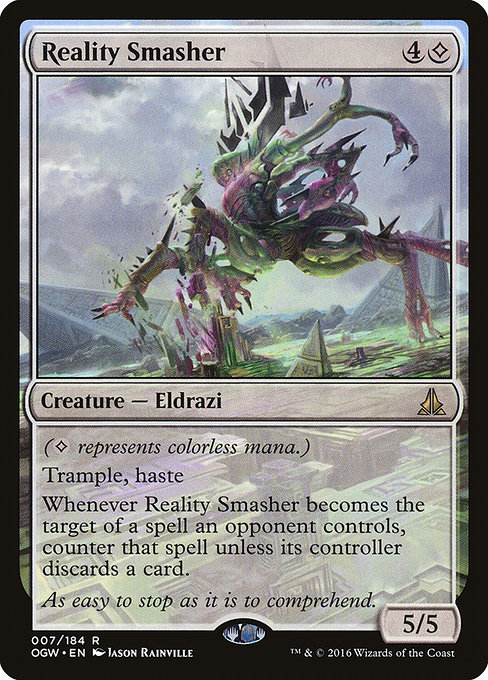 Reality Smasher
({C} represents colorless mana.)
Reality Smasher
({C} represents colorless mana.)
Trample, haste
Whenever this creature becomes the target of a spell an opponent controls, counter that spell unless its controller discards a card.
thanks to the existence of Simian Spirit Guide could shut the door in short order.
Pro Tour Oath of the Gatewatch featured a whopping SIX players utilizing an Eye of Ugin Eldrazi shell in the top eight. By comparison, as amazing as Hogaak was, it only managed to put one player into the top eight of Mythic Championship IV Barcelona. Even though there were some variations between decklists, the Eldrazi archetype completely warped the format beyond repair, earning it the top spot in our rankings.
Read More: Problematic MTG Discover Combo Returns in New Format