


Without a doubt, the dual status of Magic cards as playable game pieces and financial assets is one of the game’s most divisive aspects. Outside of proxy-only playgroups, you can’t fully separate the two, which means the potential resale value of every card on the table is always a factor, even if only distantly in players’ minds.
While many players opt to sell their MTG collection entirely when they quit the game, MTG head designer Mark Rosewater took to Blogatog on November 24th to counsel against such a move, sparking a spirited discussion. Ultimately, I’m with Mark on this one: barring extreme circumstances, selling your collection is pretty much always a poor decision, and one many players will end up regretting.
Costs of Doing Business
Jollyoldmae: I told my husband who you were and how you keep popping up on my for you and he found it really cool. Hes upset he sold all his mtg cards when he thought he wouldnt play anymore
Mark Rosewater: My one advice for people that stop playing Magic is don’t sell your cards. A lot will return and are always unhappy they didn’t keep their cards.
Via Blogatog
Perhaps the most obvious reason not to sell your MTG collection when you quit is the financial aspect. While Magic cards aren’t exactly stocks on the stock market, they often behave like them, with many growing in value over the long term.
While it’s never guaranteed, this means that you could miss out on potential future gains by selling a collection, based on how most cards have performed over the years. Some cards with any degree of playability to them start creeping up once their respective sets are out of print, and only stop climbing if they’re reprinted.
While this is less true for many cards being printed now, due to the much higher supply and range of special treatments available, selling bulk cards like this is still a rough proposition. Cards that are worth pennies now could skyrocket in value with the advent of a new synergy, as we saw with Shuko ShukoEquipped creature gets +1/+0.
Equip {0} ({0}: Attach to target creature you control. Equip only as a sorcery.) when Nadu, Winged Wisdom Nadu, Winged WisdomFlying
Creatures you control have "Whenever this creature becomes the target of a spell or ability, reveal the top card of your library. If it's a land card, put it onto the battlefield. Otherwise, put it into your hand. This ability triggers only twice each turn." dropped. The potential value of bulk rares far exceeds whatever price you’ll likely get for them in a sale, so it makes sense to hold onto them.
As for more powerful staple cards, the potential gains there are far more likely, more so these days than before, in fact. With so many Universes Beyond sets dropping now, the likelihood of powerful new rares and mythics being reprinted is much lower than in the past, as Wizards can’t just slot these cards in anywhere. This is magnified by the fact that Wizards is much less forthcoming with reprints in general nowadays, so even if they wanted to reprint these recent staples, there aren’t many avenues to do so.
These gains, and the losses you make by not waiting for them, are of course purely theoretical, but they do present a very real problem when it comes to starting to play Magic again later. As PrincessLeafa said on Reddit, selling your full collection creates a barrier to entry if you want to get back into the hobby, both financially and practically.
Buying the cards you used to have again will almost certainly cost more than you spent initially and take a good deal of time to source. You also have to factor in fees for both selling and buying, which will eat up a lot of money on the way in and out. While you can get around these with a good in-person buyer, getting good rates on a collection buy is tougher in such an environment.
There are valid reasons for selling an MTG collection, as players like DNedry pointed out, but doing so just because you’re quitting the game is a bad move financially. Both the Blogatog comments and those on Reddit are full of accounts backing this up, including some particularly wince-inducing tales of selling off absurd staples like Lion’s Eye Diamond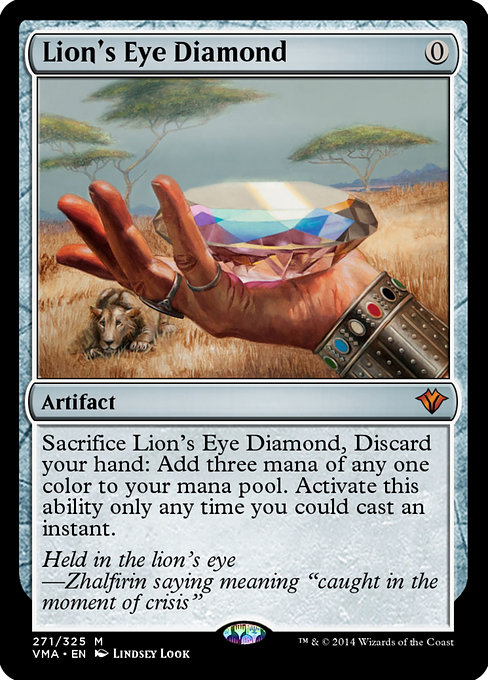 Lion’s Eye DiamondDiscard your hand, Sacrifice this artifact: Add three mana of any one color. Activate only as an instant. back in the day.
The Heart of the Matter
Though the financial reasons behind not selling your MTG collection when you quit are the most solid and concrete, there is another dimension to the issue: the emotional connection players have to their cards, which selling them off naturally severs.
While it sounds silly to talk about emotional connection in the context of collectible cardboard, it’s undeniable that we, as players, invest a lot of ourselves in the decks we build. For Commander especially, selecting the 100 cards you want to play and doing the time-consuming work of sourcing and buying them gets you invested right away. This is truer than ever nowadays, with so many alternate art treatments that really let you express yourself in deckbuilding.
This connection grows even stronger once you actually start playing with your cards and generating the stories you’ll inevitably tell and retell at future game nights. Again, Commander is king here, serving as fertile ground for wacky shenanigans, whether it’s a lucky Chaos Warp Chaos WarpThe owner of target permanent shuffles it into their library, then reveals the top card of their library. If it's a permanent card, they put it onto the battlefield. flip or a ridiculous early Deep Space 9
 Deep Space 9When Deep Space 9 enters and at the beginning of your upkeep, exile the top four cards of your library. Put all permanent cards exiled this way onto the battlefield.
Station (Tap another creature you control: Put charge counters equal to its power on this Spacecraft. Station only as a sorcery.)
9+ | Creatures you control get +3/+3. drop.
In constructed, these stories are typically less extreme, but more well-rounded, since you’ll get to play with the same cards more consistently from game to game. Even a fairly simple card like Llanowar Elves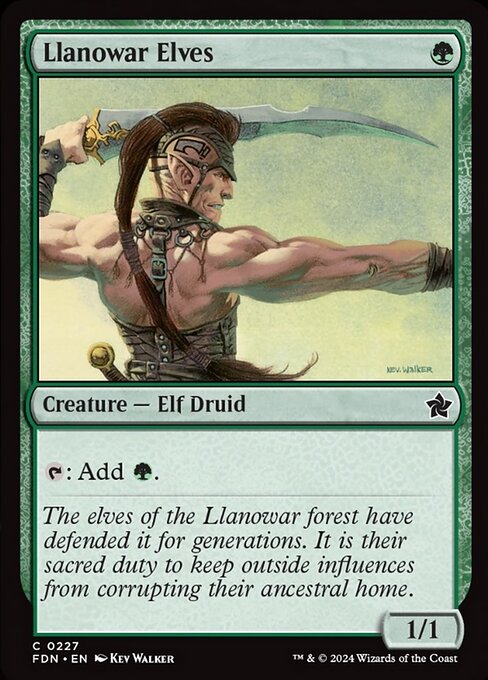 Llanowar Elves{T}: Add {G}. can earn a space in your heart if you play it regularly, especially in non-rotating formats like Pioneer and Modern.
Often the cards we form connections with aren’t even our most expensive ones, as CactuarJoe highlighted in the comments on Reddit. They’re simply the cards that we play the most, or have the best memories of, or a mix of both. And while we can replace these cards with fresh copies on getting back into the game later, that can never capture the feeling tied up in the specific copies we owned and loved before.
While selling your collection can potentially be a big financial negative, it’s often a negative in terms of emotional connection. Many players like Mouthsmasher in the comments of the discussion Rosewater started noted that the nostalgia aspect, and a fondness for their original collections, was a big driver in not selling, or a big source of regret when they did. Though this is a less tangible aspect of the selling process, it can certainly be as impactful, if not more, in the long run.
Overall, considering the major downsides discussed above, to me it simply doesn’t make sense to sell your MTG collection on quitting. Unless you’re in truly dire financial straits, the better move is always to wait a year or two to be sure, and in most cases probably to just not sell at all. We invest a lot of ourselves in our Magic collections, and, as Rosewater notes, throwing that away is a move “a lot” of players end up regretting.
For what it’s worth, this is not financial advice. Just an opinion shared among many long-time players.
Stick with us here at mtgrocks.com: the best site for Magic: The Gathering coverage. Be sure to check out our deckbuilder for your next big brew, and our brand new MTG Rocks Podcast! MTGRocks’ editorial and corrections policy lets us create content you can trust.