




Marvel Super Heroes prerelease is almost here, with just one day before players get to try the cards for themselves. While some choose to go into the event blind to experience the new cards for the first time, others prefer to join with a game plan. With dozens of extra packs on the line, knowing just a little more about Marvel Super Heroes going into your prerelease can be well worth it.
Fortunately, if you’re looking to prepare for Marvel Super Heroes, we have you covered. Thanks to Wizards of the Coast, we had the opportunity to join the Marvel Super Heroes prerelease on MTG Arena. With some extremely strong runs in the event, here are some things to keep in mind going into the Marvel Super Heroes prerelease.
Tempo Matters
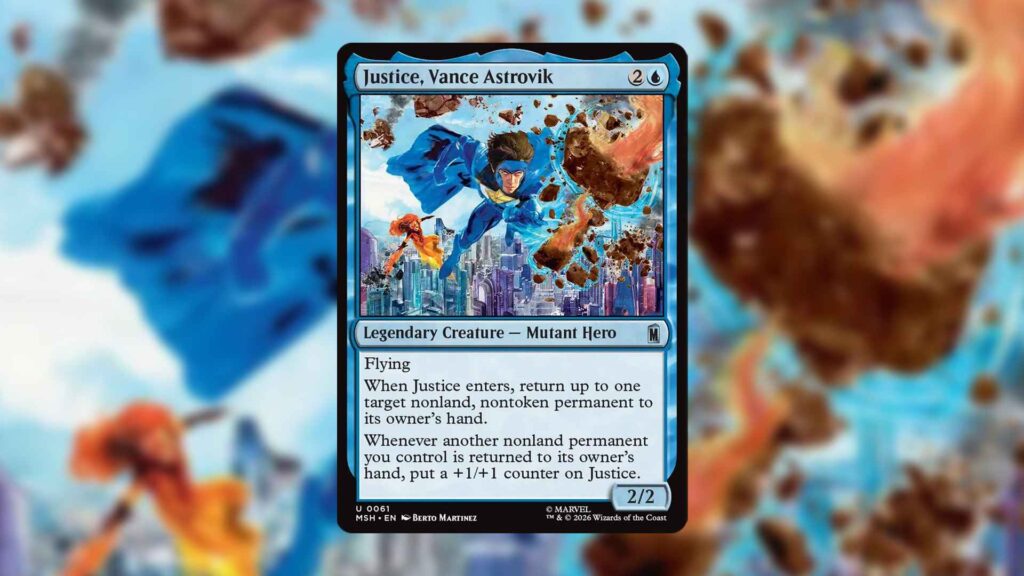
While we’ve had a fair few slower Limited formats recently, Marvel Super Heroes seems like a more tempo-heavy one. Because of this, decks with larger creature counts at smaller curves seem to be performing better. Even getting on the board with weaker one-drops like Whiplash, Vengeful Engineer is worth the downside of a weaker creature if you have the curve to support it.
For the most part, however, Marvel Super Heroes creatures can scale as the game goes on. Power Up has felt particularly strong so far, giving smaller creatures a way to continue providing value past their curve. Stature, Size Shifter is a strong example of this, chipping in damage early before setting up a massive unblockable swing later.
Of course, this also means that creatures with removal attached are at an even higher premium than usual in Marvel Super Heroes. Justice, Vance Astrovik is the biggest early power outlier for us, offering a 2/2 Flying body that bounces any permanent you choose. Even more restrictive removal attached to creatures, like Bullseye, Death Dealer or Red Guardian, Super Soldier will commonly be worth the inclusion.
With such a tempo-heavy focus for Marvel Super Heroes Limited, the set’s obligatory Quench variant feels quite strong, too. We Say Thee Nay! will often give you some breathing room up the curve, allowing you to protect your advantage or stave off an opponent’s creature.
Teamwork Makes the Dream Work
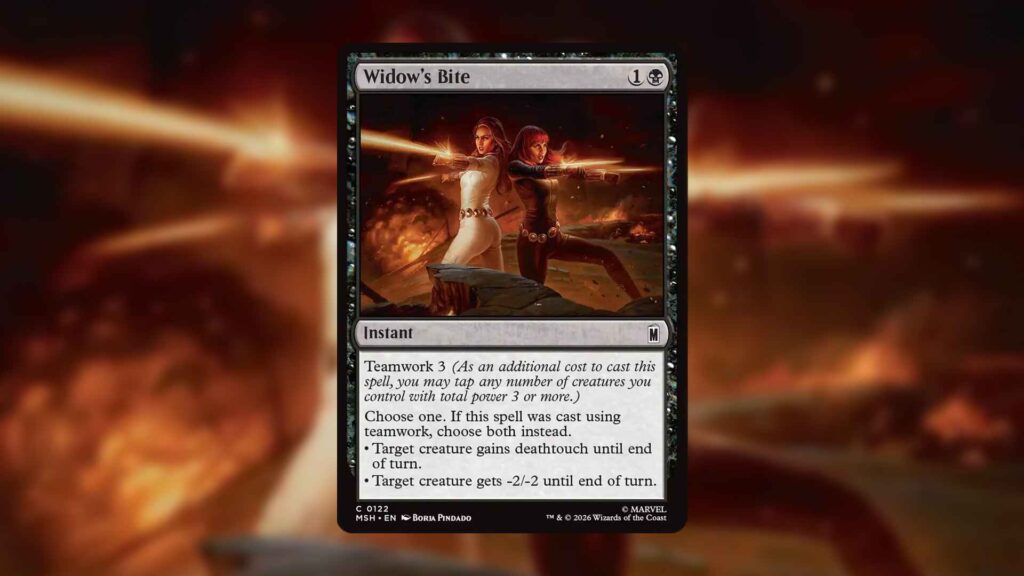
While two-for-ones are always strong in Limited, Marvel Super Heroes’ tempo-oriented nature makes them feel even better. More often than not, this makes paying for the full Teamwork costs of spells, like Murdock’s Crusade, rather favorable when possible. Widow’s Bite felt particularly powerful, functioning as a small removal piece at worst, while blowing out multiple creatures in combat at best.
For this reason, learning what the common instant-speed Teamwork removal spells are will be in your best interest for success in this format. Paying Teamwork costs, especially in a tempo format, can be surprisingly demanding, making them look a bit choreographed from across the board. If you can avoid these pitfalls while setting up your own, you’ll be in a really strong spot.
Removal is Sparse?
When drafting Marvel Super Heroes, finding removal for any deck was often a chore. Unless your colors were wide open, removal for a majority of colors would dry up just a few picks into the pack. When opening Sealed pools, I had a similar experience, with only a few colors having notable removal.
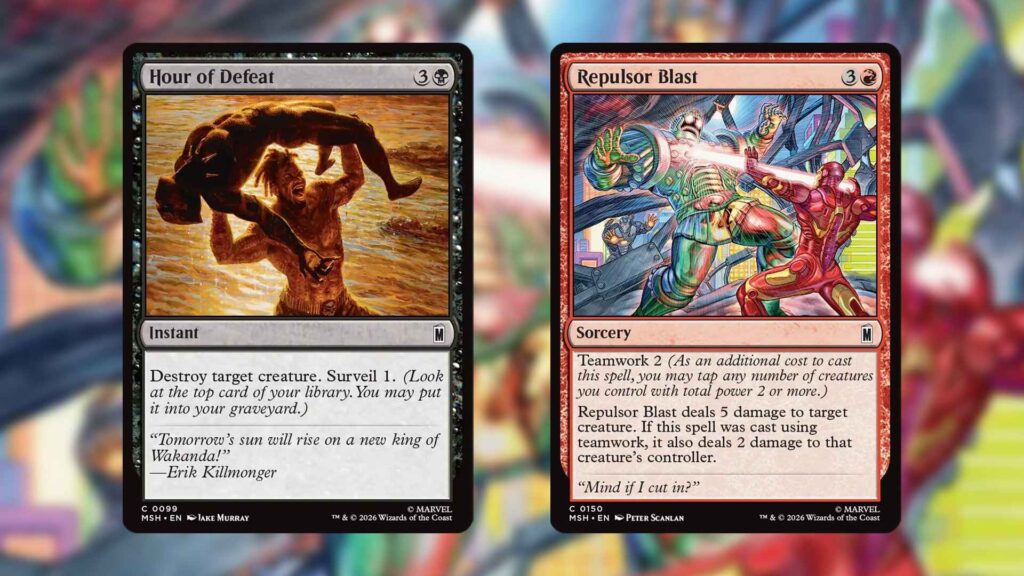
This affected my decision-making rather heavily when building my prerelease decks. Despite having a lot of rares in one color, gravitating towards Rakdos for some copies of Hour of Defeat and Repulsor Blast performed better. On the flip side, this can make removal-check threats like Black Widow, Super Spy more powerful in Marvel Super Heroes.
That said, because players aren’t super familiar with Marvel Super Heroes yet, it’s quite likely that removal is being overdrafted as players learn the format. I wasn’t the only person with this observation, however, meaning that you may want to weigh removal heavily at your prerelease.
Standout Cards
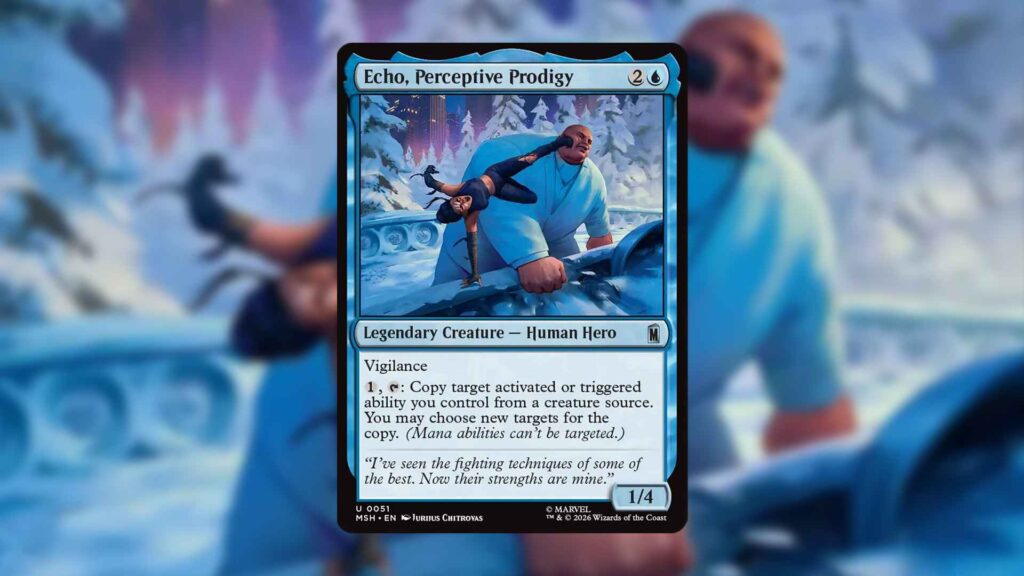
Because of Marvel Super Heroes’ peculiarities, there are a few cards that end up performing much better than usual. Of all of these, Echo, Perceptive Prodigy was easily the card that overperformed the most. Bouncing two creatures with Justice, or locking two down with Spider-Woman, Secret Agent often ended the game.
While it is a rare, Origin of the Avengers feels like a card that was underrated. I commonly picked this card up rather late into individual packs, and many of the trophy decklists I saw had the card somewhere in them. Thanks to its third ability, this card can create a lot of value regardless of when it comes down. Getting a free creature into play early is always strong, but if played later, you’ll buff more creatures with your final ability.
While not broken by any means, Titania, Rugged Rumbler can make things awkward for the opponent in specific spots. Discarding a card in the early game is a bit costly, Titania’s Ward will often force opponents to do the same to deal with her.
As far as bombs go, The Super Hero Civil War is getting a lot of hype, and it’s easy to see why. Kidnapping two of your opponent’s creatures, attacking with them, and making them fight at the end of it is absolutely devastating. If you open it in your prerelease kit, this card will be well worth splashing for.
In Green, Restorative Technique feels like a common that’s easy to miss. Generally, especially in tempo formats, you don’t want to run cards that just find lands. Fortunately, Restorative Technique also builds your board and gains you life. This has a nice perk of triggering a lot of cards in the Selesnya archetype, like Colleen Wing, Street Samurai.
Another rather unassuming card, Futurist Forge feels like a synergy enabler in multiple archetypes. Helping both UR artifacts and UB Connive, this card will be an all-star if aggressive decks aren’t too dominant. With multiple mini combos available, like I Am Iron Man turning it into a combat trick, or Wiccan, Rising Magician blinking it for extra draw, there’s lots to explore here.
It wasn’t in either of our 7-X Draft decks, but Atlantis Attacks felt like an unbeatable common bomb when resolved for its full Teamwork cost. If you’re in a slower deck using cards like Depower to buy time, you can commonly turn the corner with this Teamwork spell.
With all of these tips in mind, you should be more than ready for your Marvel Super Heroes prerelease. Keep your curve lean, learn the instant speed tricks, and you should be in for a strong showing.
Stick with us here at mtgrocks.com: the best site for Magic: The Gathering coverage. Be sure to check out our deckbuilder for your next big brew, and our brand new MTG Rocks Podcast!