




Just as the show itself broke new ground and introduced the world to all manner of radical sci-fi concepts, MTG Star Trek is pushing boundaries in its own way. From the Debut alone, we’ve seen a bunch of funky new designs, including the absolutely wild
Q, Stacking the Deck
 Q, Stacking the Deck
When Q enters, shuffle your library, then exile cards from the top of your library until you exile a nonland card. That nonland card gains "Exile a card from your hand: Create a copy of this card. You may cast the copy. Activate only during your turn and only if this card is exiled."
. On top of that,
Peace in Our Time
 Peace in Our Time
At the beginning of combat on each player's turn, that player may draw a card. If they do, they can't attack this turn and you put a peace counter on this enchantment.
At the beginning of your upkeep, if this enchantment has twelve or more peace counters on it, you win the game.
and
Kobayashi Maru Scenario
 Kobayashi Maru Scenario
At the beginning of your upkeep, choose one that hasn't been chosen —
• Hail — Return up to one target creature an opponent controls with mana value 3 or less to its owner's hand.
• Sensors — Draw two cards.
• Transport — Create two 1/1 red Officer creature tokens.
• Abandon Ship — You lose the game.
add new ways for players to win and lose, respectively.
Kobayashi Maru Scenario MTG
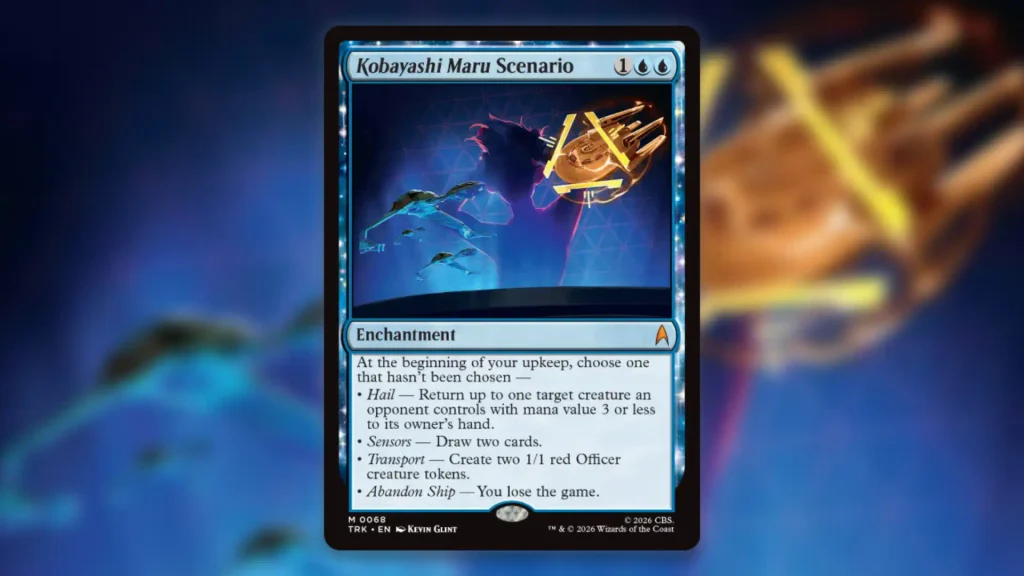
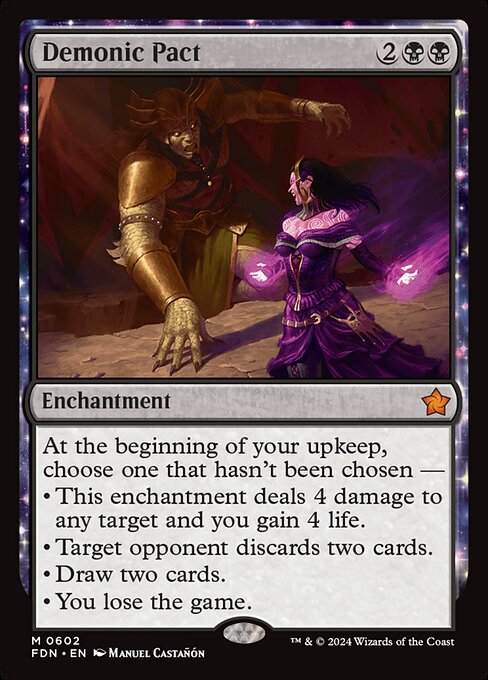
Those who checked out Mark Rosewater’s traditional teaser article for Star Trek likely saw Kobayashi Maru Scenario coming a light-year away. Given the Scenario’s status as a “no-win” training exercise in the show, and the presence of a “you lose the game” card in the teaser, this seemed like a flavor match made in heaven. What players may not have been expecting, however, is a new card that follows in the footsteps of
Demonic Pact
 Demonic Pact
At the beginning of your upkeep, choose one that hasn't been chosen —
• This enchantment deals 4 damage to any target and you gain 4 life.
• Target opponent discards two cards.
• Draw two cards.
• You lose the game.
.
As with Pact, Kobayashi Maru Scenario offers three powerful effects for just a three-mana investment, with the caveat that you lose the game if you have to pick the fourth one. Fortunately, there are plenty of ways around this, most notably giving the enchantment away with something like
Donate
 Donate
Target player gains control of target permanent you control.
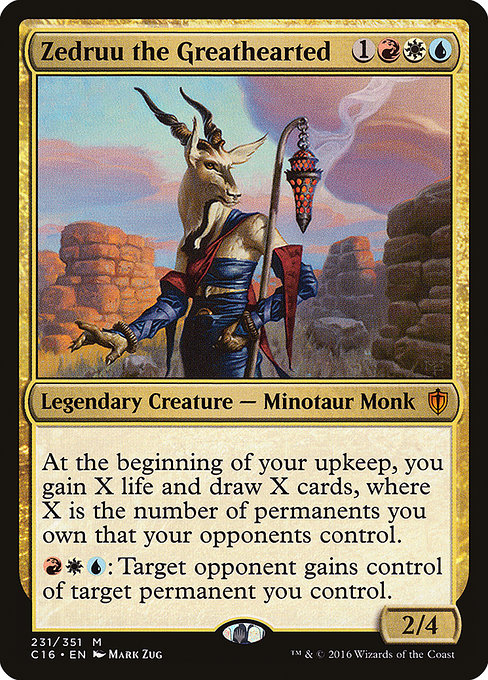
. If you time this right, you can reap the last of Scenario’s benefits, then give it to your opponent, causing them to lose the game immediately on their next upkeep. In Commander, this gives non-black Donate decks like
Zedruu, the Greathearted
 Zedruu, the Greathearted
At the beginning of your upkeep, you gain X life and draw X cards, where X is the number of permanents you own that your opponents control.
{U}{R}{W}: Target opponent gains control of target permanent you control.
and
Inniaz, the Gale Force
 Inniaz, the Gale Force
Flying
{2}{W/U}: Attacking creatures with flying get +1/+1 until end of turn. ({W/U} can be paid with either {W} or {U}.)
Whenever three or more creatures you control with flying attack, each player gains control of a nonland permanent of your choice controlled by the player to their right.
a legitimate win condition, which they previously lacked.
Scenario could actually have legs in Standard, too, given that we have a surprising amount of Donate synergy in the format at the moment.
Harmless Offering
 Harmless Offering
Target opponent gains control of target permanent you control.
,
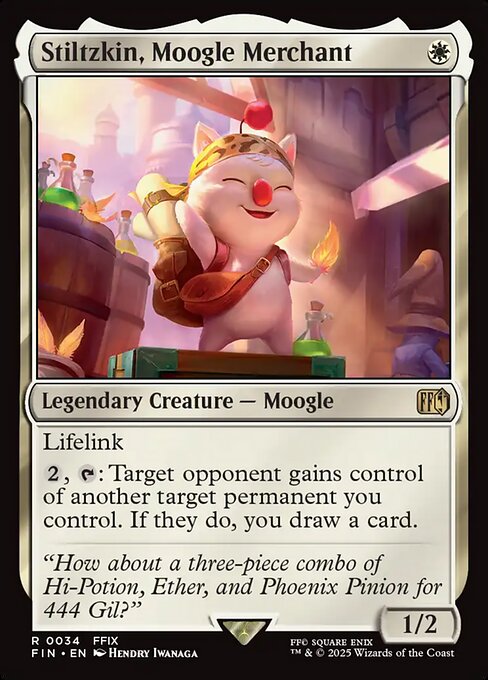
Stiltzkin, Moogle Merchant
 Stiltzkin, Moogle Merchant
Lifelink
{2}, {T}: Target opponent gains control of another target permanent you control. If they do, you draw a card.
, and
Iroh, Tea Master
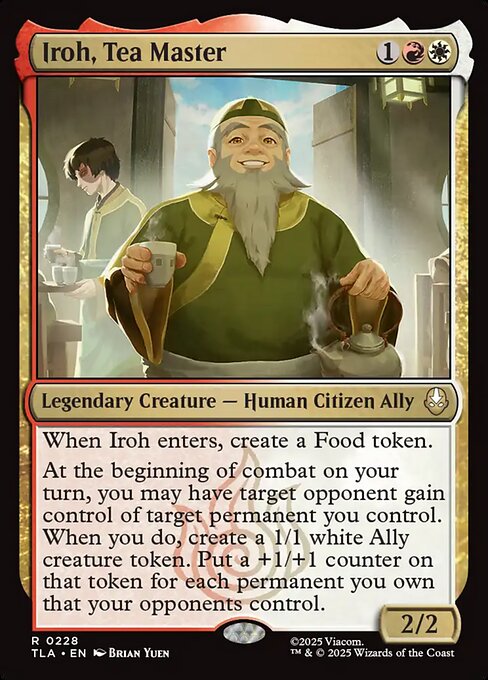 Iroh, Tea Master
When Iroh enters, create a Food token.
At the beginning of combat on your turn, you may have target opponent gain control of target permanent you control. When you do, create a 1/1 white Ally creature token. Put a +1/+1 counter on that token for each permanent you own that your opponents control.
are all legal, putting a Jeskai Scenario brew well within the realms of possibility. A Grixis or Four-Color list incorporating
Demonic Pact
Demonic Pact
At the beginning of your upkeep, choose one that hasn't been chosen —
• This enchantment deals 4 damage to any target and you gain 4 life.
• Target opponent discards two cards.
• Draw two cards.
• You lose the game.
and
Greed’s Gambit
 Greed’s Gambit
When this enchantment enters, you draw three cards, gain 6 life, and create three 2/1 black Bat creature tokens with flying.
At the beginning of your end step, you discard a card, lose 2 life, and sacrifice a creature.
When this enchantment leaves the battlefield, you discard three cards, lose 6 life, and sacrifice three creatures.
may also be possible, but that feels a lot more clunky mana-wise.
Even if you’re not abusing that last ability to close out games, Kobayashi Maru Scenario looks like a pretty interesting card. Being blue puts it in the color of
Boomerang Basics
 Boomerang Basics
Return target nonland permanent to its owner's hand. If you controlled that permanent, draw a card.
and
Fear of Isolation
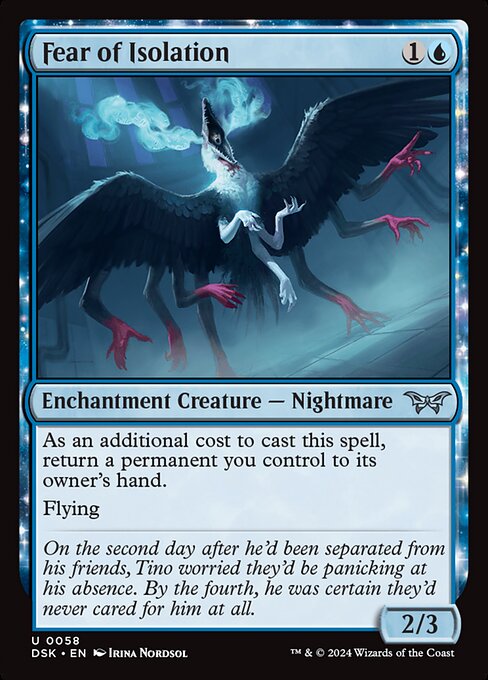 Fear of Isolation
As an additional cost to cast this spell, return a permanent you control to its owner's hand.
Flying
, meaning you could potentially run it in Standard as a tempo piece. While it’s a little slow, drawing two cards and then getting either, or both, of the other abilities makes this well worth the mana. As a result, I could easily see this showing up in Dimir Bounce decks in both Standard and Pioneer, particularly in the more aggressive builds.
Similarly, there’s a lot of potential for Kobayashi Maru Scenario as a value engine for Blink decks in Commander. Popular Commanders in the category, like
Brago, King Eternal
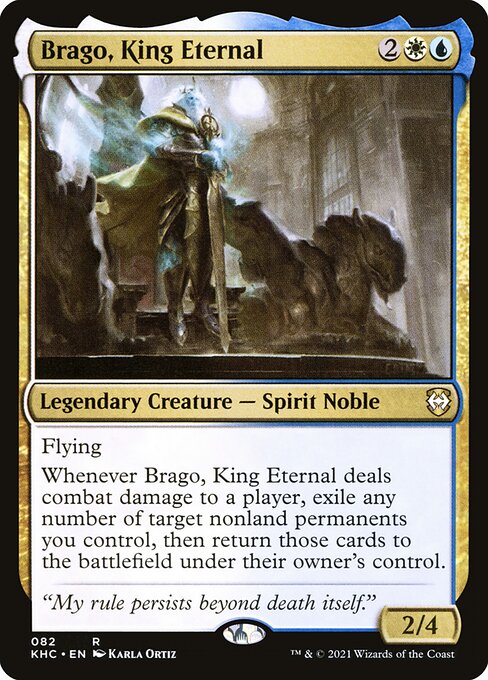 Brago, King Eternal
Flying
Whenever Brago deals combat damage to a player, exile any number of target nonland permanents you control, then return those cards to the battlefield under their owner's control.
and
Abdel Adrian, Gorion’s Ward
 Abdel Adrian, Gorion’s Ward
When Abdel Adrian enters, exile any number of other nonland permanents you control until Abdel Adrian leaves the battlefield. Create a 1/1 white Soldier creature token for each permanent exiled this way.
Choose a Background (You can have a Background as a second commander.)
can blink it on demand, letting you get all the value without risking instant death. It also shines in decks like
Obeka, Brute Chronologist
 Obeka, Brute Chronologist
{T}: The player whose turn it is may end the turn. (Exile all spells and abilities from the stack. The player whose turn it is discards down to their maximum hand size. Damage wears off, and "this turn" and "until end of turn" effects end.)
that can consistently counter the final ability, or decks that run a lot of Bargain spells like
Beseech the Mirror
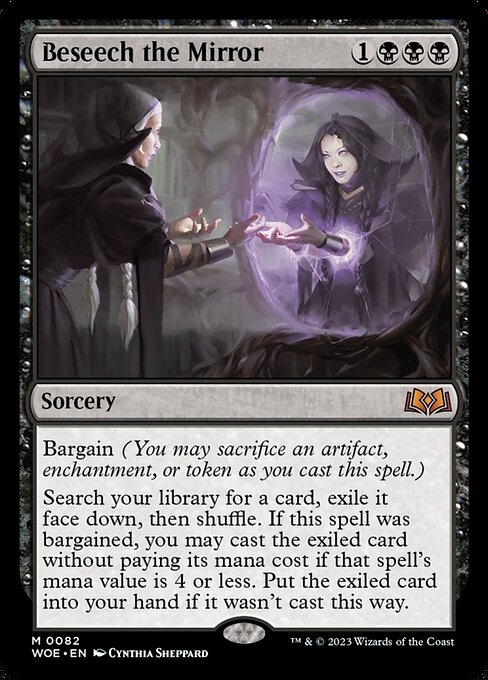 Beseech the Mirror
Bargain (You may sacrifice an artifact, enchantment, or token as you cast this spell.)
Search your library for a card, exile it face down, then shuffle. If this spell was bargained, you may cast the exiled card without paying its mana cost if that spell's mana value is 4 or less. Put the exiled card into your hand if it wasn't cast this way.
, where removing it when needed isn’t an issue.
Peace in Our Time MTG
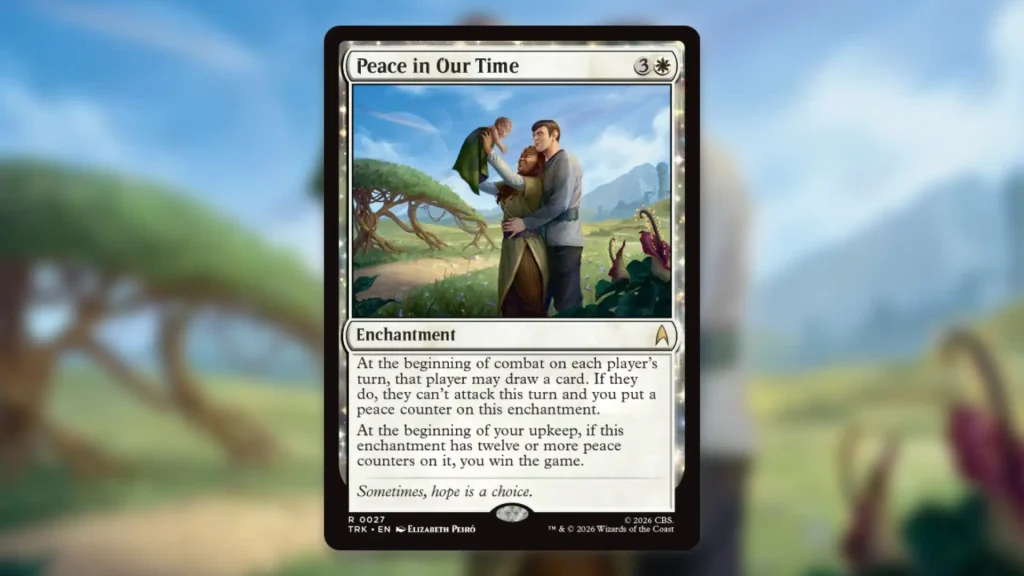
On the other side of the MTG coin from Kobayashi Maru Scenario, Peace in Our Time is a brand-new alternate win condition. It’s also another entry in the
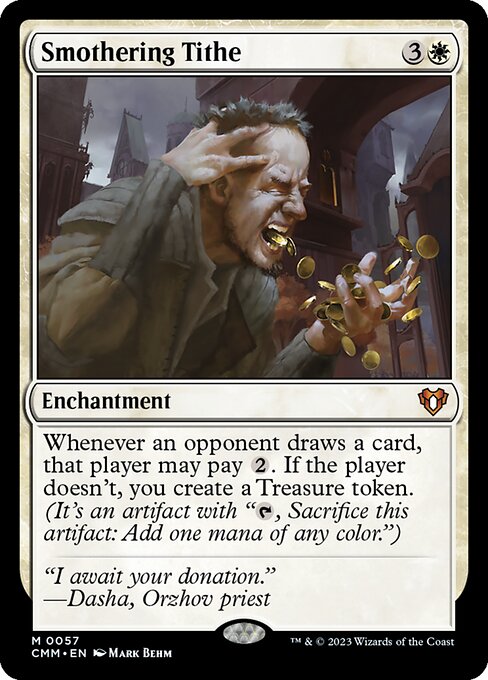
Smothering Tithe
 Smothering Tithe
Whenever an opponent draws a card, that player may pay {2}. If the player doesn't, you create a Treasure token. (It's an artifact with "{T}, Sacrifice this token: Add one mana of any color.")
genre of enchantment, offering your opponents a choice each turn that can benefit you in the long run. In this case, they have the chance to essentially opt out of combat in exchange for a free draw, with the caveat that you then get one of the 12 counters needed to win with the card.
This creates an interesting dynamic, particularly early on in a Commander game. Players often need time to build a meaningful offensive board state, so skipping attacks early for a card is a no-brainer. Even for opponents who do want to attack, however, a bit of a prisoner’s dilemma is at play, since declining the card puts them behind players who took it. Add in the fact that you can draw cards yourself with this for counters, and it’s likely this will get to around six or eight counters with little issue in most games.
Of course, once you reach this point, opponents will refuse the draw to keep you from winning, which is where counter-manipulation effects come in. You can use Proliferate cards like
Inexorable Tide
 Inexorable Tide
Whenever you cast a spell, proliferate. (Choose any number of permanents and/or players, then give each another counter of each kind already there.)
and
Karn’s Bastion
 Karn’s Bastion
{T}: Add {C}.
{4}, {T}: Proliferate. (Choose any number of permanents and/or players, then give each another counter of each kind already there.)
to add more counters yourself, for example. Add in counter doublers like
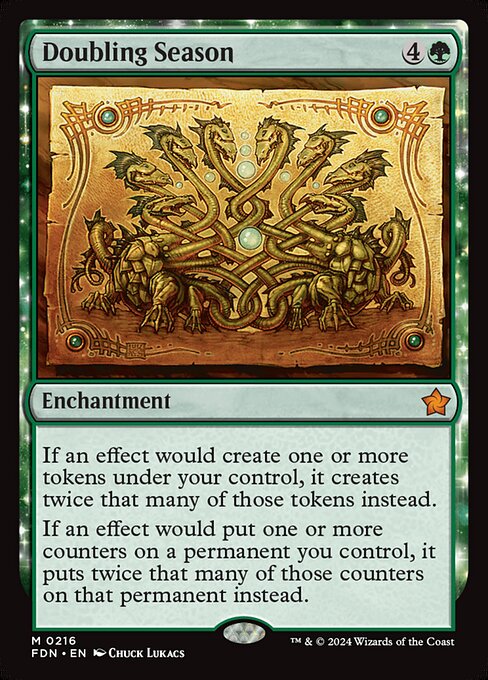
Doubling Season
 Doubling Season
If an effect would create one or more tokens under your control, it creates twice that many of those tokens instead.
If an effect would put one or more counters on a permanent you control, it puts twice that many of those counters on that permanent instead.
and
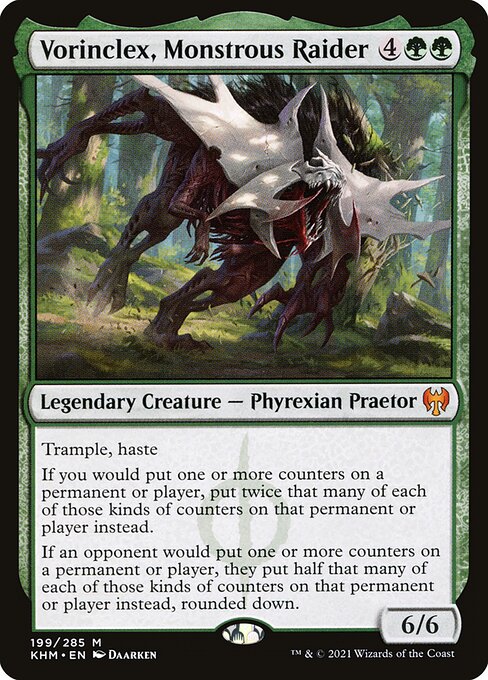
Vorinclex, Monstrous Raider
 Vorinclex, Monstrous Raider
Trample, haste
If you would put one or more counters on a permanent or player, put twice that many of each of those kinds of counters on that permanent or player instead.
If an opponent would put one or more counters on a permanent or player, they put half that many of each of those kinds of counters on that permanent or player instead, rounded down.
, and you can get your total up fast. Burst counter generation like
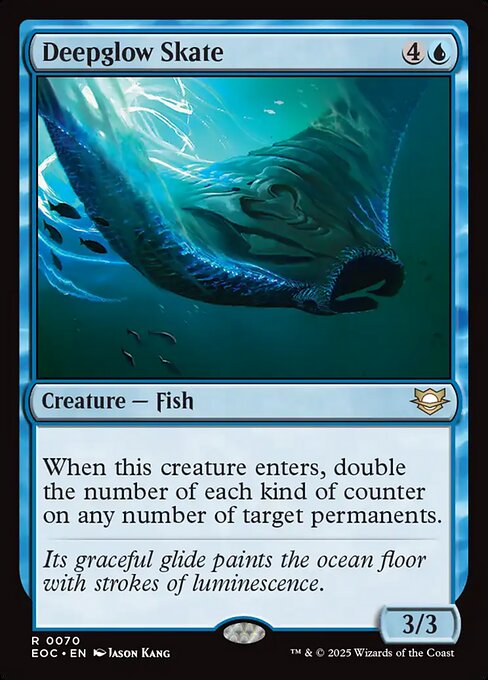
Deepglow Skate
 Deepglow Skate
When this creature enters, double the number of each kind of counter on any number of target permanents.
and
Gilder Bairn
 Gilder Bairn
{2}{G/U}, {Q}: Double the number of each kind of counter on target permanent. ({Q} is the untap symbol.)
is great here too, especially if you can pull it off at instant speed before your turn for a surprise win.
Interestingly, the best way to use Peace in Our Time in Commander may be to treat its win-condition mode as a fun extra rather than the main course. Just being a four-mana
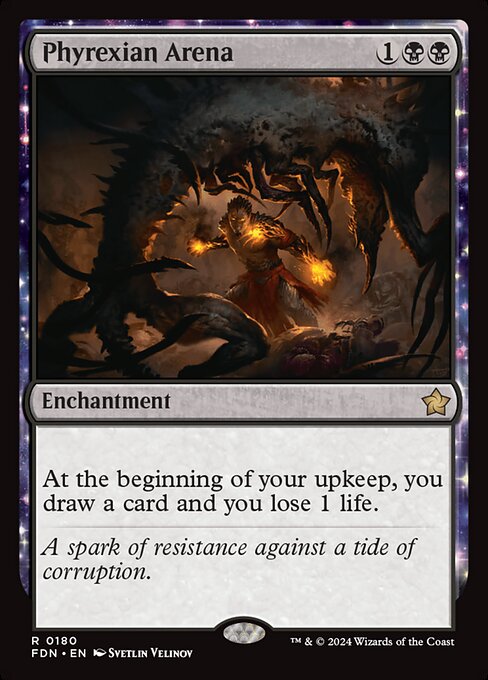
Phyrexian Arena
 Phyrexian Arena
At the beginning of your upkeep, you draw a card and lose 1 life.
in white for non-combative decks feels pretty solid for lower brackets. Higher up, it also synergizes with white staples
Smothering Tithe
Smothering Tithe
Whenever an opponent draws a card, that player may pay {2}. If the player doesn't, you create a Treasure token. (It's an artifact with "{T}, Sacrifice this token: Add one mana of any color.")
and
Gleaming Splendor
 Gleaming Splendor
Whenever an opponent draws their second card each turn, you create a Treasure token.
{2}{W}: Two target players each draw a card.
, since any extra draws your opponents take mean more resources for you. For that reason, if your deck already runs these, or any generic counter synergy, Peace in Our Time feels like a decent include that can sometimes win on its own.
Getting cards as interesting as Kobayashi Maru Scenario and Peace in Our Time so early in MTG Star Trek spoiler season is a fantastic sign for the set as a whole. While the art and flavor here may not be for everyone, it’s hard to deny the quality and power level of some of these new designs.
Stick with us here at mtgrocks.com: the best site for Magic: The Gathering coverage. Be sure to check out our deckbuilder for your next big brew, and our brand new MTG Rocks Podcast!