


In many cases, as more and more powerful cards get added to a format, some archetypes get slowly pushed out due to power creep and metagame shifts. Over the past few years, especially since the release of Modern Horizons II, there have been a multitude of previously well-established strategies that fallen by the wayside. For instance, in Modern, there were points where both five-color Humans and Infect had their time in the sun. Unfortunately, since the printing of cards like
Fury
 Fury
Double strike
Fury
Double strike
When this creature enters, it deals 4 damage divided as you choose among any number of target creatures and/or planeswalkers.
Evoke—Exile a red card from your hand.
, these decks have largely disappeared.
Another interesting deck that fell out of favor over time was Storm in Modern. While the printing of Beseech the Mirror was quite helpful for black-based Storm decks in Eternal formats, Modern Storm shells have traditionally been Izzet to accommodate
Gifts Ungiven
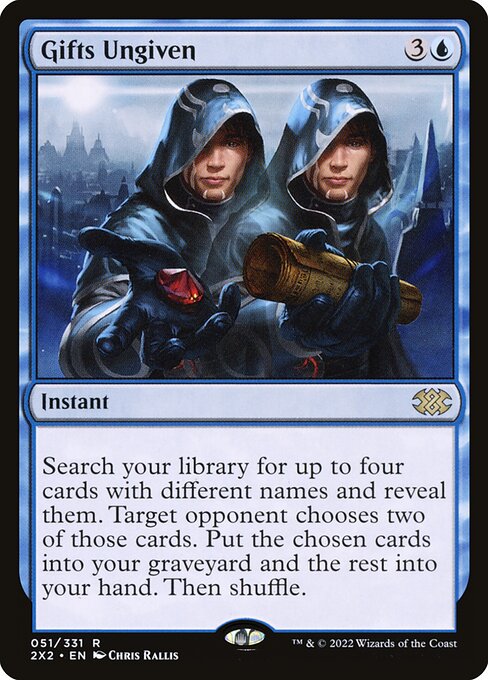 Gifts Ungiven
Search your library for up to four cards with different names and reveal them. Target opponent chooses two of those cards. Put the chosen cards into your graveyard and the rest into your hand. Then shuffle.
and
Past in Flames
Gifts Ungiven
Search your library for up to four cards with different names and reveal them. Target opponent chooses two of those cards. Put the chosen cards into your graveyard and the rest into your hand. Then shuffle.
and
Past in Flames
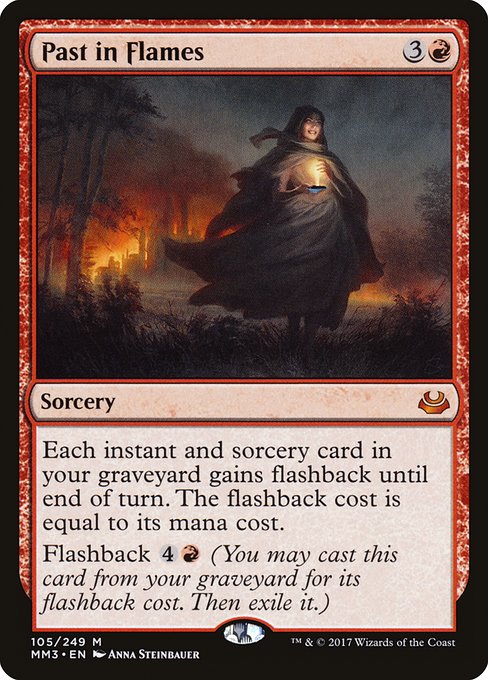 Past in Flames
Each instant and sorcery card in your graveyard gains flashback until end of turn. The flashback cost is equal to its mana cost.
Past in Flames
Each instant and sorcery card in your graveyard gains flashback until end of turn. The flashback cost is equal to its mana cost.
Flashback {4}{R} (You may cast this card from your graveyard for its flashback cost. Then exile it.)
. As a handful of more reliable combo decks became more popular in Modern, such as
Living End
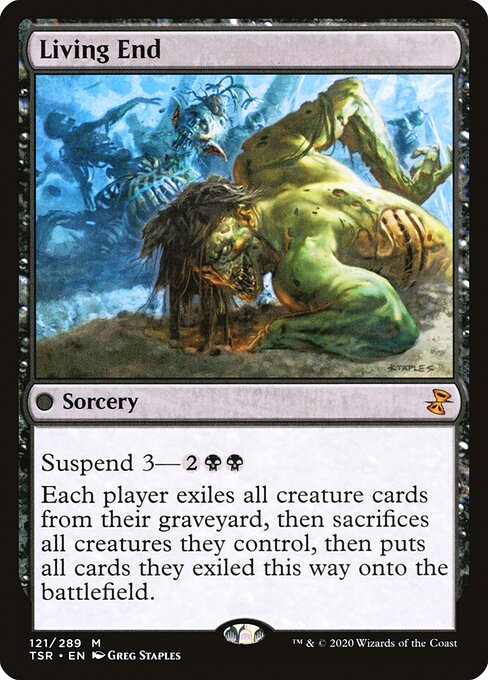 Living End
Suspend 3—{2}{B}{B}
Living End
Suspend 3—{2}{B}{B}
Each player exiles all creature cards from their graveyard, then sacrifices all creatures they control, then puts all cards they exiled this way onto the battlefield.
or
Yawgmoth, Thran Physician
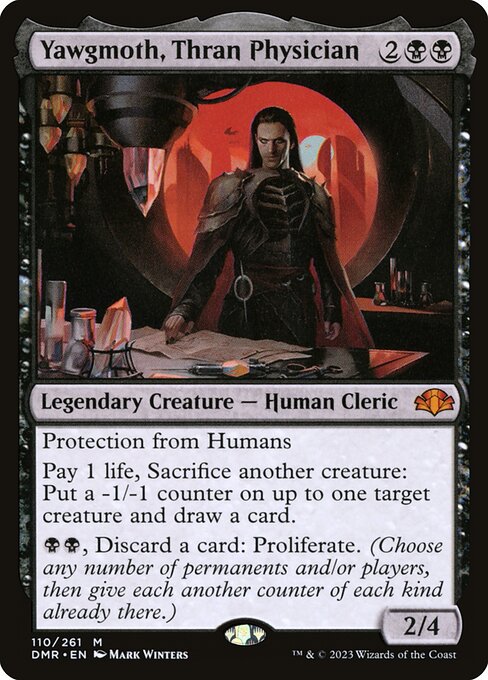 Yawgmoth, Thran Physician
Protection from Humans
Yawgmoth, Thran Physician
Protection from Humans
Pay 1 life, Sacrifice another creature: Put a -1/-1 counter on up to one target creature and draw a card.
{B}{B}, Discard a card: Proliferate. (Choose any number of permanents and/or players, then give each another counter of each kind already there.)
combo, Storm in its traditional form lacked the tools to compete.
For Storm enjoyers, though, it appears as though not all hope is lost. Thanks to a handful of relatively new cards, winning with
Grapeshot
 Grapeshot
 deals 1 damage to any target.
Grapeshot
Grapeshot deals 1 damage to any target.
Storm (When you cast this spell, copy it for each spell cast before it this turn. You may choose new targets for the copies.)
in Modern may be back on the menu. This past weekend, we saw a unique Gruul Storm deck make top eight of a Magic Online Modern Challenge, and it’s very different than typical Storm decks from years past.
The Storm Package

While this deck isn’t entirely reliant on casting Grapeshot to win all of its games, this is a very potent option to have, especially in games that go long. Rather than using Past in Flames, Gifts Ungiven, and a multitude of Rituals to build up your Storm count, this deck maximizes
Underworld Breach
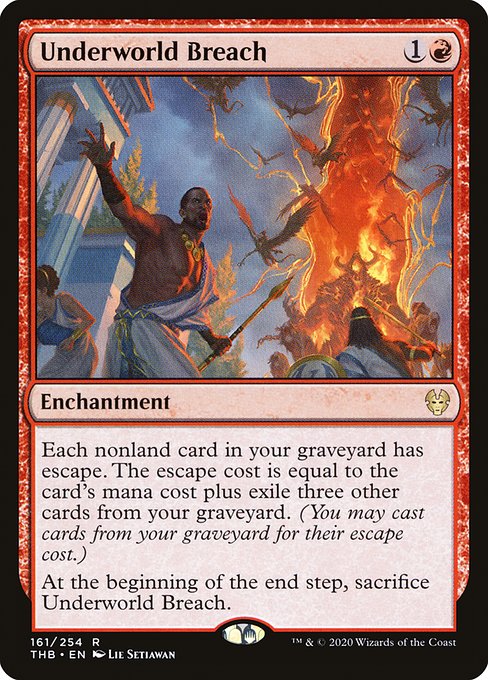 Underworld Breach
Each nonland card in your graveyard has escape. The escape cost is equal to the card's mana cost plus exile three other cards from your graveyard. (You may cast cards from your graveyard for their escape cost.)
Underworld Breach
Each nonland card in your graveyard has escape. The escape cost is equal to the card's mana cost plus exile three other cards from your graveyard. (You may cast cards from your graveyard for their escape cost.)
At the beginning of the end step, sacrifice this enchantment.
. Underworld Breach is an insanely powerful card and makes executing a Grapeshot kill fairly easy.
While Izzet Storm decks used to play
Goblin Electromancer
 Goblin Electromancer
Instant and sorcery spells you cast cost {1} less to cast.
, this deck plays
Goblin Anarchomancer
Goblin Electromancer
Instant and sorcery spells you cast cost {1} less to cast.
, this deck plays
Goblin Anarchomancer
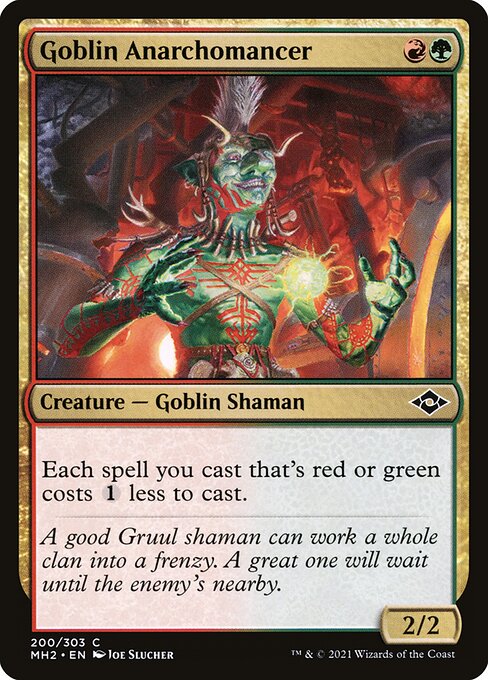 Goblin Anarchomancer
Each spell you cast that's red or green costs {1} less to cast.
. Goblin Anarchomancer notably provides a discount to all of your red and green spells, not just Instants and Sorceries. With Goblin Anarchomancer and Underworld Breach in play, whenever you cast
Manamorphose
Goblin Anarchomancer
Each spell you cast that's red or green costs {1} less to cast.
. Goblin Anarchomancer notably provides a discount to all of your red and green spells, not just Instants and Sorceries. With Goblin Anarchomancer and Underworld Breach in play, whenever you cast
Manamorphose
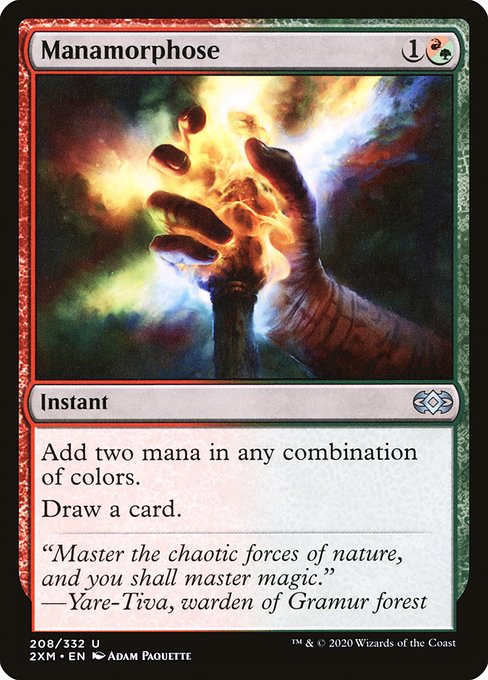 Manamorphose
Add two mana in any combination of colors.
Manamorphose
Add two mana in any combination of colors.
Draw a card.
, you draw a card and net one mana. Assuming you have a stocked graveyard, you can keep casting Manamorphose, netting you mana. After generating some mana, you can now cast Grapeshot multiple times from the graveyard and kill your opponent via non-combat damage.
Even beyond Grapeshot, this deck can burn the opponent out with
Lightning Bolt
 Lightning Bolt
 deals 3 damage to any target.
in a similar way. The key to making all of this possible, though, is making sure you have a large enough graveyard for Underworld Breach. Luckily, filling the graveyard is easier than it might sound.
Lightning Bolt
Lightning Bolt deals 3 damage to any target.
in a similar way. The key to making all of this possible, though, is making sure you have a large enough graveyard for Underworld Breach. Luckily, filling the graveyard is easier than it might sound.
Read More: Underrated Lost Caverns of Ixalan Sacrifice Outlet has Multi-Format Potential!
Keeping the Graveyard Full

In order to fuel the graveyard without detracting from the overall card quality of the deck, this strategy makes use of a bunch of extremely efficient cantrips and ways to churn through your library. Manamorphose and
Mishra’s Bauble
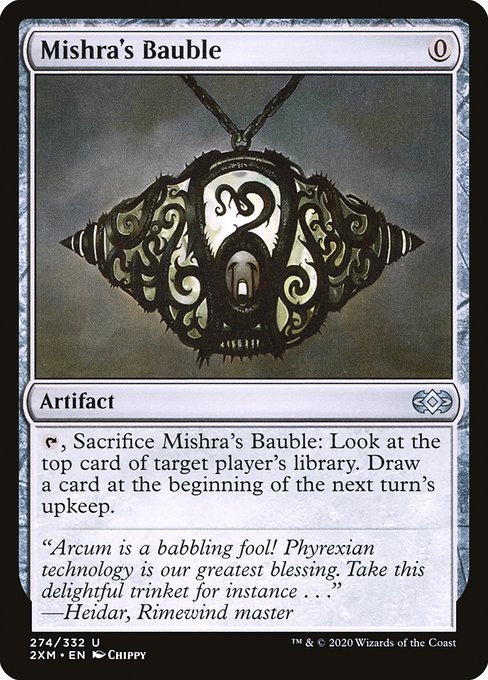 Mishra’s Bauble
{T}, Sacrifice this artifact: Look at the top card of target player's library. Draw a card at the beginning of the next turn's upkeep.
are obviously good with Underworld Breach in play, but they also both essentially require no mana input and replace themselves with new cards. This helps fill your graveyard at very minimal cost.
Mishra’s Bauble
{T}, Sacrifice this artifact: Look at the top card of target player's library. Draw a card at the beginning of the next turn's upkeep.
are obviously good with Underworld Breach in play, but they also both essentially require no mana input and replace themselves with new cards. This helps fill your graveyard at very minimal cost.
In a similar sense, Abundant harvest is a cheap card that helps make sure you can hit your land drops. For actual card advantage, both
Wrenn’s Resolve
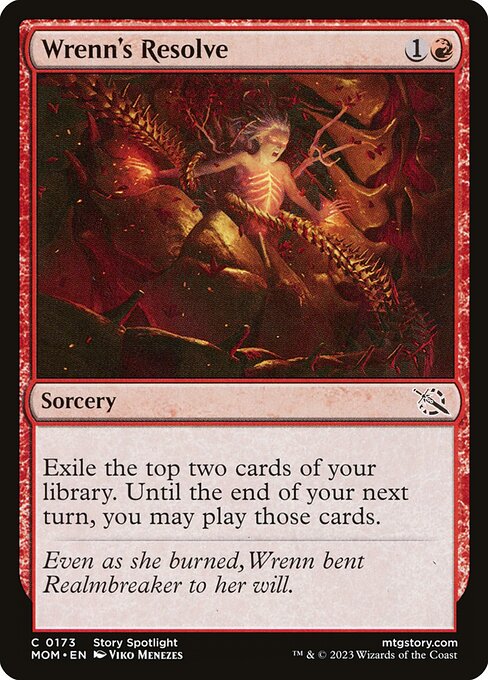 Wrenn’s Resolve
Exile the top two cards of your library. Until the end of your next turn, you may play those cards.
and the Adventure portion of
Questing Druid
Wrenn’s Resolve
Exile the top two cards of your library. Until the end of your next turn, you may play those cards.
and the Adventure portion of
Questing Druid
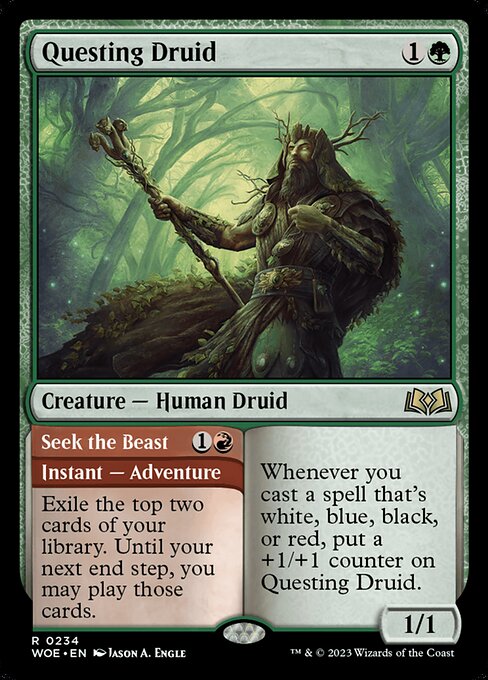 Questing Druid
Whenever you cast a spell that's white, blue, black, or red, put a +1/+1 counter on this creature.
help dig further for Underworld Breach.
Questing Druid
Whenever you cast a spell that's white, blue, black, or red, put a +1/+1 counter on this creature.
help dig further for Underworld Breach.
Where things get even easier is when you have access to
Dragon’s Rage Channeler
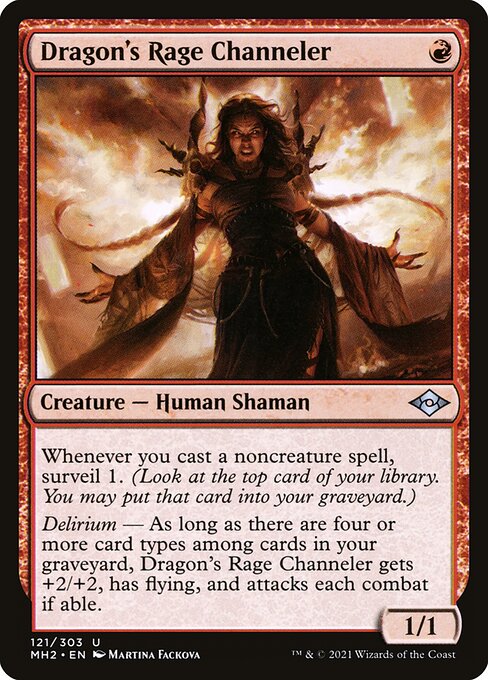 Dragon’s Rage Channeler
Whenever you cast a noncreature spell, surveil 1. (Look at the top card of your library. You may put that card into your graveyard.)
Dragon’s Rage Channeler
Whenever you cast a noncreature spell, surveil 1. (Look at the top card of your library. You may put that card into your graveyard.)
Delirium — As long as there are four or more card types among cards in your graveyard, this creature gets +2/+2, has flying, and attacks each combat if able.
. Dragon’s Rage Channeler lets you Surveil off of all of these cheap cards. Once Underworld Breach is in play, each time you cast Manamorphose from your graveyard by exiling three cards, you get to put another card into the graveyard from your library for each copy of Channeler in play. Add in the high density of Fetchlands in the deck, and it’s surprisingly easy to enable Underworld Breach. Three Channelers alongside a Manamorphose basically means you can draw your deck.
Read More: Lost Caverns of Ixalan Rare Sees Surprise Temporary MTG Arena Ban!
Solid Backup Plan

Despite the presence of Storm cards, this deck does need to function like an all-in combo deck. The reality is that Underworld Breach in many games will act simply as an elite value engine. Even if you cast Breach, cast Mishra’s Bauble a few times, then pass, you still ended up with a decent chunk of card advantage out of the deal.
This deck also can win games via attacking. Dragon’s Rage Channeler and
Ragavan, Nimble Pilferer
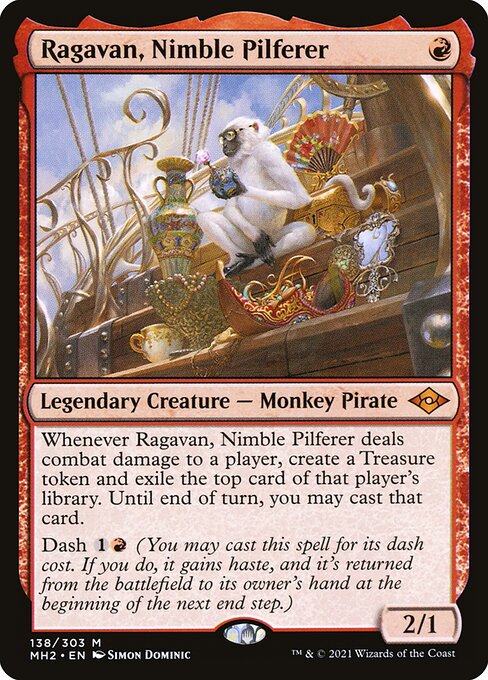 Ragavan, Nimble Pilferer
Whenever Ragavan deals combat damage to a player, create a Treasure token and exile the top card of that player's library. Until end of turn, you may cast that card.
Ragavan, Nimble Pilferer
Whenever Ragavan deals combat damage to a player, create a Treasure token and exile the top card of that player's library. Until end of turn, you may cast that card.
Dash {1}{R} (You may cast this spell for its dash cost. If you do, it gains haste, and it's returned from the battlefield to its owner's hand at the beginning of the next end step.)
provide graveyard fuel and mana, respectively, which makes it easier to combo in the long run. Additionally, the damage from these Creatures adds up, and even if they can’t cross the finish line alone, this damage makes winning with Grapeshot or Lightning Bolt significantly easier.
The emergence of Questing Druid helps with this plan as well. The Adventure is obviously strong, especially in attrition battles. Questing Druid can grow extremely fast, though, helping to add extra pressure. If you can untap with Questing Druid, the synergy between Underworld Breach and Manamorphose becomes even more potent, as Questing Druid continues to grow larger and larger in the process.
Read More: Bizarre Leyline Combo Deck Takes Over MTG Format!
Strengths and Weaknesses

The fact that this deck can win via combat damage or non-combat damage makes it tough to disrupt this deck on all angles. This deck can win relatively quickly, while the immense amount of card advantage available makes playing a long game an option as well. Being able to adjust your gameplan depending on the matchup is a nice option to have. In this way, this archetype showcases just how strong and versatile Questing Druid truly is.
That being said, being less streamlined has its downsides. Actually dealing a full 20 damage via attacking can be tough, so you are still somewhat reliant on Underworld Breach in conjunction with burn to close games. The problem is, in the face of graveyard hate, Underworld Breach is rendered mostly useless, forcing you to win via your backup plan. This problem is compounded by the fact that Dragon’s Rage Channeler becomes less of a threat as an attacker without Delirium. While the typical Modern Prowess decks played cards like
Monastery Swiftspear
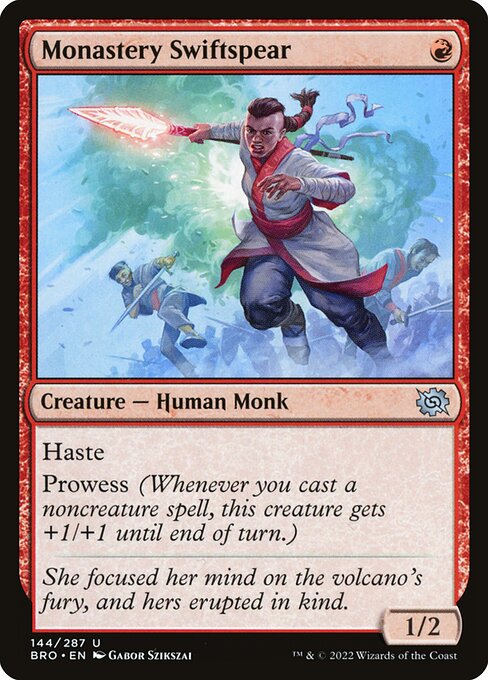 Monastery Swiftspear
Haste
Monastery Swiftspear
Haste
Prowess (Whenever you cast a noncreature spell, this creature gets +1/+1 until end of turn.)
or
Sprite Dragon
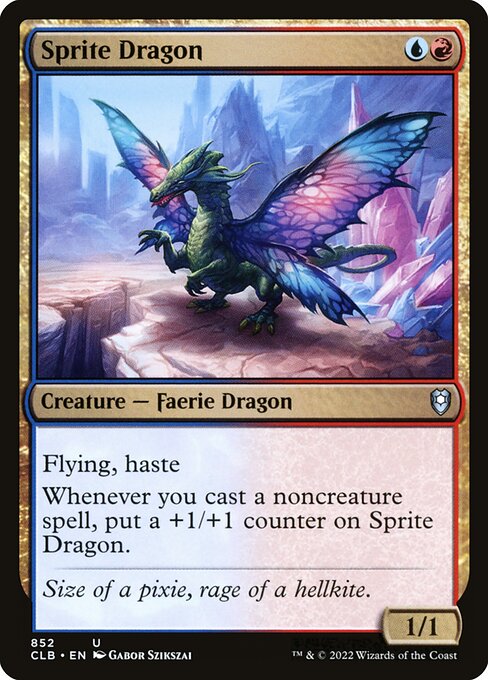 Sprite Dragon
Flying, haste
Sprite Dragon
Flying, haste
Whenever you cast a noncreature spell, put a +1/+1 counter on this creature.
that could more easily close the game, this deck has a harder time.
Obviously, you can play answers to many of these hate cards in the sideboard.
Destructive Revelry
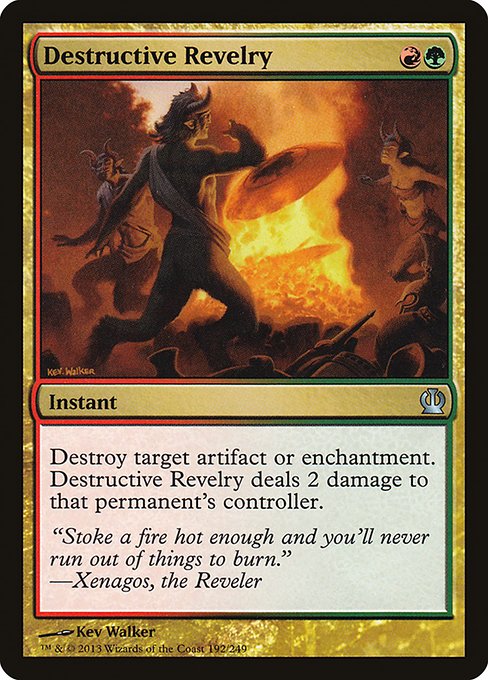 Destructive Revelry
Destroy target artifact or enchantment. Destructive Revelry deals 2 damage to that permanent's controller.
and
Ancient Grudge
Destructive Revelry
Destroy target artifact or enchantment. Destructive Revelry deals 2 damage to that permanent's controller.
and
Ancient Grudge
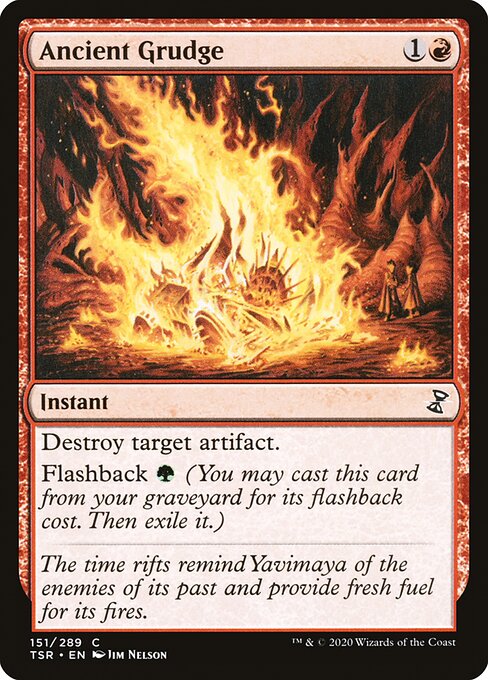 Ancient Grudge
Destroy target artifact.
Ancient Grudge
Destroy target artifact.
Flashback {G} (You may cast this card from your graveyard for its flashback cost. Then exile it.)
can help get rid of the likes of
Relic of Progenitus
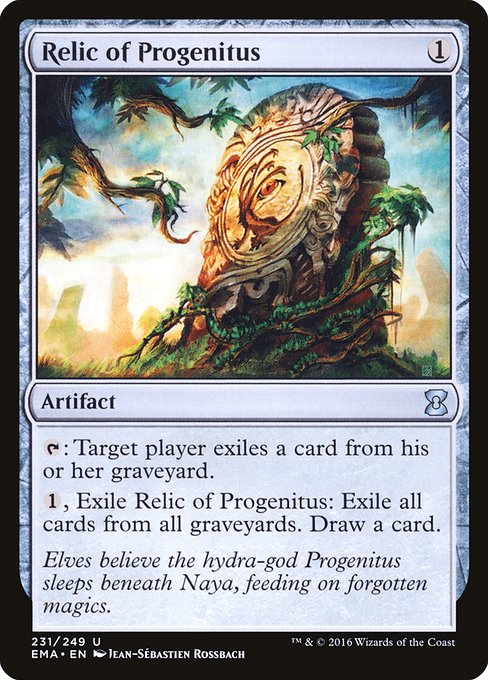 Relic of Progenitus
{T}: Target player exiles a card from their graveyard.
Relic of Progenitus
{T}: Target player exiles a card from their graveyard.
{1}, Exile this artifact: Exile all graveyards. Draw a card.
out of Tron, for instance. Playing around
Endurance
 Endurance
Flash
Endurance
Flash
Reach
When this creature enters, up to one target player puts all the cards from their graveyard on the bottom of their library in a random order.
Evoke—Exile a green card from your hand.
out of Yawgmoth combo is significantly more difficult, though. Endurance can completely wreck your gameplan when you cast Underworld Breach, and as a 3/4 with Reach, it often completely blanks your attacks.
As a result, this deck is not foolproof, but if players aren’t prepared with ideal sideboard cards, it can be quite effective. Your cards are very efficient in general, and when uninterrupted, you can win rather quickly. For players who miss casting Grapeshot in Modern, now may be your chance.
Read More: Cool Birthing Pod-Style Combo Deck Makes Surprise Appearance in Pioneer!