


Over the course of the past month, the Pioneer metagame has changed a significant amount. This is largely due to the abundance of powerful cards from Wilds of Eldraine that were added to the format. Cards like
Monstrous Rage
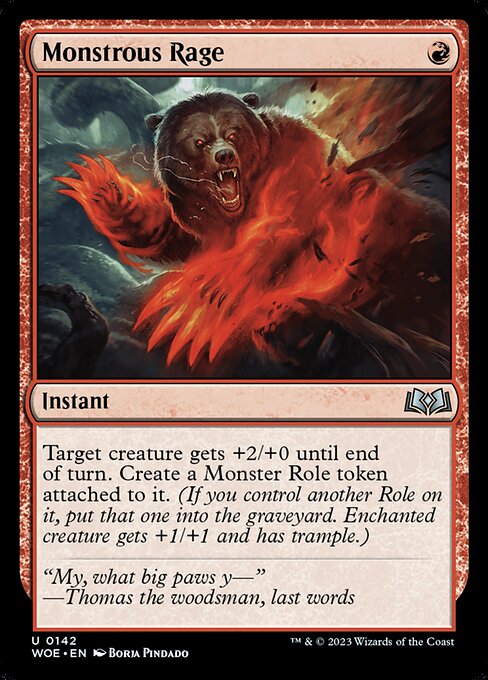 Monstrous Rage
Target creature gets +2/+0 until end of turn. Create a Monster Role token attached to it. (If you control another Role on it, put that one into the graveyard. Enchanted creature gets +1/+1 and has trample.)
in Boros Heroic and
The Huntsman’s Redemption
Monstrous Rage
Target creature gets +2/+0 until end of turn. Create a Monster Role token attached to it. (If you control another Role on it, put that one into the graveyard. Enchanted creature gets +1/+1 and has trample.)
in Boros Heroic and
The Huntsman’s Redemption
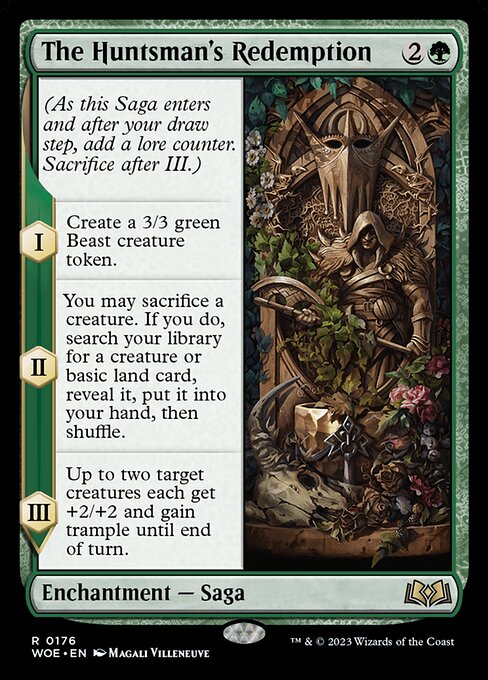 The Huntsman’s Redemption
(As this Saga enters and after your draw step, add a lore counter. Sacrifice after III.)
The Huntsman’s Redemption
(As this Saga enters and after your draw step, add a lore counter. Sacrifice after III.)
I — Create a 3/3 green Beast creature token.
II — You may sacrifice a creature. If you do, search your library for a creature or basic land card, reveal it, put it into your hand, then shuffle.
III — Up to two target creatures each get +2/+2 and gain trample until end of turn.
in Gruul midrange have not only had a major impact on their respective archetypes but have changed the landscape of the Pioneer format as a whole.
What used to be a format so heavily dominated by mono-green Devotion and Rakdos Midrange is starting to see some interesting archetypes starting to rise to the top. It seems like no deck has risen more in recent weeks than Izzet Phoenix, though. This deck has remained largely consistent and unchanged for a while. While the deck had solid matchups against many Creature-based decks like Spirits, combo decks like
Lotus Field
 Lotus Field
Hexproof
Lotus Field
Hexproof
This land enters tapped.
When this land enters, sacrifice two lands.
{T}: Add three mana of any one color.
combo were tough to beat.
However, some new additions from Wilds of Eldraine have catapulted the deck up into the top echelon of decks. It’s no surprise that
Sleight of Hand
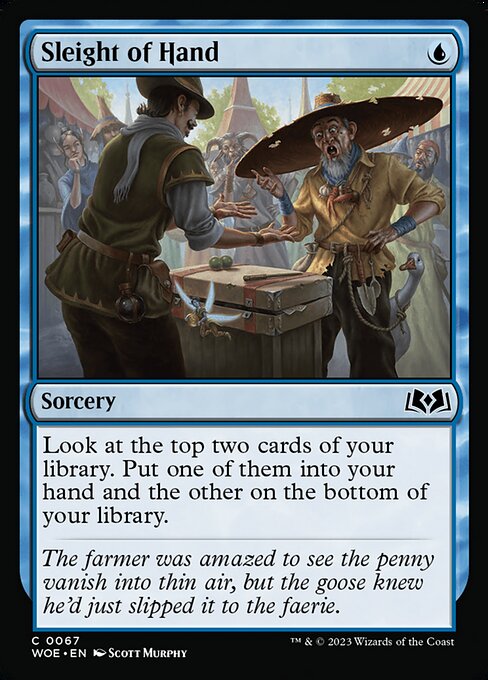 Sleight of Hand
Look at the top two cards of your library. Put one of them into your hand and the other on the bottom of your library.
being added to Pioneer helped the deck gain some additional consistency. That being said, some players have had success changing the deck even further. The recent 452-player MTGO Pioneer Qualifier winning decklist, for example, showcased some really cool innovations. Is Izzet Phoenix going to continue to dominate? To help answer this question, let’s take a look at some of the core of the deck as well as some key changes that have helped shore up some of the deck’s weaknesses.
Sleight of Hand
Look at the top two cards of your library. Put one of them into your hand and the other on the bottom of your library.
being added to Pioneer helped the deck gain some additional consistency. That being said, some players have had success changing the deck even further. The recent 452-player MTGO Pioneer Qualifier winning decklist, for example, showcased some really cool innovations. Is Izzet Phoenix going to continue to dominate? To help answer this question, let’s take a look at some of the core of the deck as well as some key changes that have helped shore up some of the deck’s weaknesses.
Phoenix Core

The goal of the Izzet Phoenix deck is to naturally get copies of
Arclight Phoenix
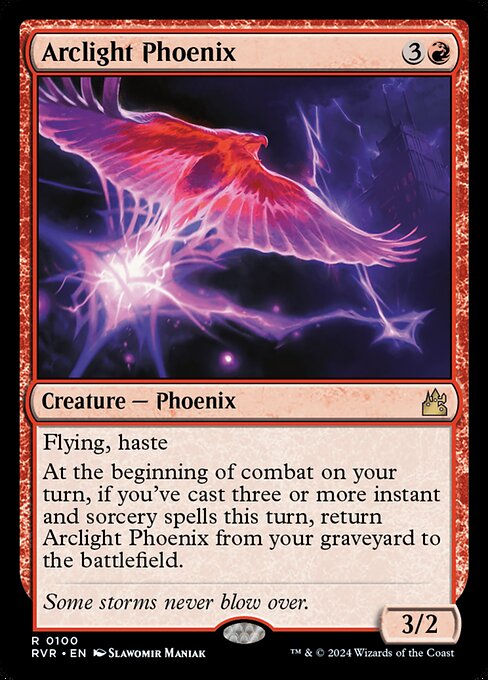 Arclight Phoenix
Flying, haste
Arclight Phoenix
Flying, haste
At the beginning of combat on your turn, if you've cast three or more instant and sorcery spells this turn, return this card from your graveyard to the battlefield.
into your graveyard and cast the requisite number of spells to bring them back. As you might expect, this requires playing a lot of cheap Instants and Sorceries. What makes Arclight Phoenix such a strong card is that it is recursive. Even if the opponent uses removal on it, you can simply play three spells again and bring it back. This makes Arclight Phoenix an excellent blocker, and the combination of Flying and Haste makes it a solid attacker that can close the game relatively quickly as well.
The best way to make sure that you have enough spells to cast to reliably bring back Phoenix at any point in the game is by playing lots of cheap cantrips. Both
Consider
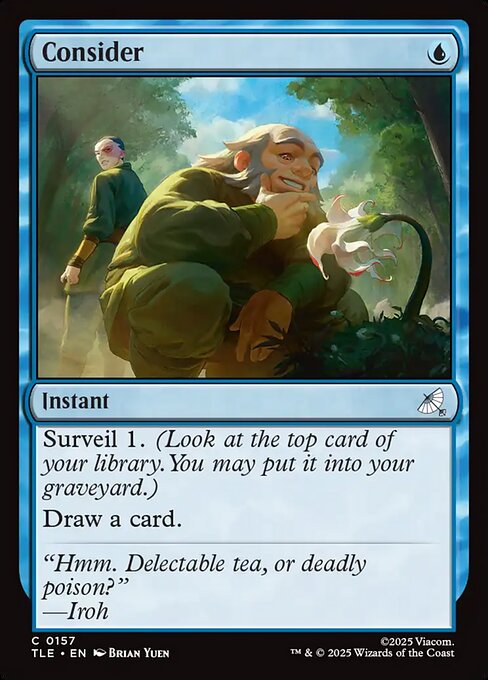 Consider
Surveil 1. (Look at the top card of your library. You may put it into your graveyard.)
Consider
Surveil 1. (Look at the top card of your library. You may put it into your graveyard.)
Draw a card.
and
Opt
 Opt
Scry 1. (Look at the top card of your library. You may put that card on the bottom.)
Opt
Scry 1. (Look at the top card of your library. You may put that card on the bottom.)
Draw a card.
were utilized before Wilds of Eldraine, and now Sleight of Hand has joined the mix to add additional consistency. These cantrips also work well with
Thing in the Ice
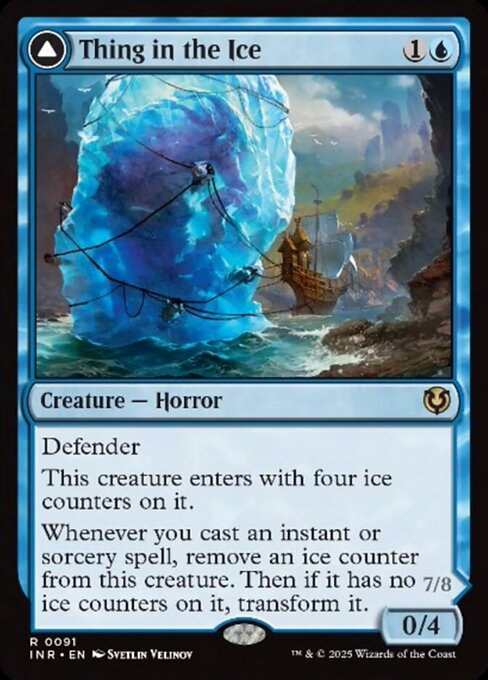 Thing in the Ice
Defender
Thing in the Ice
Defender
This creature enters with four ice counters on it.
Whenever you cast an instant or sorcery spell, remove an ice counter from this creature. Then if it has no ice counters on it, transform it.
, which can win games against Creature decks singlehandedly if unanswered.
From there, you need ways to get Arclight Phoenix in the graveyard and ways to stay alive in the interim.
Lightning Axe
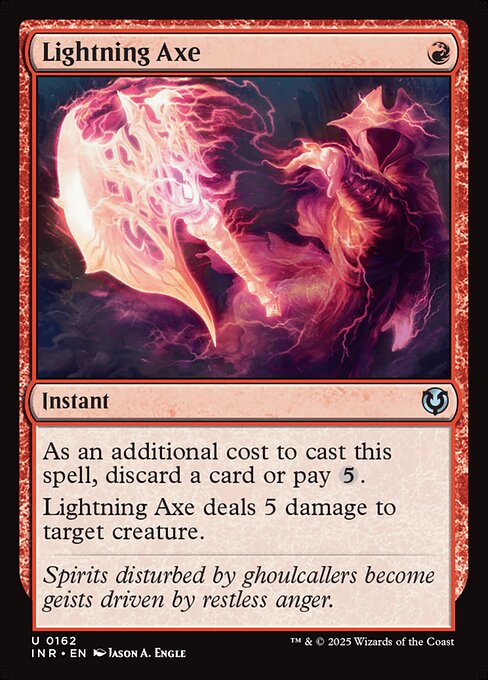 Lightning Axe
As an additional cost to cast this spell, discard a card or pay {5}.
Lightning Axe
As an additional cost to cast this spell, discard a card or pay {5}.
Lightning Axe deals 5 damage to target creature.
helps play both roles nicely. Five damage is enough to kill problematic cards like
Sheoldred, the Apocalypse
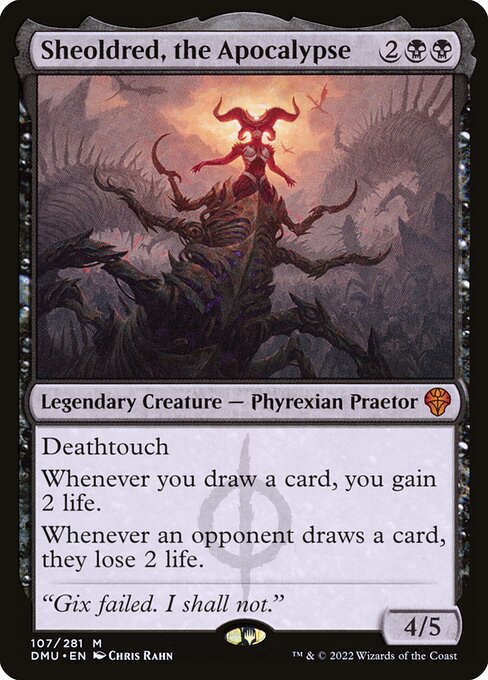 Sheoldred, the Apocalypse
Deathtouch
Sheoldred, the Apocalypse
Deathtouch
Whenever you draw a card, you gain 2 life.
Whenever an opponent draws a card, they lose 2 life.
, and being able to use Lightning Axe as a discard outlet for Phoenixes trapped in your hand is a big bonus. Beyond Lightning Axe, the deck also plays
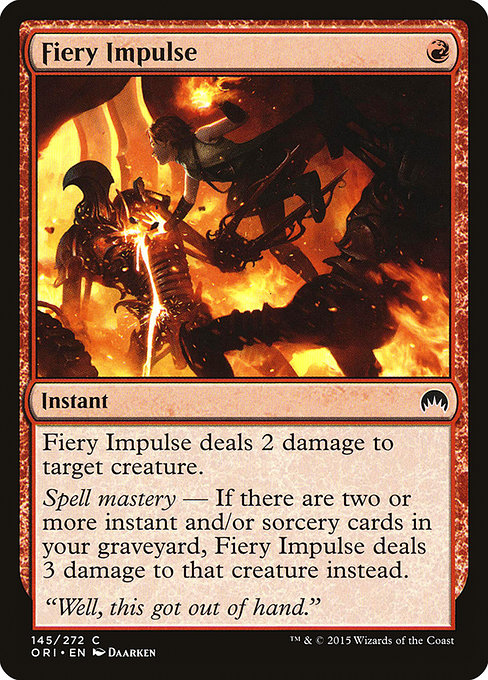
Fiery Impulse
 Fiery Impulse
 deals 2 damage to target creature.
Fiery Impulse
Fiery Impulse deals 2 damage to target creature.
Spell mastery — If there are two or more instant and/or sorcery cards in your graveyard, Fiery Impulse deals 3 damage instead.
as additional cheap interaction.
Read More: Upcoming MTG Ban Announcement Needs to Address These Cards
Intriguing Changes

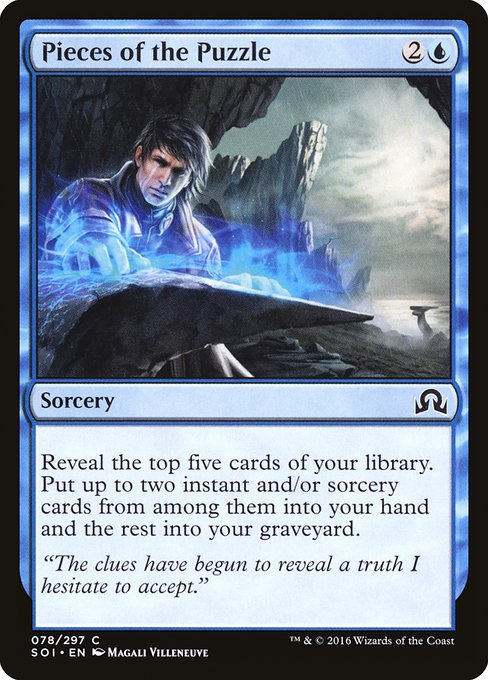
One of the biggest omissions from Phoenix decks of the past is certainly
Pieces of the Puzzle
 Pieces of the Puzzle
Reveal the top five cards of your library. Put up to two instant and/or sorcery cards from among them into your hand and the rest into your graveyard.
. Instead, this deck makes use of Picklock Prankster’s associated Adventure to help fill the graveyard. Picklock Prankster may only let you select one card instead of two to put into your hand, but there are a couple benefits to playing this solid uncommon Faerie in this archetype. The first is that this spell is more efficient. Pieces of the Puzzle, while powerful, was certainly a bit clunky. Against Creature decks, casting Pieces required you to take a whole turn off from using potential interaction, which could be problematic.
Pieces of the Puzzle
Reveal the top five cards of your library. Put up to two instant and/or sorcery cards from among them into your hand and the rest into your graveyard.
. Instead, this deck makes use of Picklock Prankster’s associated Adventure to help fill the graveyard. Picklock Prankster may only let you select one card instead of two to put into your hand, but there are a couple benefits to playing this solid uncommon Faerie in this archetype. The first is that this spell is more efficient. Pieces of the Puzzle, while powerful, was certainly a bit clunky. Against Creature decks, casting Pieces required you to take a whole turn off from using potential interaction, which could be problematic.
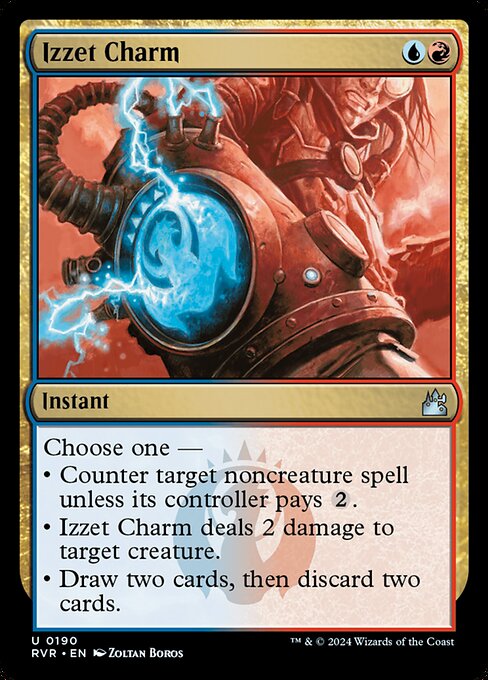
The second benefit to the card is that the Adventure is an Instant. This allows you to hold up interaction with the option of casting the Adventure, depending on what the opponent does. This includes
Izzet Charm
 Izzet Charm
Choose one —
Izzet Charm
Choose one —
• Counter target noncreature spell unless its controller pays {2}.
• Izzet Charm deals 2 damage to target creature.
• Draw two cards, then discard two cards.
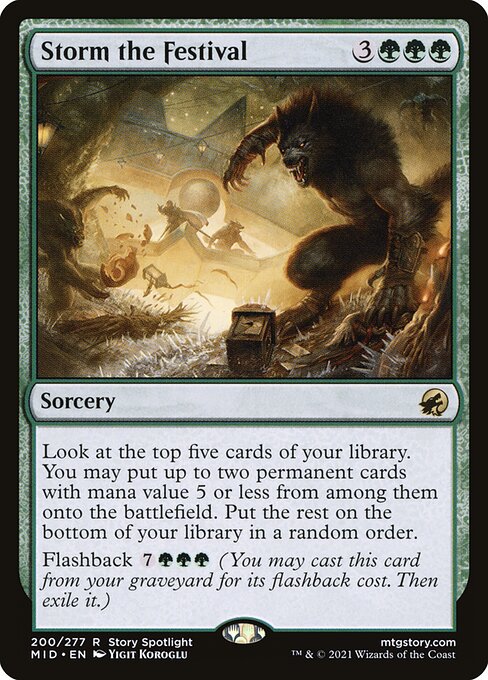
, which can be used to counter potential game-ending spells from the opponent, such as
Storm the Festival
 Storm the Festival
Look at the top five cards of your library. You may put up to two permanent cards with mana value 5 or less from among them onto the battlefield. Put the rest on the bottom of your library in a random order.
Storm the Festival
Look at the top five cards of your library. You may put up to two permanent cards with mana value 5 or less from among them onto the battlefield. Put the rest on the bottom of your library in a random order.
Flashback {7}{G}{G}{G} (You may cast this card from your graveyard for its flashback cost. Then exile it.)
out of mono-green Devotion or
Enigmatic Incarnation
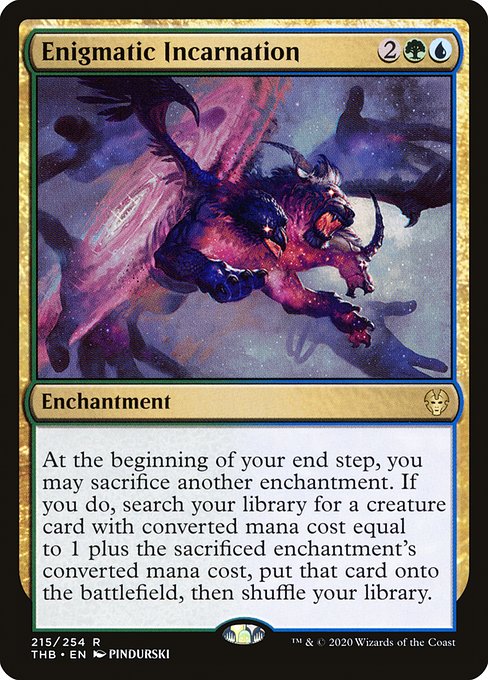 Enigmatic Incarnation
At the beginning of your end step, you may sacrifice another enchantment. If you do, search your library for a creature card with mana value equal to 1 plus the sacrificed enchantment's mana value, put that card onto the battlefield, then shuffle.
out of
Fires of Invention
Enigmatic Incarnation
At the beginning of your end step, you may sacrifice another enchantment. If you do, search your library for a creature card with mana value equal to 1 plus the sacrificed enchantment's mana value, put that card onto the battlefield, then shuffle.
out of
Fires of Invention
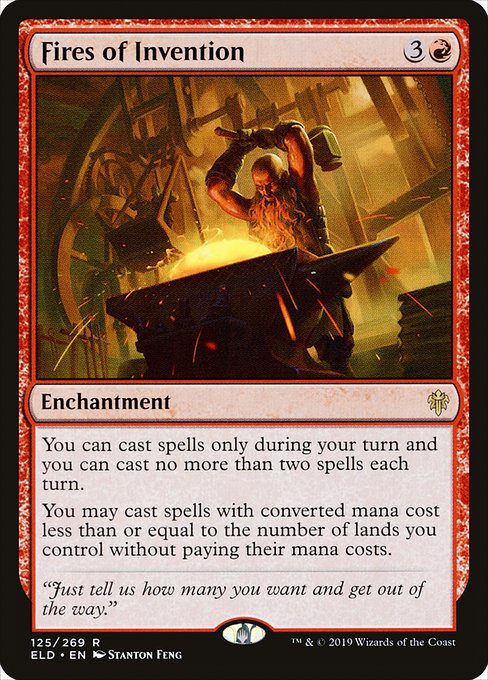 Fires of Invention
You can cast spells only during your turn and you can cast no more than two spells each turn.
Fires of Invention
You can cast spells only during your turn and you can cast no more than two spells each turn.
You may cast spells with mana value less than or equal to the number of lands you control without paying their mana costs.
decks. Izzet Charm can also be used as a removal spell and a discard outlet for Phoenixes, making it quite a versatile card.
Finally, simply casting Picklock Prankster as a three-toughness Flier helps a lot at stemming the bleeding against aggressive decks. The goal of this version of the deck is to simply use cards that are as efficient as possible to fill their roles. This includes going as far as playing
Otherworldly Gaze
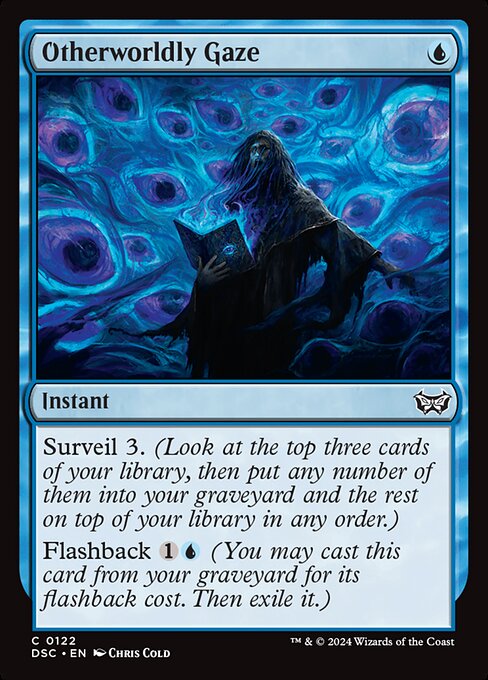 Otherworldly Gaze
Surveil 3. (Look at the top three cards of your library, then put any number of them into your graveyard and the rest on top of your library in any order.)
Otherworldly Gaze
Surveil 3. (Look at the top three cards of your library, then put any number of them into your graveyard and the rest on top of your library in any order.)
Flashback {1}{U} (You may cast this card from your graveyard for its flashback cost. Then exile it.)
to help fill the graveyard quickly, despite technically being card disadvantage. The idea is that, while Gaze and Axe don’t help refuel your hand, playing four copies of
Treasure Cruise
 Treasure Cruise
Delve (Each card you exile from your graveyard while casting this spell pays for {1}.)
Treasure Cruise
Delve (Each card you exile from your graveyard while casting this spell pays for {1}.)
Draw three cards.
is more than enough to make up for this. You even get to maximize
Demilich
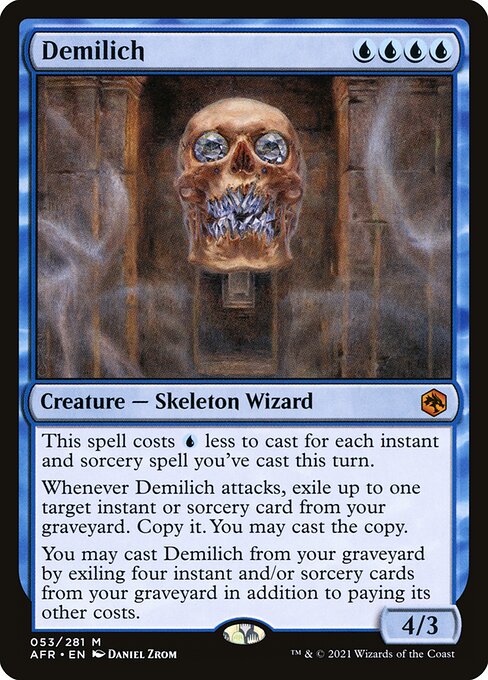 Demilich
This spell costs {U} less to cast for each instant and sorcery spell you've cast this turn.
Demilich
This spell costs {U} less to cast for each instant and sorcery spell you've cast this turn.
Whenever this creature attacks, exile up to one target instant or sorcery card from your graveyard. Copy it. You may cast the copy.
You may cast this card from your graveyard by exiling four instant and/or sorcery cards from your graveyard in addition to paying its other costs.
as another recursive threat, letting you copy removal and cantrips from your graveyard when you attack.
Read More: Unusual Rat Deck Overperforms in Competitive Modern Event!
Strengths and Weaknesses

When the Izzet Pheonix deck gets going, it can be very difficult for non-combo decks to stop. The combination of cheap removal, recursive Creatures, and Treasure Cruise to refuel gives Izzet Phoenix an edge against most Creature-based decks. That being said, there are still a few notable ways to fight against the archetype, which is by no means oppressive.
First off, if you want to disrupt the deck’s engine, playing graveyard hate cards like
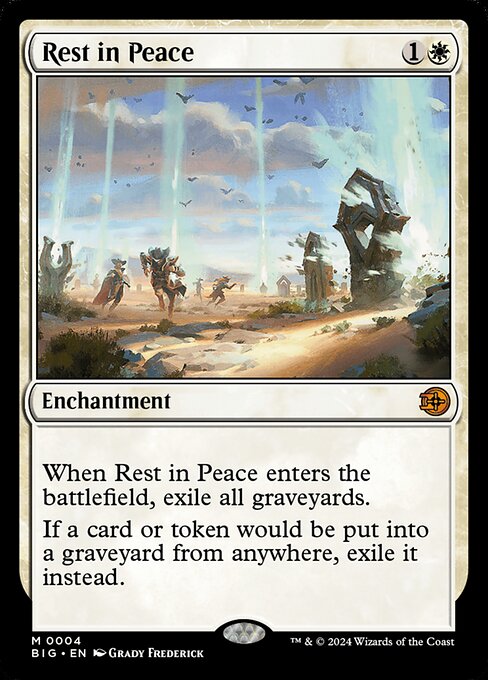
Rest in Peace
 Rest in Peace
When this enchantment enters, exile all graveyards.
Rest in Peace
When this enchantment enters, exile all graveyards.
If a card or token would be put into a graveyard from anywhere, exile it instead.
is a good place to start. These types of cards make Arclight Phoenix and especially Treasure Cruise significantly worse, helping you play a fairer and grindy game against the deck that otherwise would be very difficult to win. Given that the deck goes as far as to play Otherworldly Gaze just to fill the graveyard and sculpt your draws, the deck is pretty reliant on Treasure Cruise to pull ahead.
Secondly, there are still combo decks like Lotus Field combo that can go way over the top. Izzet Pheonix’s removal spells are mostly dead, and the clock the deck presents is often too slow to effectively race you. Of course, Izzet Pheonix players will come prepared to try to fight through graveyard hate and combo decks in sideboarded games. Cards like
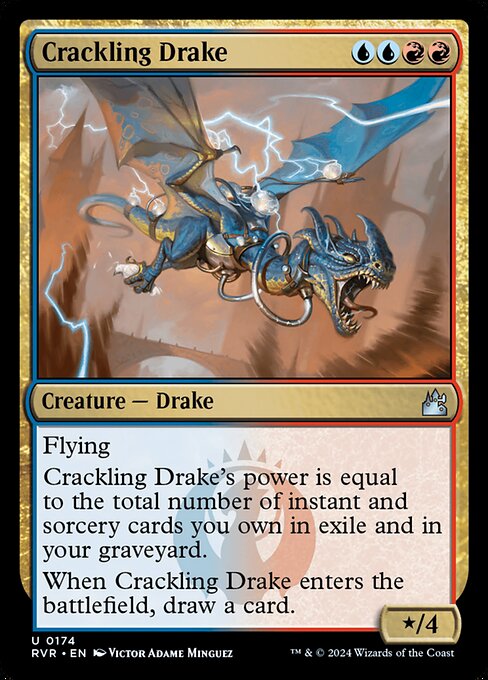
Crackling Drake
 Crackling Drake
Flying
Crackling Drake
Flying
Crackling Drake's power is equal to the total number of instant and sorcery cards you own in exile and in your graveyard.
When this creature enters, draw a card.
and
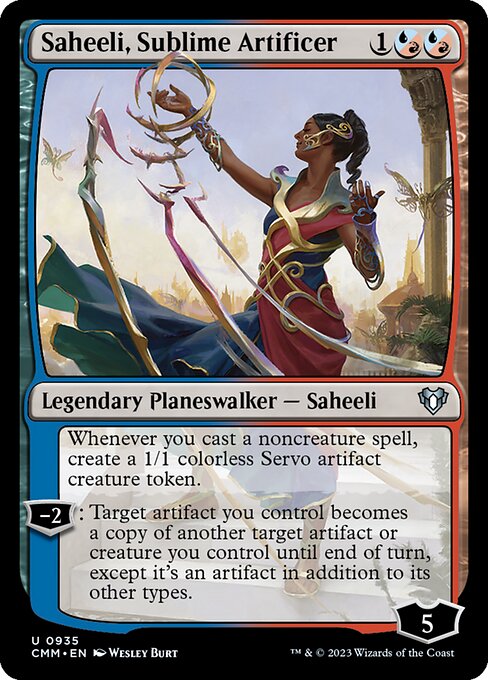
Saheeli, Sublime Artificer
 Saheeli, Sublime Artificer
Whenever you cast a noncreature spell, create a 1/1 colorless Servo artifact creature token.
Saheeli, Sublime Artificer
Whenever you cast a noncreature spell, create a 1/1 colorless Servo artifact creature token.
−2: Target artifact you control becomes a copy of another target artifact or creature you control until end of turn, except it's an artifact in addition to its other types.
provide alternate angles of attack that don’t require using the graveyard in any way. Further, Counterspells like
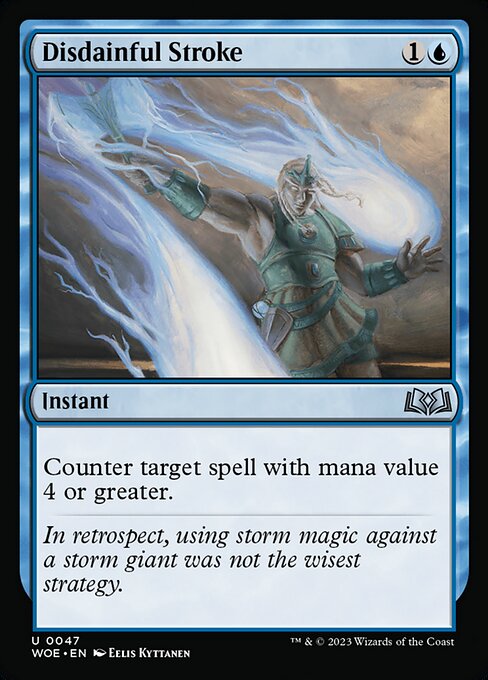
Disdainful Stroke
 Disdainful Stroke
Counter target spell with mana value 4 or greater.
combined with Flash threats like
Brazen Borrower
Disdainful Stroke
Counter target spell with mana value 4 or greater.
combined with Flash threats like
Brazen Borrower
 Brazen Borrower
Flash
Brazen Borrower
Flash
Flying
This creature can block only creatures with flying.
may help the deck steal games against combo strategies. If you are looking to get into the Pioneer format, definitely make sure you come prepared with a gameplan for Izzet Phoenix, because the deck isn’t going anywhere.
Read More: Unique Legacy Deck Joins Two Distinct Combos into One Shell!