




Since the release of MTG Avatar, the Standard metagame has gone through a surprising number of evolutions. Early on, it looked like Simic Aggro might dominate for a long time, only for Izzet Lessons to rise to the top of the throne at the World Championship.
Now, there’s yet another archetype in contention for best deck in Standard. This strategy is capable of insanely fast kills but also has the tools necessary to win longer games, making it a formidable force in a variety of matchups.
Speed Kills
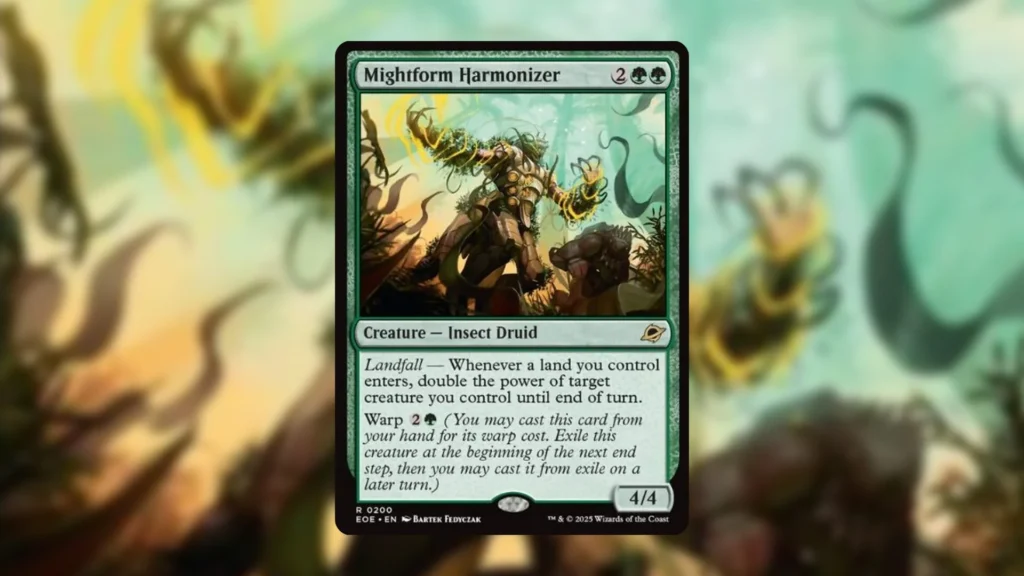
As the name of the deck implies, the main goal behind Selesnya Landfall is to abuse the power of the Landfall mechanic. While Landfall decks did pop up in Standard soon after the release of MTG Final Fantasy, this variant is quite different. You won’t find any copies of Tifa Lockhart, and there’s less of an emphasis on pump spells like Overprotect as a result.
Instead, this archetype gets its fastest kills by maximizing the power of Mightform Harmonizer, which can come down at any point and immediately make one of your other threats enormous. In conjunction with Fabled Passage and Escape Tunnel, even a simple creature like Sazh’s Chocobo can send a wave of damage your opponent’s way out of nowhere.
This deck is even capable of winning the game as early as turn three with the power of Llanowar Elves and Lumbering Worldwagon. Curving Elves into Worldwagon gives you a pretty big mana advantage right out of the gates. Then, if you have Harmonizer rolled up, you can Crew Worldwagon and play a copy of Fabled Passage or Escape Tunnel right away to double Worldwagon’s power twice. After attacking and searching up yet another land, you’ll deal well above lethal damage, all without ever leaving yourself vulnerable to sorcery speed kill spells like Iroh’s Demonstration. These four-toughness threats also easily outsize most efficient red removal spells like Torch the Tower, which only enhances your matchup against the popular Izzet decks.
Versatile Approach
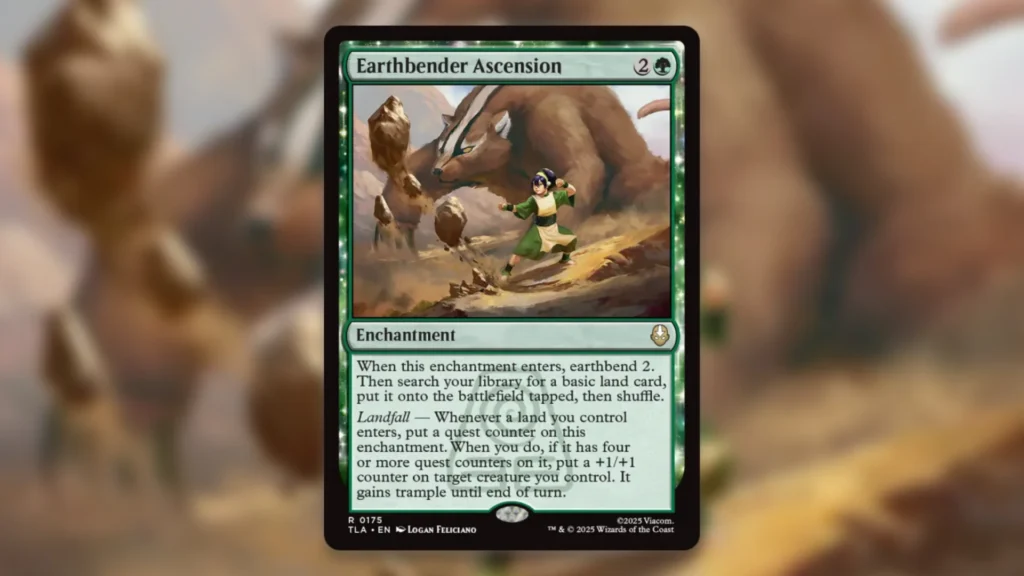
As good as this deck is at putting your opponent on the backfoot quickly, it also presents a robust mid to late game thanks to some specific powerhouse inclusions. At the top of the list, Earthbender Ascension provides a ton of utility over the course of a game. Just at face value, being able to Earthbend 2 and search for a land is already not a bad deal for three mana. The simple 2/2 land creature synergizes with Badgermole Cub and can also grow on a whim alongside Harmonizer.
Once you factor in the Landfall trigger, however, things start to get out of hand. Worldwagon, Passage, and Tunnel get you to four quest counters pretty fast. After that, you unlock the elite payoff of being able to spread +1/+1 counters around and make each of your threats individually problematic. Of course, in conjunction with Harmonizer, getting to make one of your attackers into an enormous Trampler makes it trivial to break through a board stall versus Ouroboroid decks.
If you ever get to assemble the combination of Ascension and Icetill Explorer, you’ll start triggering Landfall an absurd number of times in a turn. All the while, you’ll be Milling a bunch of cards, and any copies of Esper Origins you put into your graveyard can be Flashbacked for additional value. You should have no shortage of mana once your engine starts rolling, so having additional ways to spend it goes a long way versus the midrange decks of the format.
A Gameplan Against the Field

With the ability to present a fast clock and still have plenty of fuel for attrition wars, Selesnya Landfall is built to handle a diverse field. Against aggro decks, so long as you can keep your head above water, setting up a massive Trampling attack with Harmonizer should easily swing games in your favor. On the flip side, the Icetill Explorer/Esper Origins package gives you a better chance to beat slower control decks that come prepared with cards like Get Lost that can break up your big attacks. Your control matchup only gets better if you can land Felidar Retreat out of the sideboard, which is an army in a can that’s become more popular in recent days.
Given Selesnya Landfall’s versatility, it makes a lot of sense why it would thrive in a field where aggro, midrange, and control all play a big role. That being said, there are still some weaknesses to look out for. The lack of removal in the maindeck can come back to bite you against fast curves from Bant Airbending Combo or Red Leyline Aggro, especially if you’re on the draw. Additionally, strong draws from Reanimator featuring Bitter Triumph can be tough to fight through.
Fortunately, the sideboard copies of Seam Rip and Sheltered by Ghosts drastically improve the Airbending and Leyline Aggro matchups, while Soul-Guide Lantern is a game-changer versus Reanimator. So, with the right set of draws, Selesnya Landfall is capable of competing with nearly anything your opponent could throw your way. There’s still plenty of room for players to adjust to the current metagame, and we look forward to seeing how the format adapts over time.
Stick with us here at mtgrocks.com: the best site for Magic: The Gathering coverage. Be sure to check out our deckbuilder for your next big brew!