




Slipping in just after Avatar, the final MTG release of the year was actually the Final Fantasy Holiday product line. While most of the attention has been focused on the incredibly expensive reprints from here so far, there are also 24 all-new designs across the products. Because of their odd delivery method, many of these cards flew under the radar after their December 5th release.
That said, nothing good stays hidden forever. Now that the set has been on shelves for a couple of weeks, players are starting to wake up to how potent some of these new pieces are. In a recent Instagram reel from MTG content creator Deckedoutedh, the virtues of one such new card, Campsite Cuisine, were put on full display. This is an absolute banger for Food lists, as well as a surprisingly flexible tool for other strategies, so it’s great to see it get the recognition it deserves.
Campsite Cuisine MTG
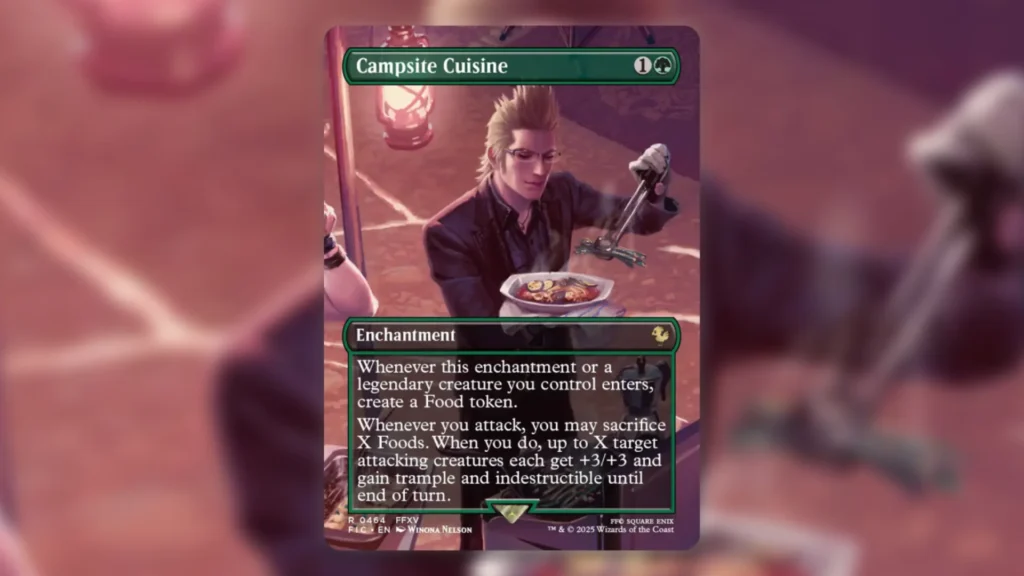
Campsite Cuisine is the perfect example of the “self-sustaining engine” design we see in a lot of modern MTG cards. For two mana, it serves both as a continual source of Food and a way to leverage that Food for value.
On the Food generation side, getting one on entry, then one each time a legendary creature enters, is a pretty sweet deal. Every Commander deck has access to at least one legend on tap, so it can always do something. It gets even better with Partner pairs, too. On top of that, thanks to Universes Beyond, most Commander decks run a lot more legends in the 99 these days. As a result, it shouldn’t be hard to keep a stream of Food going with this card.
Your reward for building up Food with Campsite Cuisine is access to a surprisingly potent Overrun effect. Each Food you sacrifice on attack gives a creature +3/+3, Trample, and Indestructible, which is a killer combination. Whether your opponents block or not, they’re going to have a bad time on the receiving end of this.
The flexibility here is what really makes the second ability interesting. Unlike something like Pippin, Warden of Isengard, which forces you to go all-in for a similar effect, you can pick and choose your targets with this one. You can apply buffs only to the creatures that really need them, and conserve Food for later turns. The addition of Trample is also a big improvement over Pippin, too, since it makes the card more of a reliable finisher for Food decks.
A Moveable Feast
Naturally, Campsite Cuisine is at its best in MTG decks that are already creating and leveraging Food tokens. In Commander, there are a bunch of great homes like this available.
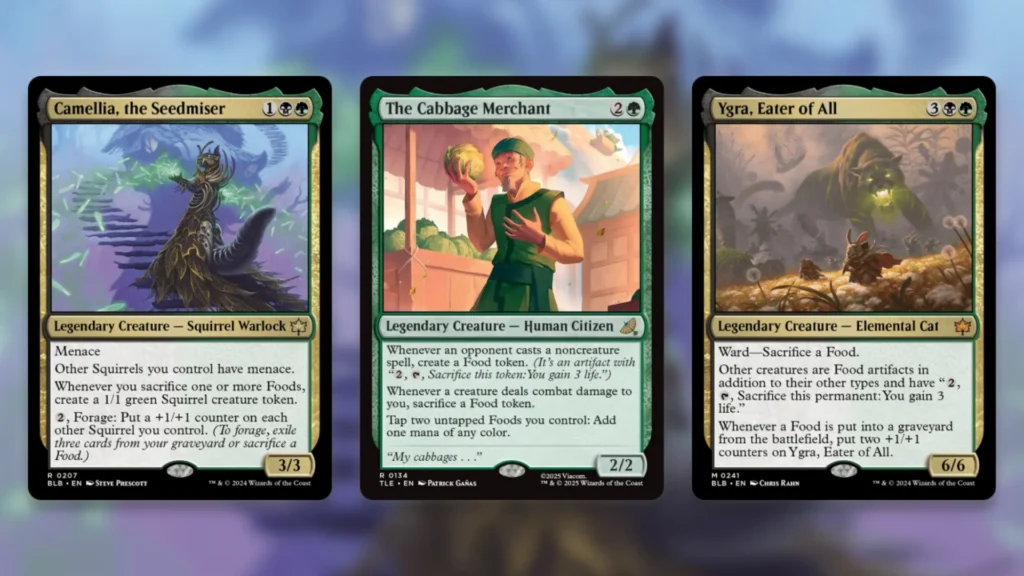
Ygra, Eater of All is perhaps the best home for the card in Commander. Thanks to its passive ability, you’ll have enough Food to buff your whole board whenever you need. The fact that Campsite Cuisine is an easy Food sacrifice outlet also blends really well with Ygra’s self-buff effect.
You only need to sacrifice a handful of Foods here to push Ygra into ‘lethal Commander damage’ territory, which forces your opponents to play conservatively as long as both are in play. Even if you’re less all-in than Ygra, turning the extra Foods from The Cabbage Merchant into creature buffs can allow for explosive early wins that the deck wouldn’t have been capable of otherwise.
The sacrifice aspect of Campsite Cuisine boosts a lot of other Food decks as well. It lets you get extra tokens with Camellia, the Seedmiser, for example, as well as ramp with Elanor Gardner. In the 99, having more ways to trigger Nuka-Cola Vending Machine, Unlucky Cabbage Merchant, and Trail of Crumbs is a big bonus, too. While Foods can always sacrifice themselves for two mana, doing so isn’t very efficient. Having another outlet to get rid of them when needed is great for Food decks in the format.
Sacrifice potential aside, the passive Food generation is subtly great here too. While there are a number of continuous Food generators available already, most of the best ones, like Tireless Provisioner and Samwise Gamgee, come in creature form. Getting a similar effect on a hard-to-remove enchantment instead is a big deal, and helps increase the resiliency and redundancy of green Food strategies greatly.
Extra Nutritional Value
While its applications in MTG Food decks are exciting, Campsite Cuisine has other tricks up its sleeve, too. As a cheap-n’-easy source of artifact generation, there are a bunch of different ways to abuse the card in Commander.
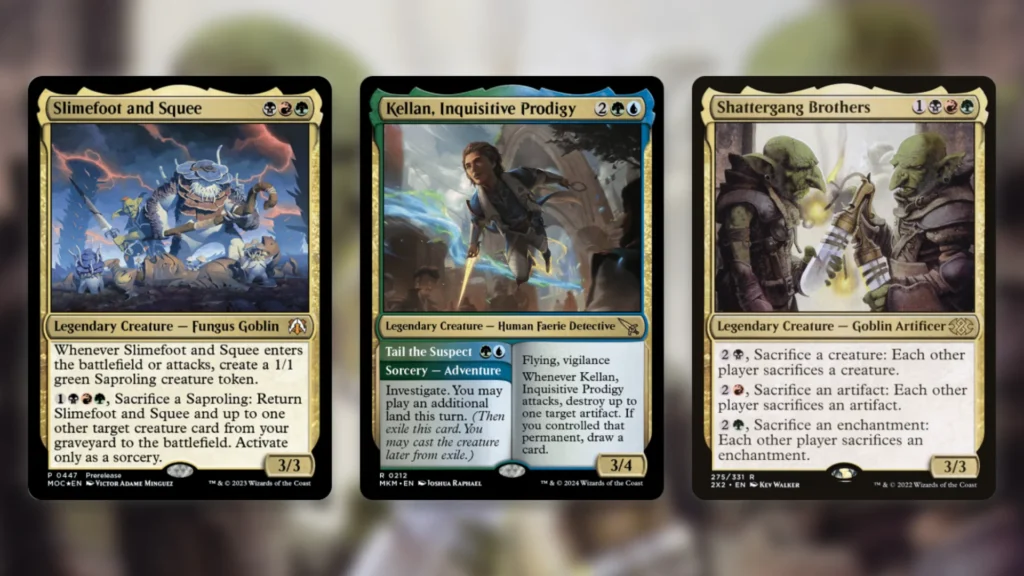
One of the best use cases here is to add the card to decks where the Commander can enter over and over. Legends like Slimefoot and Squee, or Norin, the Wary within the 99 of a Rocco, Cabaretti Caterer deck, are perfect for this. Both of these can generate a constant or potentially infinite stream of Food with Cuisine. Throw in a Reckless Fireweaver or Ingenious Artillerist, and you can burn the table down in no time.
Campsite Cuisine is also great in decks that can make good use of fodder artifacts. In Kellan, Inquisitive Prodigy, for example, every Food you make can become a card draw later. Alternatively, you can use it in Shattergang Brothers to ensure access to an artifact Edict when you need it. There are plenty of ways to generate tokens like this these days, of course, but the fact that Cuisine is both green and an enchantment gives it a pretty unique edge.
In each of these use cases, Cuisine’s potential as a finisher takes a back seat to its general utility. The reason this card is so good, however, and why players are starting to take note of it now, is that it blends these two aspects so seamlessly. It’s rare that a grindy value piece can also sub in for a card like Craterhoof Behemoth, but Campsite Cuisine certainly can.
Stick with us here at mtgrocks.com: the best site for Magic: The Gathering coverage. Be sure to check out our deckbuilder for your next big brew!