



Just over two years ago, Wizards announced the introduction of the new Timeless format on MTG Arena. Unlike Historic, Timeless is specifically designed to allow players to utilize all the goodies that are available on the client. With zero bans and only three restricted cards to speak of, this format features a handful of extremely powerful decks.
Unfortunately, as cool as a no holds barred-style environment sounds, Arena Championship 10 may have shed some light on the format’s flaws. Despite Mardu Energy’s popularity at the event at large, a different archetype is the talk of the town, and there’s cause for concern about the format’s health as a whole.
Necro Dominance

On day one of Arena Championship 10, Mardu Energy made up over 30% of the field. With such massive representation, it was natural to assume that the deck would end up making up a decent chunk of the top 16 going into day two. Yet, only two Mardu Energy players broke through.
By contrast, Mono-Black and Orzhov Necrodominance shells made up half of the top 16. Considering that only 18 players out of 119 registered either deck in the first place, this showcases an absolutely absurd conversion rate. This trend continued into day two as well, with three of the four players in the semifinals piloting Mono-Black Necro.
Obviously, this data suggests that Mono-Black Necro has what it takes to crush a field ruled by Mardu Energy. That said, the deck showcased that it had what it takes to beat most top tier strategies. Omni-Tell Combo, Four-Color Midrange, and Golgari Midrange all fell to Mono-Black Necro in the top 16 bracket. The fact that a well-known deck with such a fast, straightforward gameplan was able to dominate on one of Magic’s biggest stages is indicative of a couple problems that plague the Timeless format.
First and foremost, as good as most aggro and midrange decks are in Timeless, they can have trouble competing with the elite sources of fast mana that Timeless decks have access to. No archetype abuses Dark Ritual better than Mono-Black Necro. Even if your opponent has Strip Mine at the ready, you can still land a turn one Necrodominance, Necropotence, or Sorin, Imperious Bloodlord and put your opponent on the backfoot immediately. Chrome Mox only makes the deck more consistent and gives you a better chance to relish all of the extra card advantage.
On top of broken acceleration, Timeless in its current state features far better proactive elements than reactive ones. Outside of Force of Negation, countermagic is too slow to stop Necrodominance shells. Plus, the presence of Grief and Reanimate gives Mono-Black Necro the opportunity to strip the opponent of their meaningful interaction. Most Necro decks even splash for Voice of Victory out of the sideboard as a tool to completely blank counterspells. Then, once one of the premium three-drops hits the table, reactive decks are in a world of trouble.
With this in mind, Necro strategies promote boring gameplay. To have the best chance of competing, you need to either present an extremely fast gameplan of your own or disrupt opposing Necro players right out of the gates. If you manage to force the Necro player to go low on resources by burning Rituals and Moxen and stop a problematic haymaker from hitting the table, you’re in good shape. In either case, though, games can feel like they’re decided very quickly in one direction. If this deck’s popularity continues to grow, the Timeless format as a whole suffers the consequences.
Ban Discourse
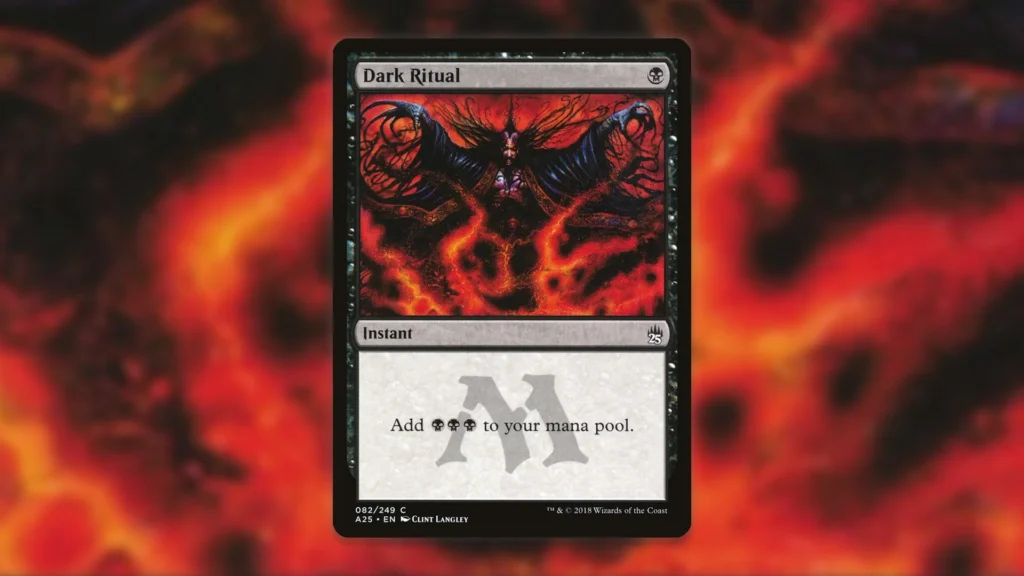
With everything put together, there’s an argument that a nerf to Mono-Black Necro in some form or fashion could help alleviate some of these issues. Of all the cards that could be worthy of getting restricted in the deck, Dark Ritual and Grief are at the top of the list.
In the case of Dark Ritual, many players believe elite sources of fast mana are inherently problematic for the format. Given the lack of flexible reactive elements like Force of Will, broken starts promoted by fast mana sources are harder to combat.
With both Dark Ritual and Grief in the mix, Mono-Black Necro is capable of nut draws involving casting an unbeatable three-drop on turn one with discard backup. These starts lead to complete non-games which are far from enjoyable, and that some players unsurprisingly object to.
Interestingly, incorporating Force of Will into Timeless could address this issue in theory. Force of Will is already on the client thanks to the recent Powered Cube and making the card legal in Timeless gives reactive blue decks a huge boost. That said, Force of Will may end up turbocharging Show and Tell decks, which is another combo shell that abuses fast mana, but perhaps that’s a risk worth taking at the moment. It’s in Wizards’ best interest to keep Timeless fun and interesting, and Mono-Black Necro’s persistence is a limiting factor in the format’s evolution.
A Glimmer of Hope
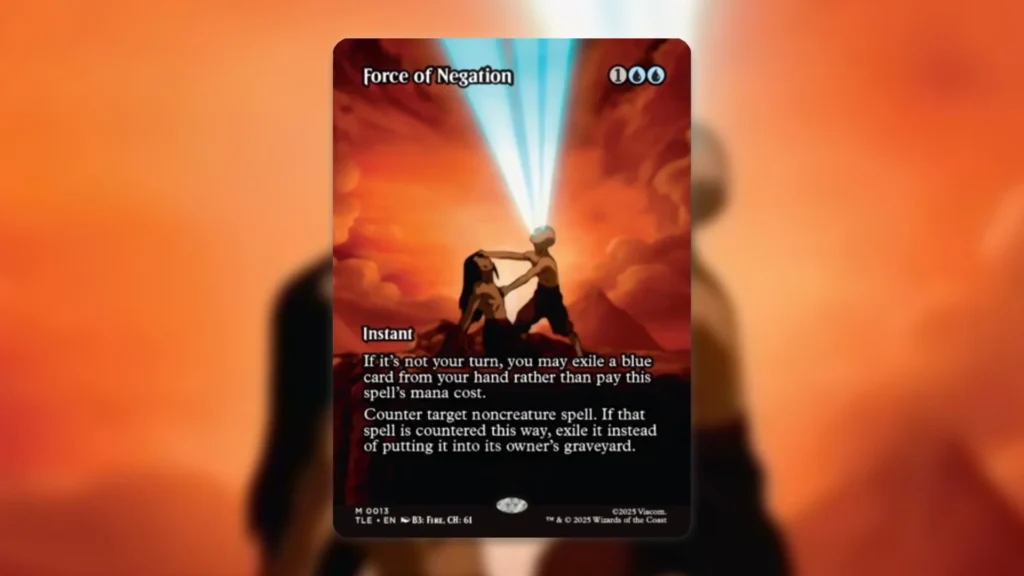
Even without the addition of Force of Will, however, there is still a chance that the Timeless format can experience a bit of a self-correction moving forward. While full-on control decks suffer in such a fast field that features Strip Mine, there’s still room for blue decks like Esper Tempo to succeed. Esper Tempo does a good job applying pressure while utilizing Force of Negation and Spell Pierce as disruption. Force of Negation lines up exceptionally well versus Mono-Black, and Orcish Bowmasters does a good job keeping Necrodominance in check.
The issue is that unlike Force of Will, Force of Negation is an extremely poor tool versus Mardu Energy. Perhaps if the metagame starts shifting in the direction of combo decks and away from creature decks, the blue tempo archetypes might have room to flourish once again. In this sense, it’s possible that Mono-Black’s performance isn’t as alarming as some players think. Only time will tell if players are able to adapt, or if some changes to Timeless could be on the horizon.
Stick with us here at mtgrocks.com: the best site for Magic: The Gathering coverage. Be sure to check out our deckbuilder for your next big brew!