



At this point in the timeline of Magic: The Gathering, the Fetch lands need no introduction. These are, arguably, the best lands in the game, offering impeccable fixing as well as a range of other benefits. Unfortunately, these lands also come with a major gameplay drawback: shuffling. Players going through their decks, finding lands, then shuffling afterwards, takes up a lot of time. In fact, many Magic players refer to Fetch lands as “loading screens” for this very reason.
Turns out Wizards is well aware of this issue and is actually actively working to solve it. In a Blogatog post earlier today, Mark Rosewater revealed that R&D is currently undergoing a bit of an experiment to test some Fetch land alternatives for MTG. While these new approaches have their own problems, it’s encouraging to see them nonetheless. Magic is at its best when it’s evolving, after all, especially in key gameplay areas like this.
A New MTG Fetch Land Experiment
“Flakmaniak: I would like to request more cards that make land tokens/summon lands from the sideboard, specifically to reduce the amount of shuffling.
Mark Rosewater: We’ve been experimenting in this space. It trades one logistically complicated action for a different one.”
Via Blogatog
Flakmaniak’s position, of wanting ramp options that don’t require shuffling, is hardly unique within the Magic community. Even putting the Fetch lands themselves aside, other widely-played cards like Rampant Growth and Sakura-Tribe Elder have similar issues. Land tokens are a fairly elegant solution to this, adding more mana without asking players to delve into their decks for a minute or more.
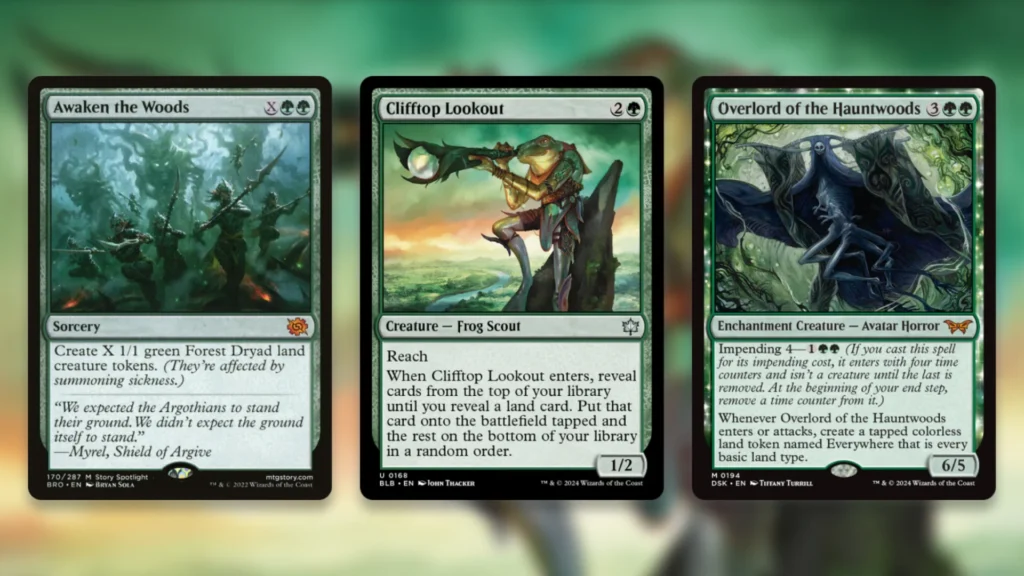
As Rosewater notes, this idea is something Wizards has dabbled with recently. We’ve seen the effect on flashy mythic Awaken the Woods, and in a more traditional form on Overlord of the Hauntwoods. Given how negative Wizards’ stance on land tokens has been in the past, even just seeing a couple of cards use the tech is fairly radical.
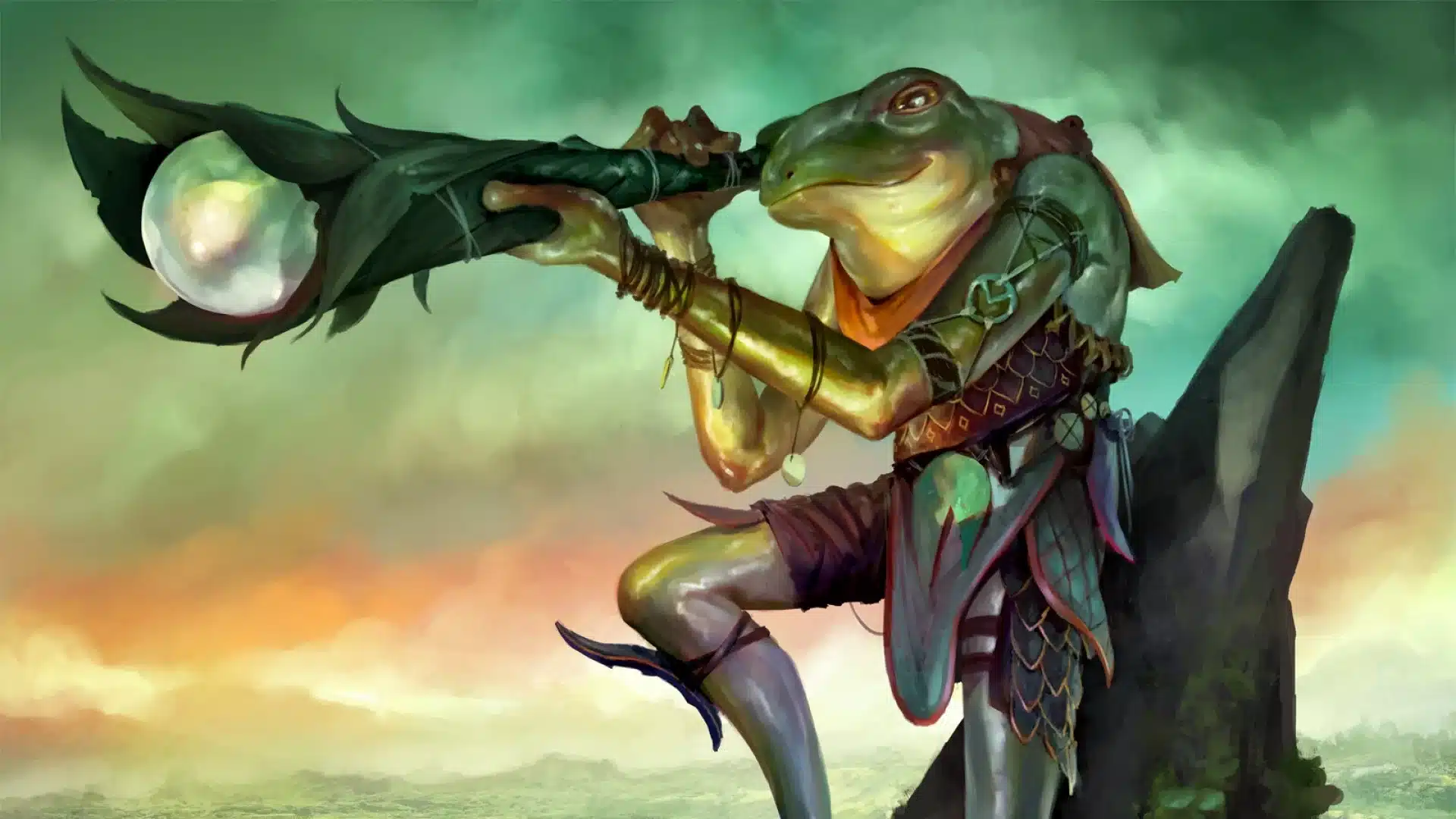
This isn’t the only way Wizards has been dodging shuffle effects, either. Other recent ramp pieces, like Clifftop Lookout and The Regalia, substitute searching for revealing cards from the top of your library. This provides a very similar effect to traditional search-based ramp at a much lower time cost. It also ups variance, which results in more interesting deckbuilding and gameplay.
It’s worth noting that this is still very much an experiment so far. Wizards hasn’t gotten rid of Fetch land-type effects in MTG altogether. Avatar alone featured several such effects, including Shared Roots and Aang’s Journey. These kinds of effects still outnumber their non-shuffle counterparts by a significant margin, which indicates that Wizards is just dipping its toes in the water here. Those who enjoy Fetch lands and the like don’t need to worry just yet.
Pros And Cons

As with most design shifts in Magic, there are positive and negative aspects to changing up search effects like this. On one hand, addressing the time issue is a really big deal. This is the rare problem that actually affects pretty much every Magic player equally. In competitive formats like Modern and Legacy, the abundance of Fetch lands ensures you’ll see a few searches per game. In Commander, they blend with the format’s naturally long wait times and plentiful other tutor effects to a mind-numbing effect.
On the other hand, the new approaches are hardly perfect, either. Land tokens, in particular, introduce a whole new batch of problems, especially for newer players. For starters, they come with the overhead of needing a token, or other representational aid, in order to function. Additionally, because of how players are conditioned to treat their lands, these tokens can easily end up being shuffled into decks after games. This was a problem Wizards encountered back when it trialed the concept in testing, and it remains relevant today. “Reveal until” effects are better, but they also offer a less obvious parallel to the search effects Wizards is aiming to replace here.
Whatever your thoughts on Wizards’ latest experiment, it’s clearly still in the early stages for now. We could see it ramp up over the next few years, or it could dwindle into nothing if players react poorly. Only time, and the ever-vocal MTG community, will tell.
Stick with us here at mtgrocks.com: the best site for Magic: The Gathering coverage. Be sure to check out our deckbuilder for your next big brew!