


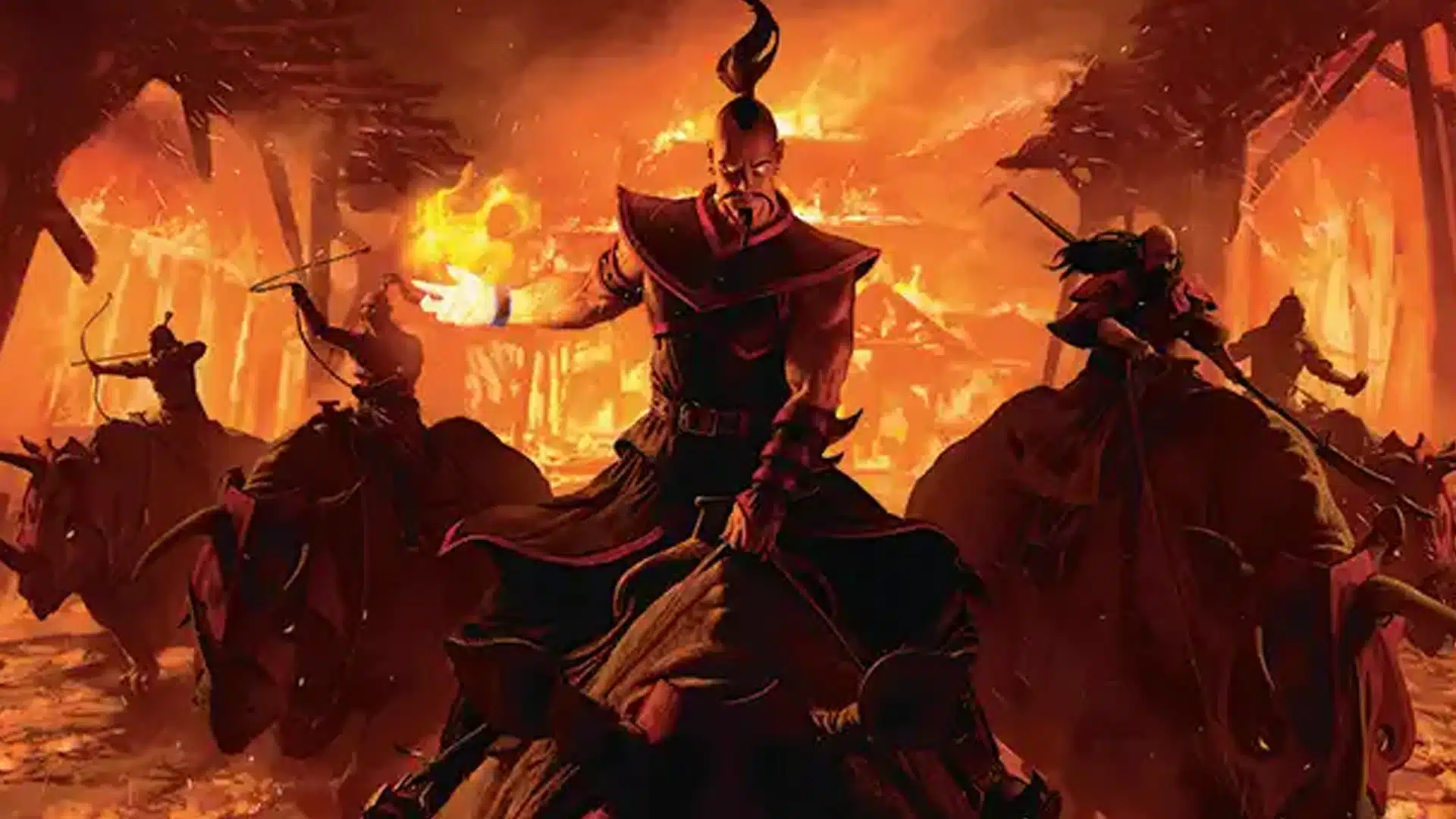

As a whole, MTG Avatar seems to be a pretty big success story. The set is flavorful, many new cards are making an impact on Constructed right out of the gates, and the new mechanics for the most part are intriguing and fun to play with.
Unfortunately, in a Draft setting, Firebending ultimately missed the mark. A mix of mediocre enablers and clunky designs makes it difficult to get a strong Firebending shell to come together. Given how powerful some of the other mechanics are in MTG Avatar, including Ally support, Firebending not living up to expectations has major consequences.
Lack of Redundancy and Efficiency
On the surface, Firebending looks like a pretty powerful keyword. Being able to attack with multiple Firebending creatures, cast instant-speed removal spells during combat, then follow up with more pressure during your second main phase could lead to huge tempo swings in your favor. The problem is that the vast majority of cheap creatures in the set just don’t have Firebending.
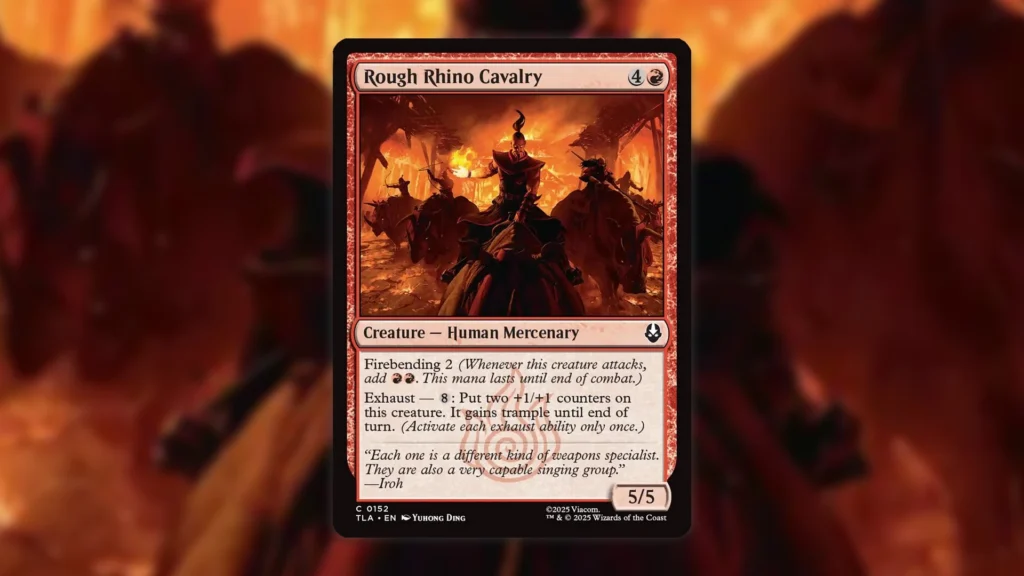
Firebending is primarily featured in red in MTG Avatar, a primarily aggressive color. Yet, at common, Fire Nation Cadets is the only Firebending creature in the main set that costs less than three mana. The card does perform admirably as a result, which suggests that Firebending, when done right, has potential. The other two cards to feature the Firebending mechanic at common, Rough Rhino Cavalry and Vindictive Warden, are extremely mediocre.
In Cavalry’s case, there’s a lot of competition in the five mana slot in modern-day Limited, and by the time you’re playing five-drops, the value you gain from extra Firebending mana has diminished significantly. In fact, according to 17lands.com, a site that tracks MTG Arena user draft data, Cavalry has the ninth-worst win rate among commons when maindecked. Warden is a bit more efficient, but the difference between Firebending 1 and Firebending 2 when you’re looking to cast removal spells like Lightning Strike is huge and means Warden doesn’t give you enough bang for your buck.
When you factor in the uncommons, things still look bleak. Once again, there’s only one uncommon creature at one or two mana in the form of Fire Sages, and the rest have below-average win rates. Azula, on the Hunt and Zuko, Exiled Prince even offer you something to spend your excess mana on to pull you ahead on resources, but you need to attack to get any value whatsoever.
In an environment where more successful red archetypes like Izzet and Boros that utilize red as a support color make good use of Firebending Lesson and Lightning Strike, it’s hard to justify playing four mana creatures with low toughness. The removal in red is actually quite strong, and if the Firebending cards themselves were more powerful, Rakdos might not be the second-worst two-color archetype in the format.
Poor Payoffs
If the lack of cheap creatures with Firebending wasn’t enough, there also aren’t as many strong ways to maximize the excess mana during combat. Obviously, Lightning Strike and Firebending Lesson do the trick, but the issue is that these premium removal spells are hard to come by. Because every red drafter at the table should be taking these cards highly, it’s hard to rely on getting a bunch of elite removal spells for your Firebending deck.
With this in mind, one style of card that Firebending players would normally want to look for is combat tricks. Efficient combat tricks work perfectly with Firebending cards, and because decks like Izzet Lessons and Gruul Midrange wouldn’t be competing as heavily for them, you might’ve been able to get premium picks for your deck late in each pack.
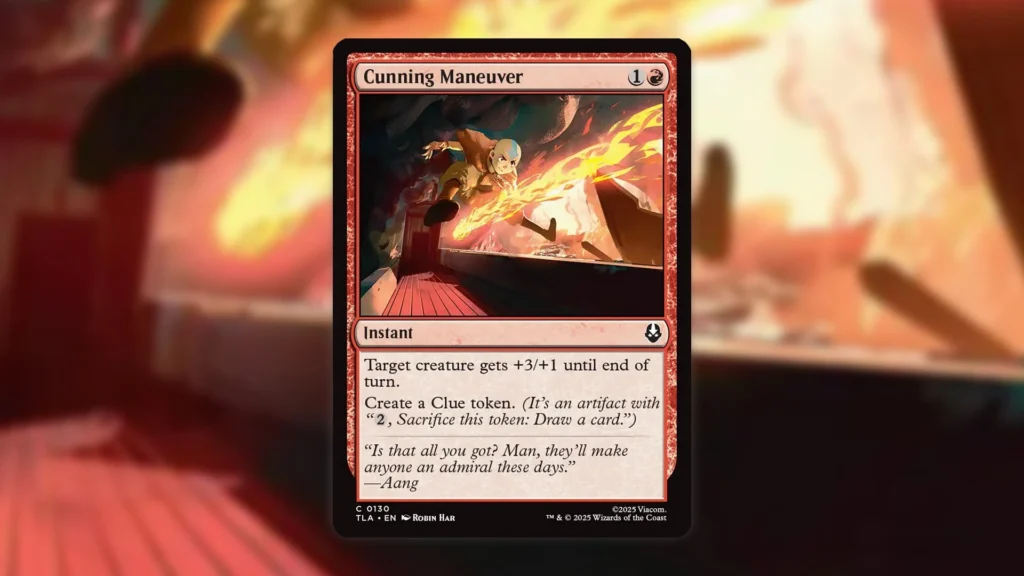
The problem is that there are only three instant-speed combat tricks in red in the whole set in Cunning Maneuver, Twin Blades, and How to Start a Riot! Twin Blades is the only card in the group that provides a meaningful boost towards helping your creature not get blocked down in combat. As a result, it’s the only card of the bunch with an above-average win rate.
Beyond using combat tricks, cracking Clues is another way to take advantage of Firebending that this set didn’t lean on as much as I would’ve expected. Many of the cards in black and red that are capable of making Clue tokens, including Jet’s Brainwashing and Sold Out, are either too bad to play or don’t produce Clues in a reliable fashion. With all of these factors added together, it’s easy to see why Firebending support fell short.
A Tough Ask
While hindsight is 20/20, striking a balance when it comes to Firebending does seem difficult from a design perspective. If Wizards puts too many hyper-efficient Firebending threats and mana sinks in the format, there’s certainly a risk that aggro decks become way too strong.
The downside to aiming too low, of course, is that the incentives to building around the Firebending mechanic just aren’t there. Other top-tier draft archetypes, such as Azorius Allies, thrive in part because many of the cards are just good individually, while also synergizing with each other. After all, it doesn’t take a ton of work to draft a bunch of Allies in this set, since a large percentage of the best creatures are Allies naturally.
Rakdos, on the other hand, typically needs to present a healthy mix of different roles in order to get the most out of each card. If it weren’t for the elite removal spells available in black and red, the color pair would likely have the lowest winning percentage in the format. MTG Avatar definitely checks more boxes than it misses, and it’s a shame the lack of Firebending support prevents the set from providing a truly excellent draft experience.
Stick with us here at mtgrocks.com: the best site for Magic: The Gathering coverage. Be sure to check out our deckbuilder for your next big brew!