


For those who have played Pioneer at all over the past few months, you know just how strong the Vampires core is. Thanks to the printing of
Vein Ripper
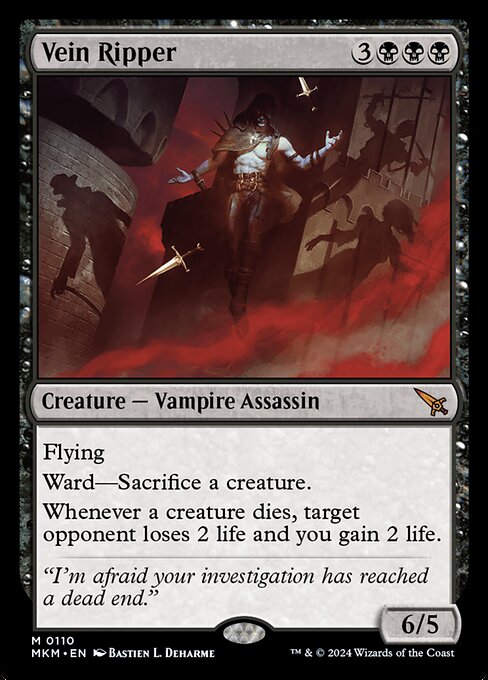 Vein Ripper
Flying
Ward—Sacrifice a creature.
Whenever a creature dies, target opponent loses 2 life and you gain 2 life.
, Vampires strategies got an enormous boost. Not only is Vein Ripper a huge Flier that a lot of decks can’t kill, but even those that can need to sacrifice a creature in order to have their removal spell work.
Obviously, Vein Ripper and
Sorin, Imperious Bloodlord
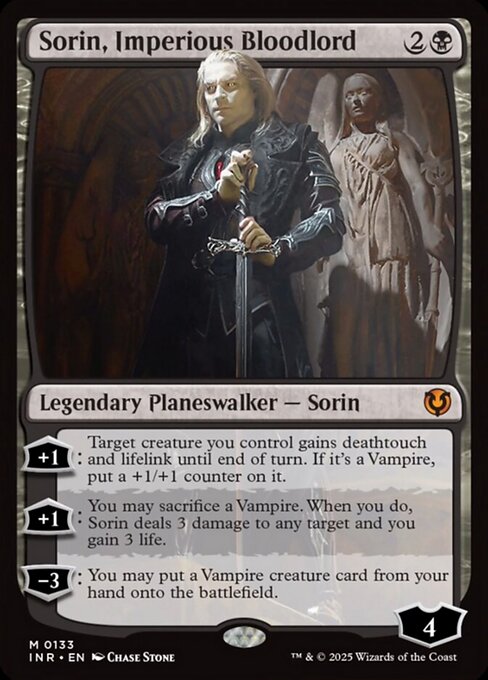 Sorin, Imperious Bloodlord
+1: Target creature you control gains deathtouch and lifelink until end of turn. If it's a Vampire, put a +1/+1 counter on it.
+1: You may sacrifice a Vampire. When you do, Sorin deals 3 damage to any target and you gain 3 life.
−3: You may put a Vampire creature card from your hand onto the battlefield.
remain the stars of the show for the Vampires archetype. General Rakdos builds are still by far the most popular shells for this package. However, we have seen some other decks make use of Sorin and Vein Ripper, too.
Some players have utilized Sorin and Vein Ripper in Golgari
Fight Rigging
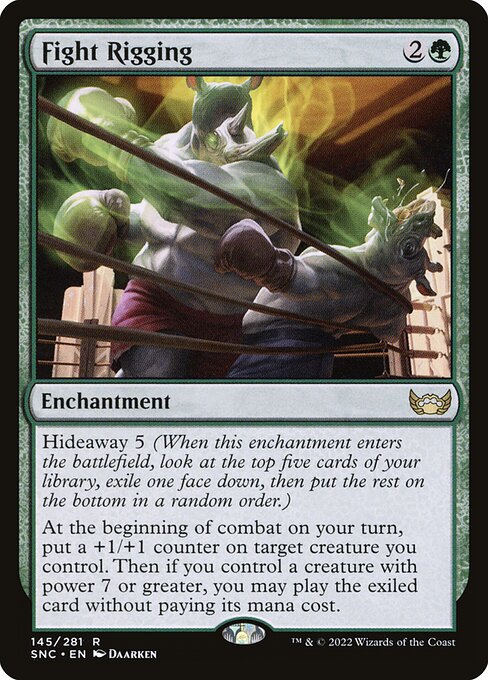 Fight Rigging
Hideaway 5 (When this enchantment enters, look at the top five cards of your library, exile one face down, then put the rest on the bottom in a random order.)
At the beginning of combat on your turn, put a +1/+1 counter on target creature you control. Then if you control a creature with power 7 or greater, you may play the exiled card without paying its mana cost.
decks. Other players have tried adding this combo to Modern to maximize
Bloodghast
 Bloodghast
This creature can't block.
This creature has haste as long as an opponent has 10 or less life.
Landfall — Whenever a land you control enters, you may return this card from your graveyard to the battlefield.
as a recurring threat. Today, we’re going to focus on an interesting archetype from a recent Magic Online Pioneer Challenge that meshes two combos together. This deck is none other than Mardu Greasefang, and the inclusion of Sorin and Vein Ripper adds a whole new element. Before we talk about the role of the Vampire package, it’s important to refresh ourselves on what Mardu Greasefang is all about.
Greasefang Combo

Mardu Greasefang is a cool deck that is designed to abuse the power of
Greasefang, Okiba Boss
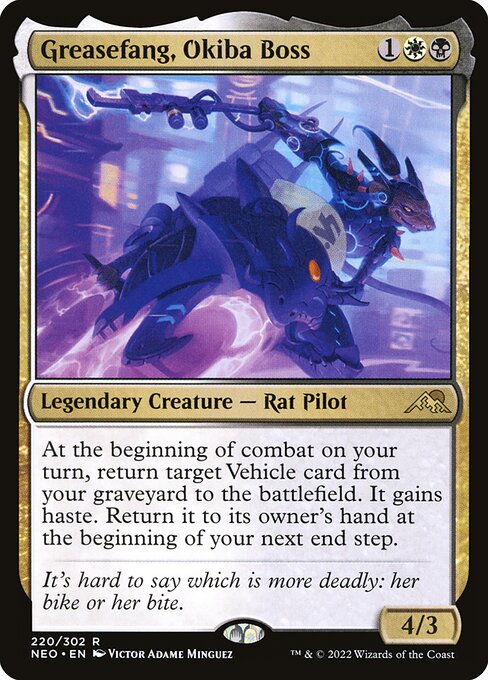 Greasefang, Okiba Boss
At the beginning of combat on your turn, return target Vehicle card from your graveyard to the battlefield. It gains haste. Return it to its owner's hand at the beginning of your next end step.
and
Parhelion II
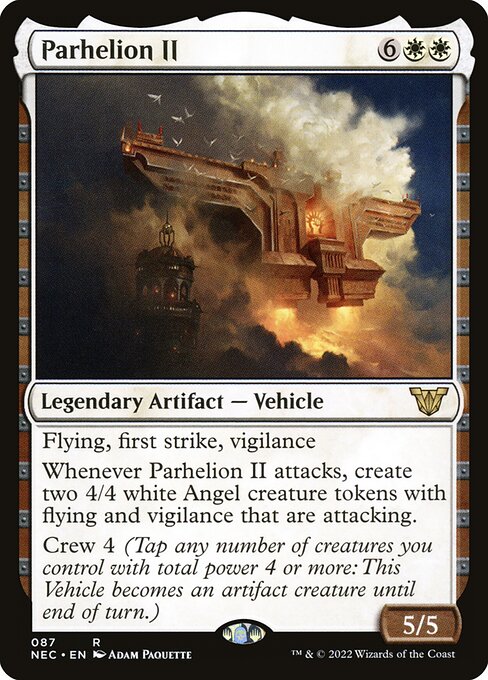 Parhelion II
Flying, first strike, vigilance
Whenever Parhelion II attacks, create two 4/4 white Angel creature tokens with flying and vigilance that are attacking.
Crew 4 (Tap any number of creatures you control with total power 4 or more: This Vehicle becomes an artifact creature until end of turn.)
. The main goal is to get Parhelion II into the graveyard, then slam Greasefang when the coast is clear. From there, Greasefang can return Parhelion II to play with Haste and Crew the large vehicle itself. This enables a huge attack for 13 damage in the air.
Since Greasefang was printed, the most popular color combination by far for Greasefang decks has been Abzan. After all, playing green as a support color gives the deck a lot of nice tools to work with. First and foremost, you get another elite Vehicle to pair with Greasefang in the form of
Esika’s Chariot
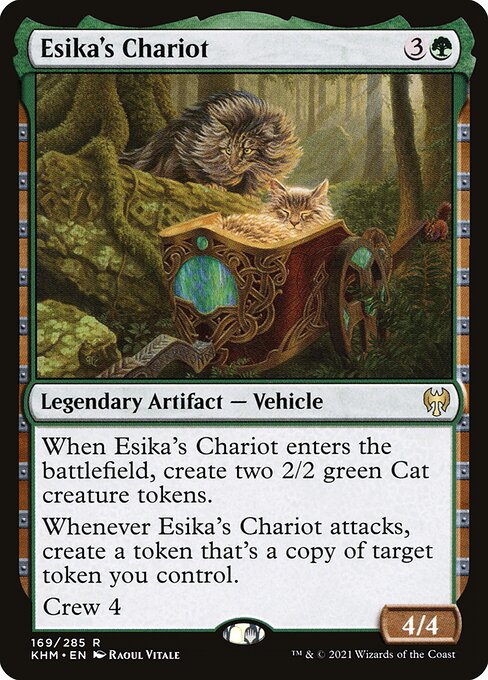 Esika’s Chariot
When Esika's Chariot enters, create two 2/2 green Cat creature tokens.
Whenever Esika's Chariot attacks, create a token that's a copy of target token you control.
Crew 4
. Esika’s Chariot doesn’t quite pack the same punch as Parhelion II, but unlike Parhelion II, casting Esika’s Chariot is a legitimate backup plan.
Outside of Chariot, the deck also gets access to cards like
Grisly Salvage
 Grisly Salvage
Reveal the top five cards of your library. You may put a creature or land card from among them into your hand. Put the rest into your graveyard.
that help dig for Greasefang while fueling your graveyard at the same time. So, what does red add to the table that green doesn’t?
Unsurprisingly,
Fable of the Mirror-Breaker
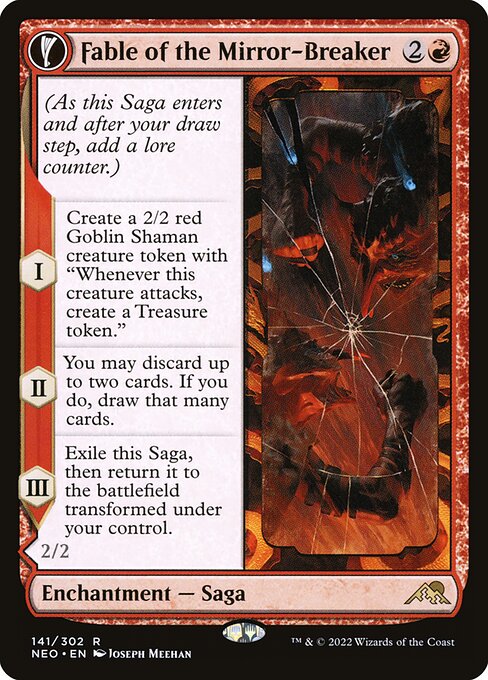 Fable of the Mirror-Breaker
(As this Saga enters and after your draw step, add a lore counter.)
I — Create a 2/2 red Goblin Shaman creature token with "Whenever this token attacks, create a Treasure token."
II — You may discard up to two cards. If you do, draw that many cards.
III — Exile this Saga, then return it to the battlefield transformed under your control.
is at the top of the list. Fable acts as a discard outlet for any massive Vehicles you draw and is naturally a strong card on its own. The same can be said for
Bloodtithe Harvester
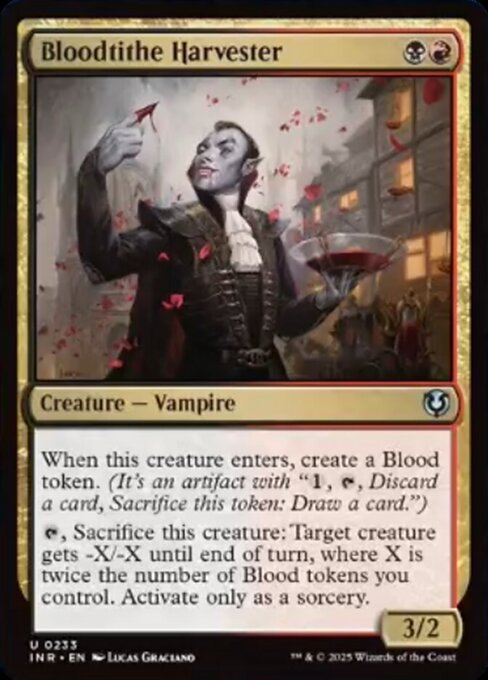 Bloodtithe Harvester
When this creature enters, create a Blood token. (It's an artifact with "{1}, {T}, Discard a card, Sacrifice this token: Draw a card.")
{T}, Sacrifice this creature: Target creature gets -X/-X until end of turn, where X is twice the number of Blood tokens you control. Activate only as a sorcery.
, which pairs nicely with Fable. By themselves, these two cards aren’t quite enough to justify abandoning green. When factoring in Sorin and Vein Ripper, though, playing red becomes a lot more appealing.
Read More: Intriguing Equipment-Themed Legend Highlights New MTG Assassin’s Creed Spoilers!
Intriguing Overlap

We all know how good Vein Ripper is when you can put it into play early with Sorin. The problem is that, in some games, Vein Ripper will end up rotting in your hand if you don’t draw the support for it. This is a huge part of the reason why Bloodtithe Harvester and Fable are so strong in Rakdos Vampires. Both cards allow you to pitch away excess Vein Rippers you don’t need and filter through your library. On top of that, Bloodtithe is a Vampire to pump with Sorin, and the Treasures you make with Fable’s Goblin Shaman token can enable you to hard cast Vein Ripper in no time.
All of these points stay true in Mardu Greasefang. Beyond being able to put huge vehicles into the graveyard for Greasefang, your rummage effects give you the luxury to sculpt your hand depending on the matchup.
From the opponent’s standpoint, even if they know you’re playing Sorin and Vein Ripper in your Greasefang deck, it can be hard to disrupt both gameplans. Hate pieces like
Unlicensed Hearse
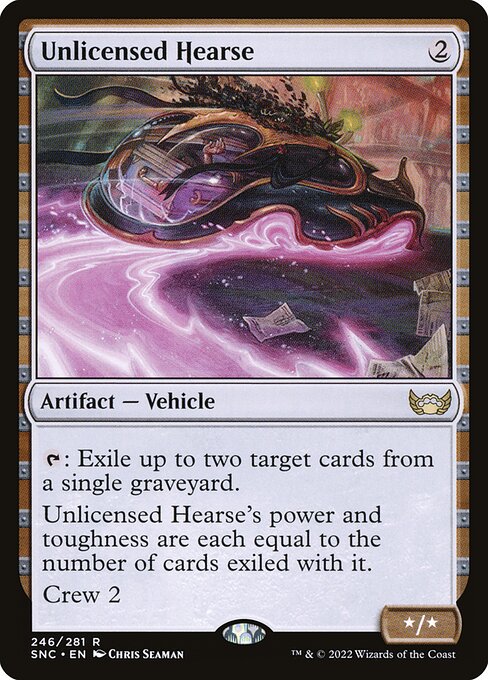 Unlicensed Hearse
{T}: Exile up to two target cards from a single graveyard.
Unlicensed Hearse's power and toughness are each equal to the number of cards exiled with it.
Crew 2
and
Rending Volley
 Rending Volley
This spell can't be countered.
Rending Volley deals 4 damage to target white or blue creature.
do absolutely nothing against Vein Ripper. Meanwhile, clean answers to Vein Ripper such as
Blot Out
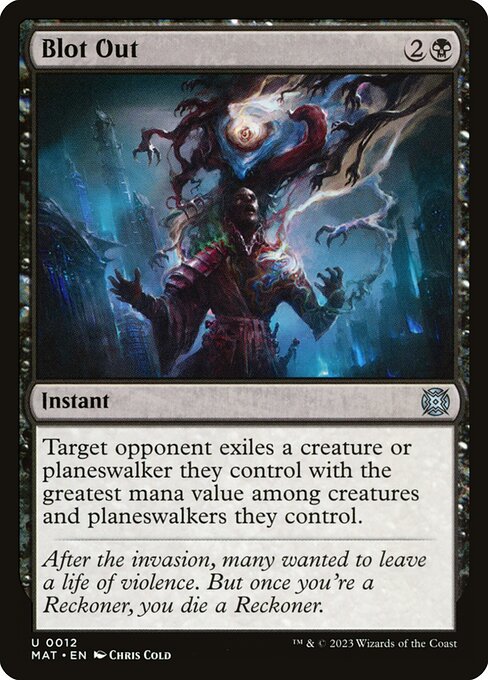 Blot Out
Target opponent exiles a creature or planeswalker they control with the greatest mana value among creatures and planeswalkers they control.
are extremely inefficient against Greasefang, which usually needs to be removed at Instant speed to prevent a large attack.
The fact that you get to decide which avenue to victory you want to play towards is what makes it tough to disrupt this deck. I’m a bit surprised to not see any copies of
Voldaren Epicure
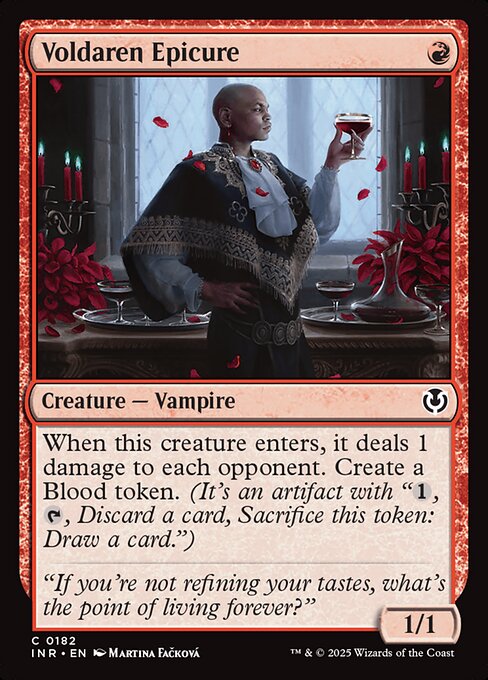 Voldaren Epicure
When this creature enters, it deals 1 damage to each opponent. Create a Blood token. (It's an artifact with "{1}, {T}, Discard a card, Sacrifice this token: Draw a card.")
to lean heavier on the themes present. Voldaren Epicure is a Vampire as well, making Sorin a bit more reliable.
Read More: Top Five MTG Most Expensive Assassin Cards
Strengths and Weaknesses

As we mentioned, a lot of the deck’s strengths lie with its versatility. Unlike traditional Greasefang decklists, this shell is less vulnerable to graveyard hate. Part of the reason Abzan Greasefang has faltered in recent months is because Izzet Phoenix is so popular. As players look to minimize
Treasure Cruise
 Treasure Cruise
Delve (Each card you exile from your graveyard while casting this spell pays for {1}.)
Draw three cards.
, Greasefang decks naturally get hit with a lot of splash hate. Mardu Greasefang gets to lean heavier on the power of Fable and Sorin, so graveyard hate is less concerning.
The main issue that this deck can run into, though, is that it can be a bit inconsistent. With full playsets of both Parhelion II and Vein Ripper, two cards that are quite expensive and difficult to enable without Greasefang or Sorin, respectively, this deck naturally has a lot of air in it. As such, you’re a bit weak to multiple pieces of counter magic or
Thoughtseize
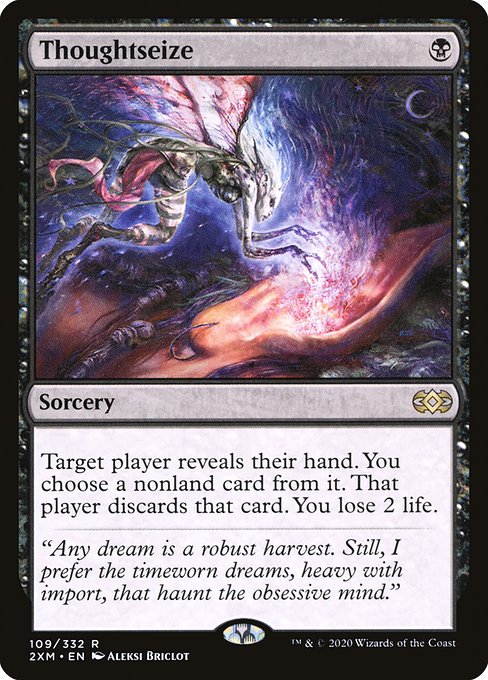 Thoughtseize
Target player reveals their hand. You choose a nonland card from it. That player discards that card. You lose 2 life.
effects.
For example, it’s easy for mono-black
Waste Not
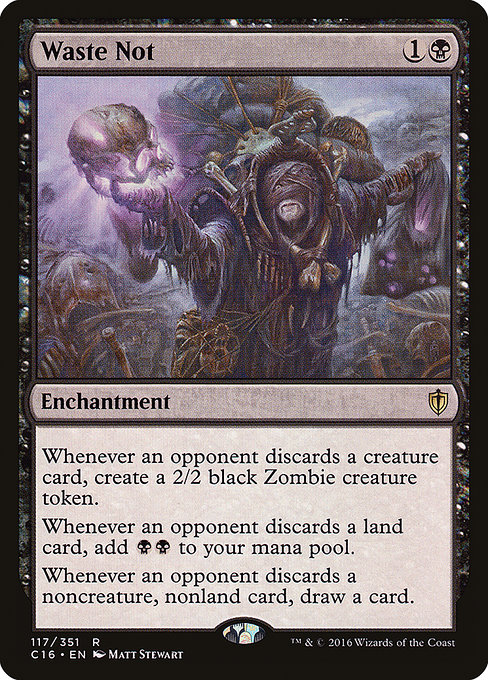 Waste Not
Whenever an opponent discards a creature card, create a 2/2 black Zombie creature token.
Whenever an opponent discards a land card, add {B}{B}.
Whenever an opponent discards a noncreature, nonland card, draw a card.
decks to mess with your ability to execute either of your combos. Your opponent may be able to disrupt your prominent cards like Fable and leave you with a bunch of individually useless cards in hand. Factoring in this deck’s weakness to
Sheoldred’s Edict
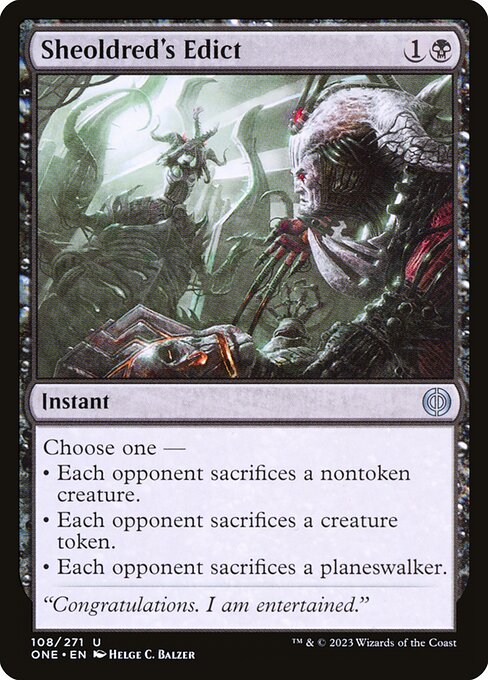 Sheoldred’s Edict
Choose one —
• Each opponent sacrifices a nontoken creature of their choice.
• Each opponent sacrifices a creature token of their choice.
• Each opponent sacrifices a planeswalker of their choice.
and
Go Blank
 Go Blank
Target player discards two cards. Then exile that player's graveyard.
, and the matchup seems like a nightmare.
Ultimately, Rakdos Vampires is more consistent than Mardu Greasefang. The presence of Greasefang does help you beat opposing combo decks faster, which is nice. Against decks like mono-green Devotion that have don’t interact much, attacking with a quick Parhelion II is certainly a recipe for success. This deck has its tradeoffs, but if you’re looking for something unique that can catch your opponent off-guard, Mardu Greasefang has you covered.
Read More: Borderless Bonus Card Theme Is Beginning To Wear Thin